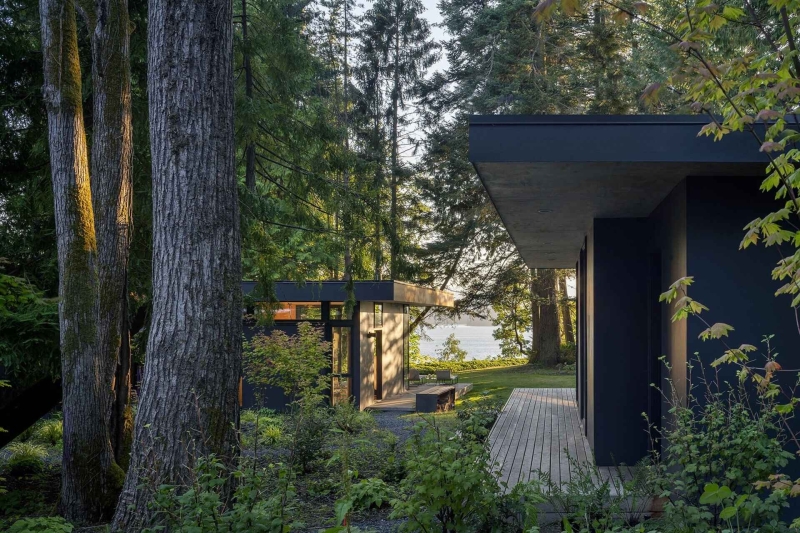
Hidden among the trees and perched high above Washington’s Hood Canal, Hood Cliff Retreat feels less like a single home and more like a quiet gathering of cabins carefully placed in the forest.
Designed by Wittman Estes, the project replaces an aging cedar cabin that had stood on the site since 1962. While the original structure carried decades of history, its dark and enclosed interiors left the owners feeling disconnected from the landscape they loved. The family wanted something different this time. A place that embraced the outdoors, welcomed friends, and made the most of its dramatic natural setting.
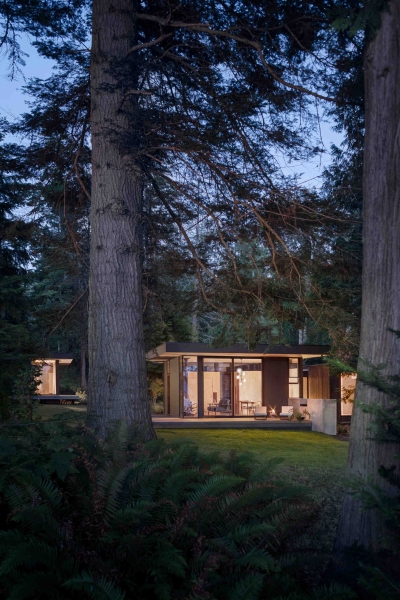
Rather than building one large house, the architects reimagined the site as a series of smaller structures that work together. Set atop a wooded bluff, the project is made up of three distinct elements. The original 20 by 20 foot footprint of the old cabin was repurposed, a new cabin addition was introduced, and a separate bunkhouse with bathroom was added to the north. Together, they create a flexible layout that allows the family to be together while still offering moments of privacy.
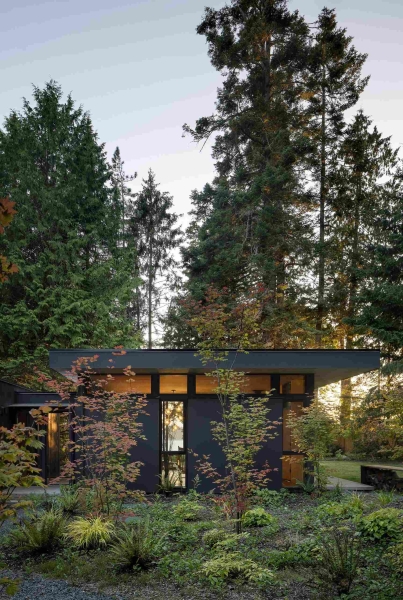
The cabins are deliberately understated in their appearance. Rough sawn cedar siding and cement panel finishes were chosen for their durability and their ability to weather naturally over time. As the materials age, they soften and darken, helping the buildings blend into the surrounding forest rather than stand apart from it.
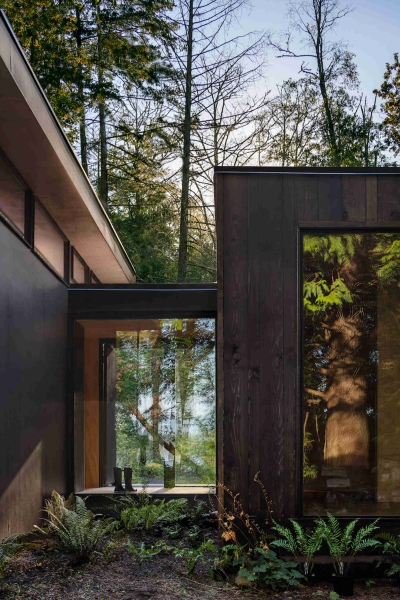
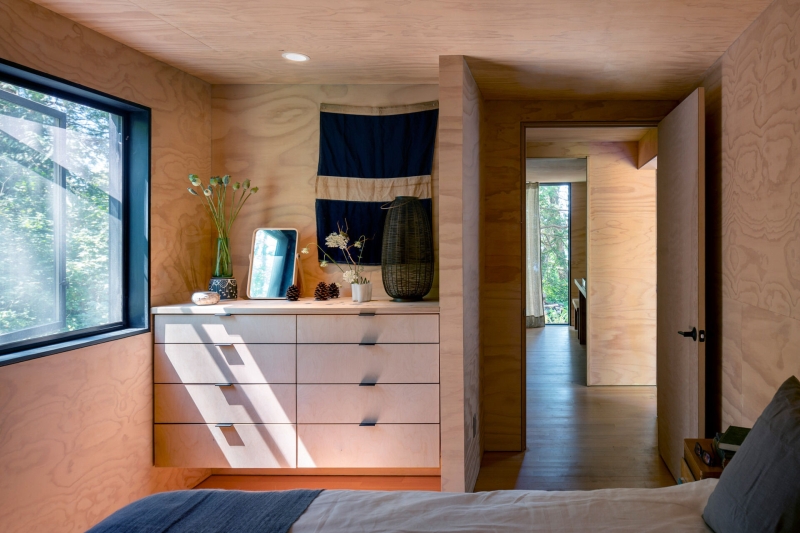
Sustainability and restraint guided many of the design decisions. Beams and siding from the original 1960s cabin were carefully reclaimed and reused as interior cladding and countertops, giving the new spaces a sense of continuity with the past. Simple detailing and a limited material palette helped keep the construction budget under control while reinforcing the calm, tactile quality of the interiors.
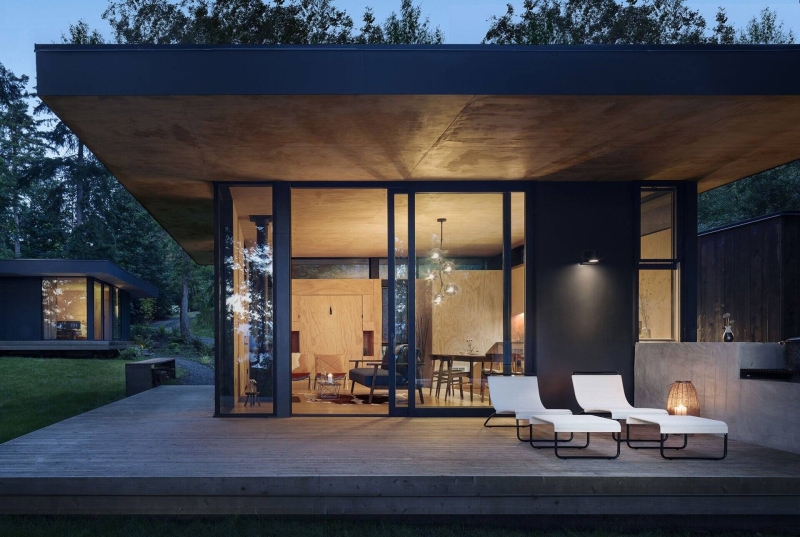
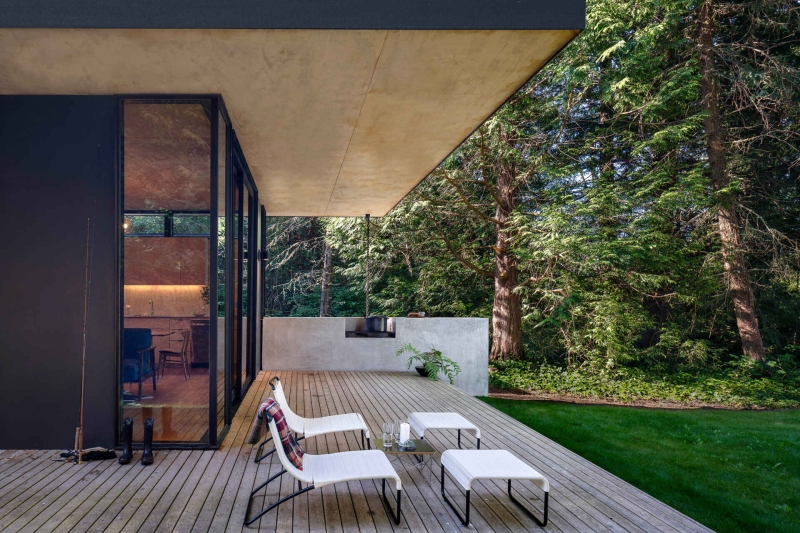
At the heart of the main cabin is an indoor outdoor kitchen designed for gathering. A pass through window opens the kitchen to the outside, extending the interior counter into a concrete outdoor surface paired with a built in wood barbeque.
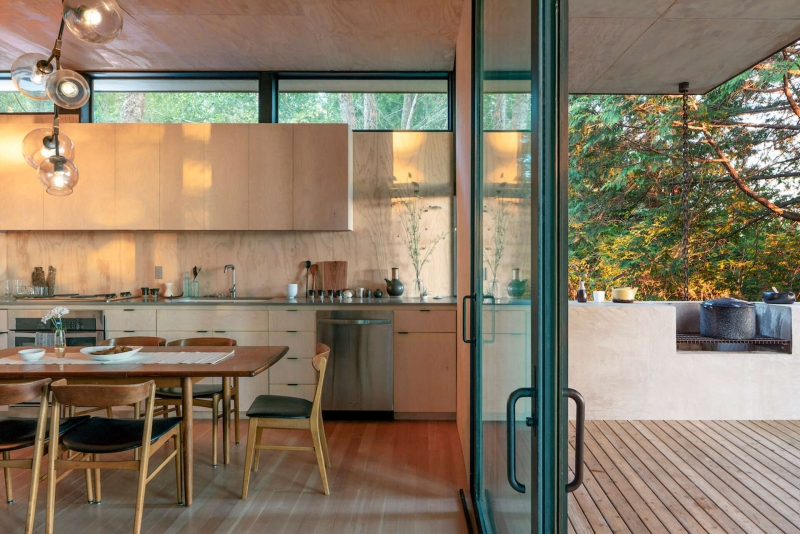
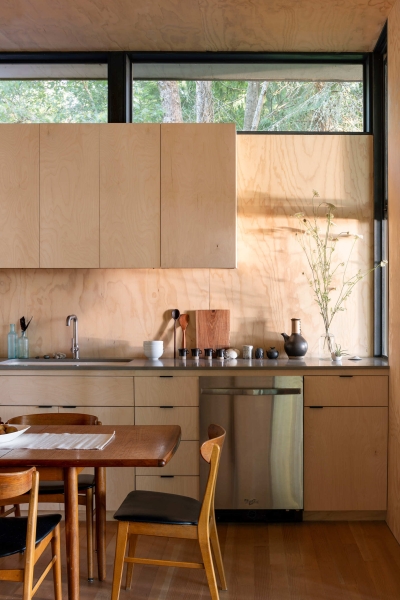
Flexibility was also key. In the living area, a built-in murphy bed allows the main cabin to double as additional sleeping space when friends visit. High clerestory windows bring in natural light and offer glimpses of the surrounding trees, keeping the space bright without sacrificing privacy.
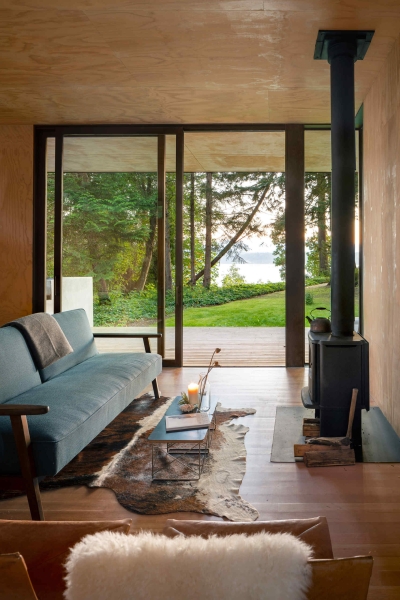
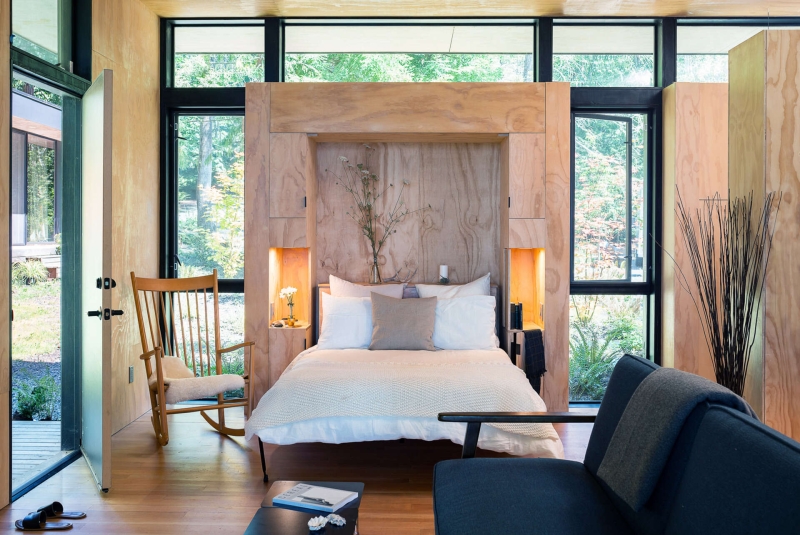
In a bedroom, a large picture window frames uninterrupted views of the forest, filling the room with soft daylight and reinforcing the sense of being immersed in nature.
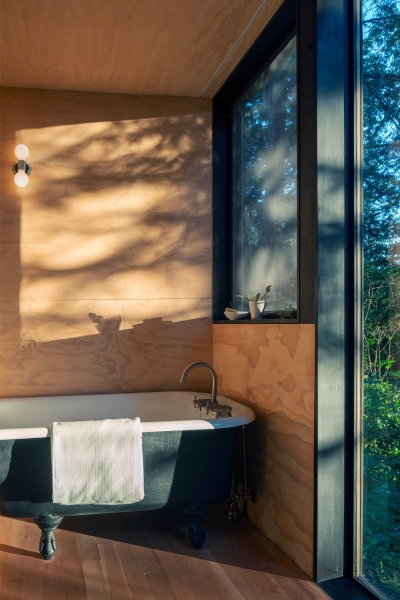
In the bathroom, a reclaimed cast iron tub becomes a focal point. Set against views of the trees, it creates the feeling of soaking outdoors while remaining sheltered inside. It is a small but thoughtful detail that captures the spirit of the project.
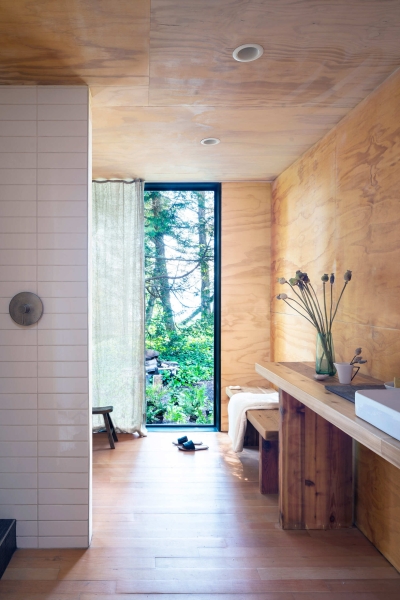
Hood Cliff Retreat is ultimately about how a family lives together in nature. Through a series of modest cabins, reclaimed materials, and carefully framed views, Wittman Estes created a place that celebrates the sensory experience of the Puget Sound ecosystem and brings everyday life closer to the outdoors.
Photography by Andrew Pogue | Architect: Wittman Estes Architecture+Landscape | Design team: Matt Wittman AIA LEED AP, Jody Estes, Naomi Javanifard, and Erica Munson | Structural Engineer: Strongworks Structural | Builder: Jack Colgrove Construction