by Anna Lazzaron
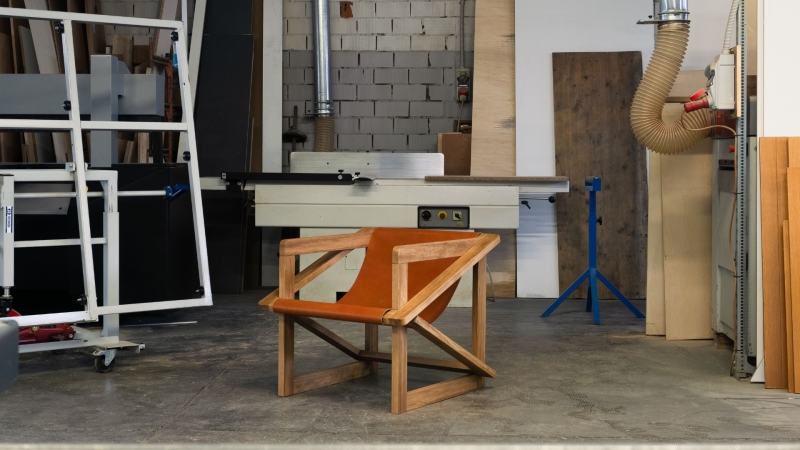
Tene’ is the artisan’s newly founded contemporary furniture company, and has launched its first chair embracing artisanality and mechanical precision.
Tene’ is a new contemporary furniture brand, emerging from the artisan workshop of Luigi Tenebruso in the outskirts of Bologna, Italy. The company’s debut product is called the Incastro chair, and it represents a specific approach to furniture design: a completely tool-free assembly through mechanical interlocking. “Incastro” in Italian means “joint” or “interlocking“, directly referencing the chair’s core characteristic, a system that eliminates screws, glue, and tools in favour of well-made wooden joints.
Incastro is built around a frame system available in solid oak or birch plywood. The frames interlock through precision joints that simply slot together in an intuitive sequence; the chair invites its owner to participate in its creation, understanding its structure. The fabric seating is customisable and can be interchanged through another mechanical interlocking system, which makes “dressing” the chair as simple as its assembly. When the chair is disassembled, it transforms into a vertical storage system that organises all of these elements in the smallest possible footprint.
Gallery
Open full width
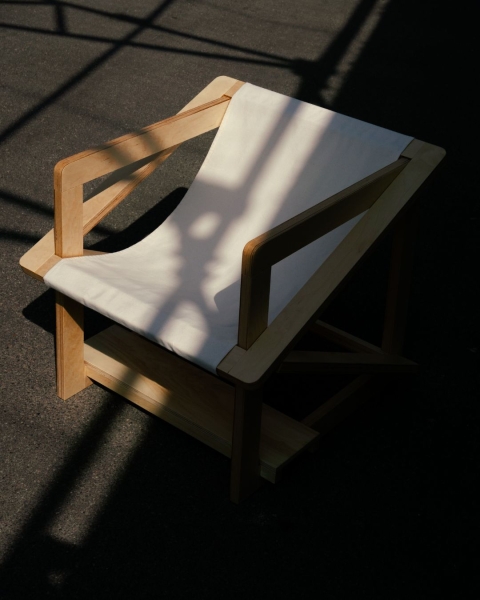
Incastro Chair © Tene’
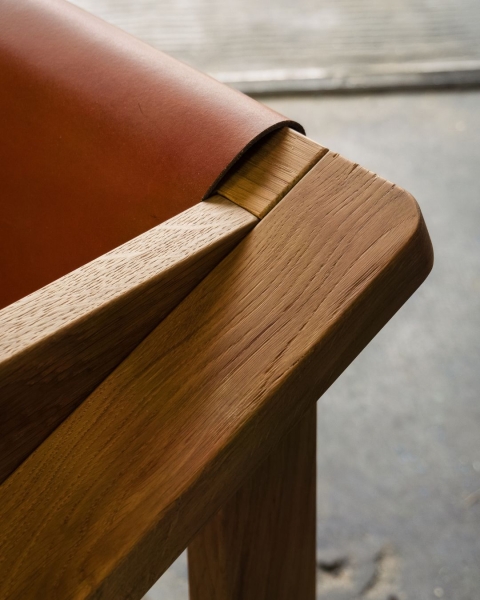
Incastro Chair © Tene’
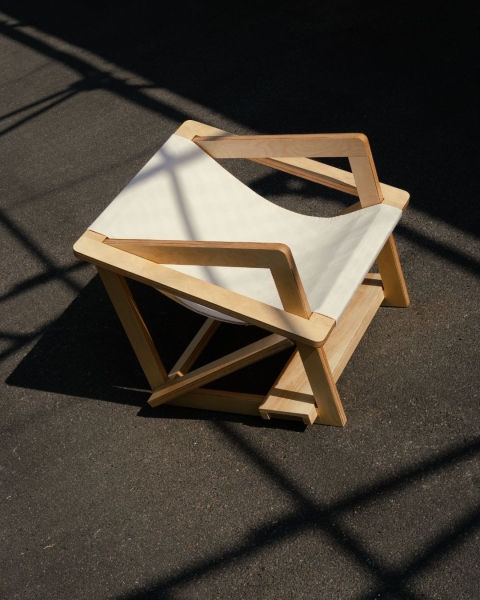
Incastro Chair © Tene’
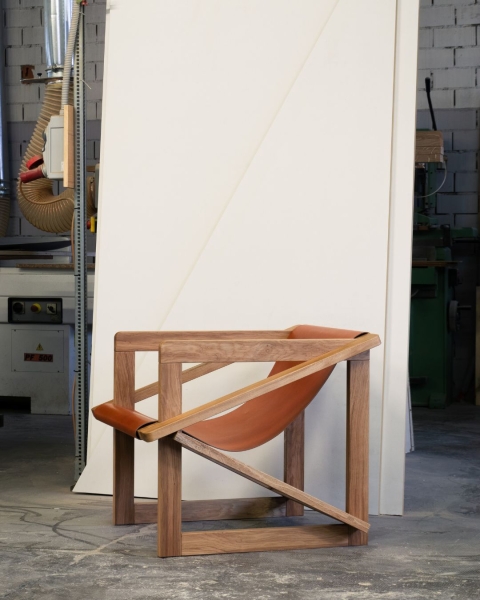
Incastro Chair © Tene’
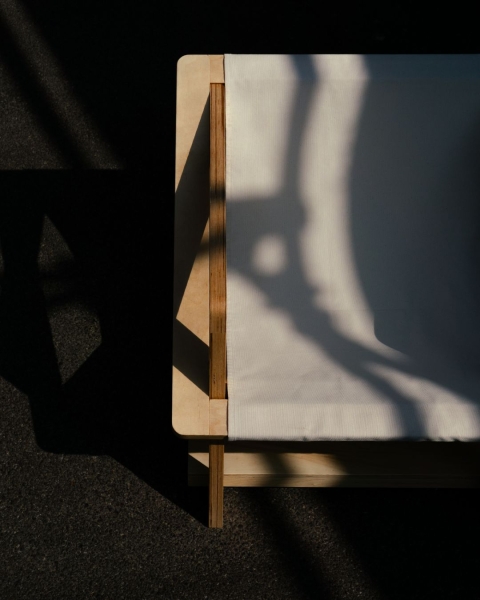
Incastro Chair © Tene’
Open full width
The Incastro chair emerges within a broader design trend that has been gaining momentum, about the celebration of joints and manufacturing techniques as aesthetic elements rather than hidden technologies. In 2022, architect Andrea Caputo and design professor Anniina Koivu published U-Joints: A Taxonomy of Connections, a 900-page encyclopedia documenting hundreds of different types of joints. The book is now foundational for many designers, and it explores how joints function not just structurally but also culturally.
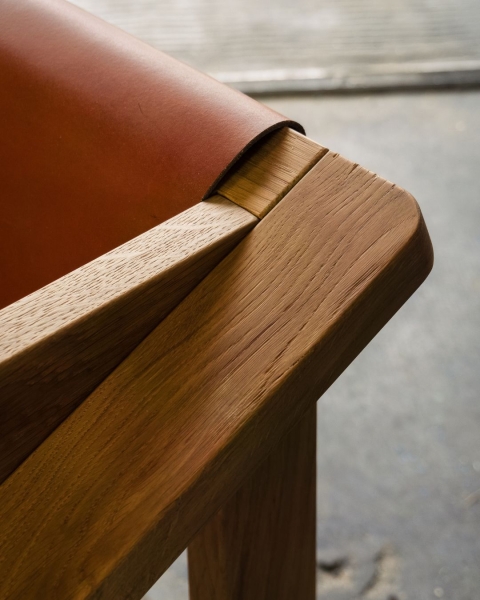
Incastro Chair’s joint © Tene‘
This growing focus on visible joinery reflects other trends in contemporary design, such as the renewed interest in exposed craftsmanship, where traditional techniques like dovetail or finger joints are now celebrated rather than concealed. Their visibility allows viewers to appreciate the precision and skill involved in their construction. The movement also aligns with the demand for transparency in manufacturing, as “fast furniture” is rising to the level of its cousin, fast fashion. When you see how something is made, you can judge its quality, probably understand its durability, and appreciate the labour involved.
This emphasis on joints also speaks to sustainability concerns, as well-executed joinery creates furniture that lasts generations without requiring adhesives or screws that may fail or rust over time. It can be assembled and disassembled as many times as needed without damaging its parts, ideal for people who move often, but also for event locations or horeca. In a market saturated with disposable furniture and untrustworthy manufacturing, pieces like Incastro represent a different value system, privileging longevity over novelty.
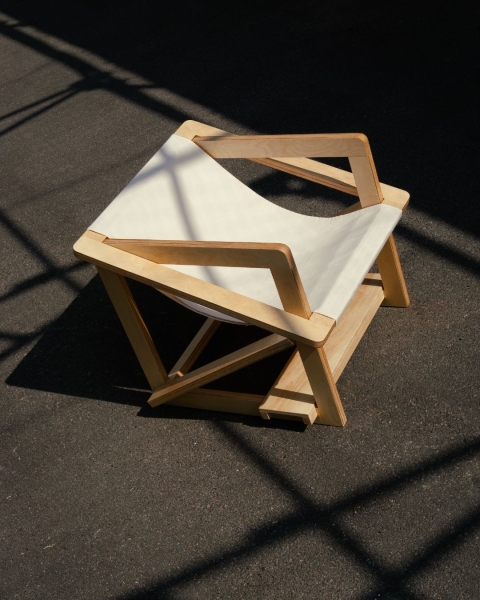
Incastro Chair © Tene’
Incastro communicates Luigi‘s experience in every detail. It invites conversation between the maker and the user, between tradition and innovation, between the material and the hand that shapes it. In making the joint the main character, the chair acknowledges that understanding how something is built changes our relationship to it.