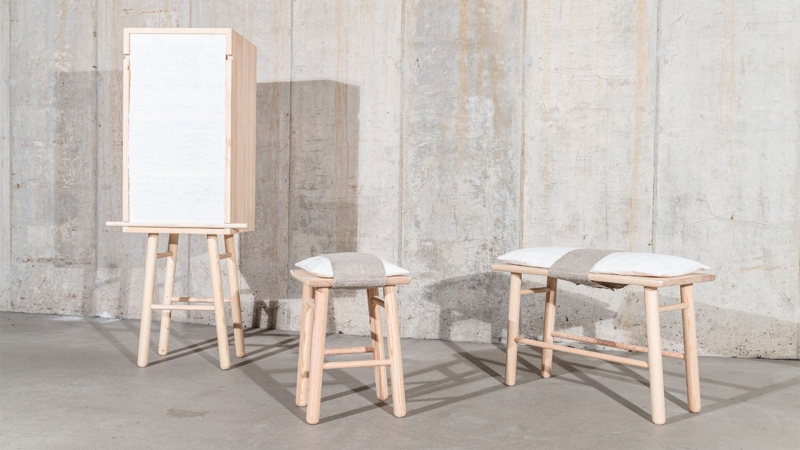
Contents
- 1 Born as a research thesis by Alessio Ramundo, the project is now evolving into a startup idea to renew Alpine craft heritage with contemporary tools.
- 2 Gallery
- 3 Ades is a project strongly connected to a community. Can you tell us more about yourself and your roots?
- 4 Why did you decide to research local craft traditions?
- 5 Ades is evolving into a startup combining on-demand production, small-batch manufacturing, and intergenerational knowledge transfer. Could you explain how this model works in practice?
- 6 What are the next steps for Ades?
- 7 Looking beyond Ades, how do you imagine the future of Alpine design? Do you see it as an aesthetic, a philosophy, or perhaps a way of living that can inspire international design culture?
by Juan Torres
Born as a research thesis by Alessio Ramundo, the project is now evolving into a startup idea to renew Alpine craft heritage with contemporary tools.
“Every year, we are overwhelmed by the news of products launched on the market, which is also slowly killing the local heritage and traditional crafts of different communities. So how can we try to keep this tradition alive and pass it to the new generations of designers and craftsmen?” This is the question that Alessio Ramundo, industrial designer and researcher, asked himself 5 years ago.
His thesis delved deeply into the local traditions and the story of the craft processes within his community, from the physics and mechanical properties of wood, through the segherie veneziane (sawmills named after the Venetians, who were their main clients), to local materials such as flax and the intricate steps required to obtain the fiber. These include retting, spinning, and carding: ancient techniques that embody patience and manual skill, serving as a symbol of slow design.
Gallery
Open full width

Alessio Ramundo © Alessandro Palumbo
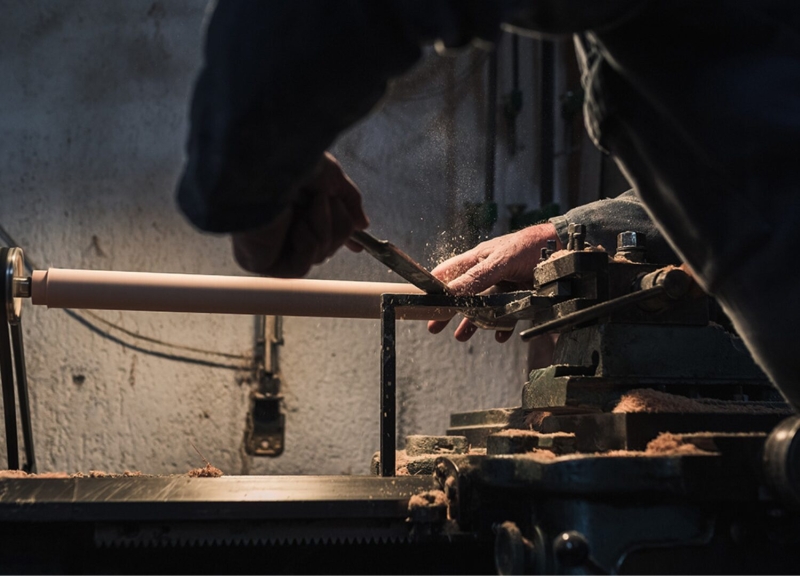
Woodturning process © Giacomo Podetti
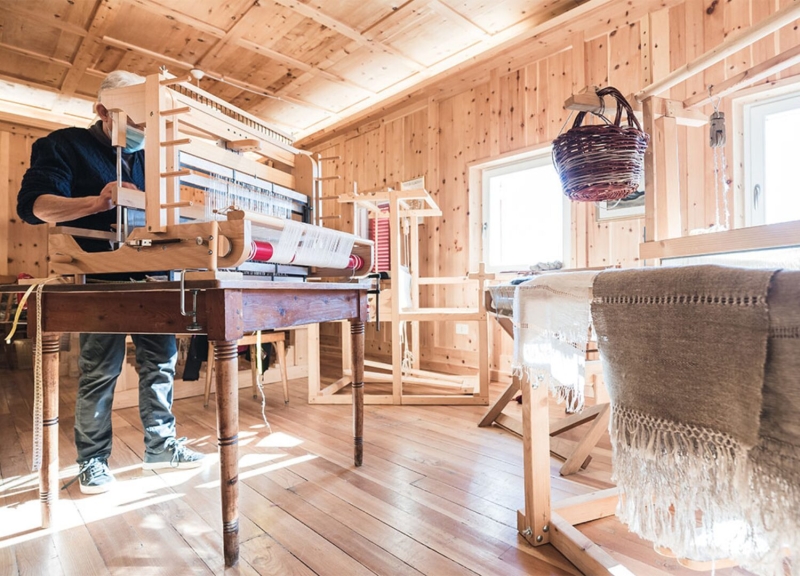
Weaving process © Giacomo Podetti
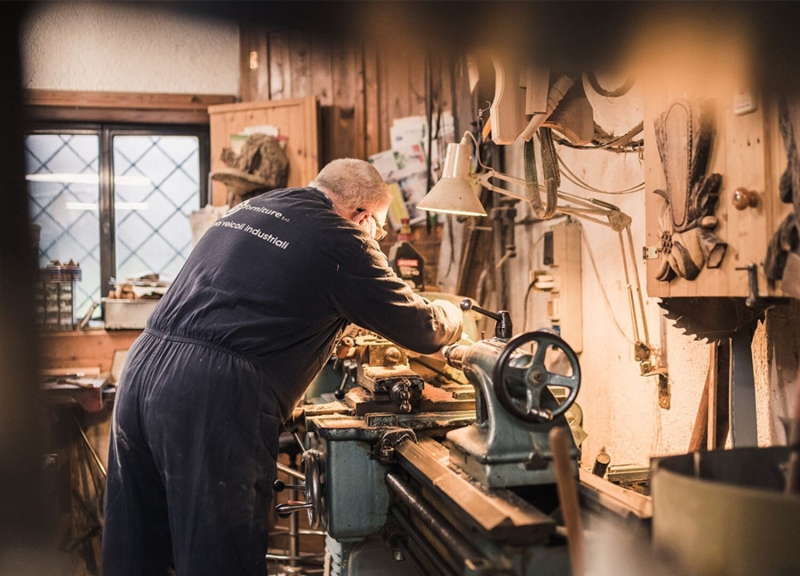
Woodturning process © Giacomo Podetti
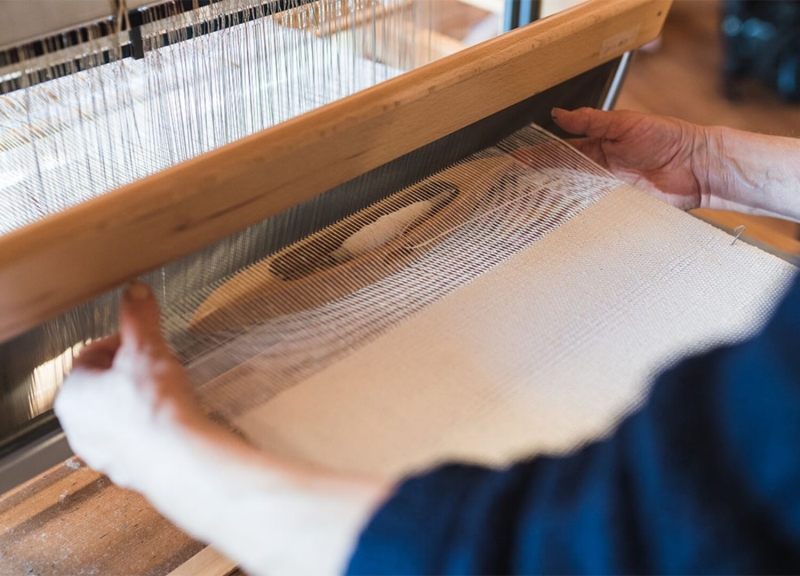
Weaving process © Giacomo Podetti
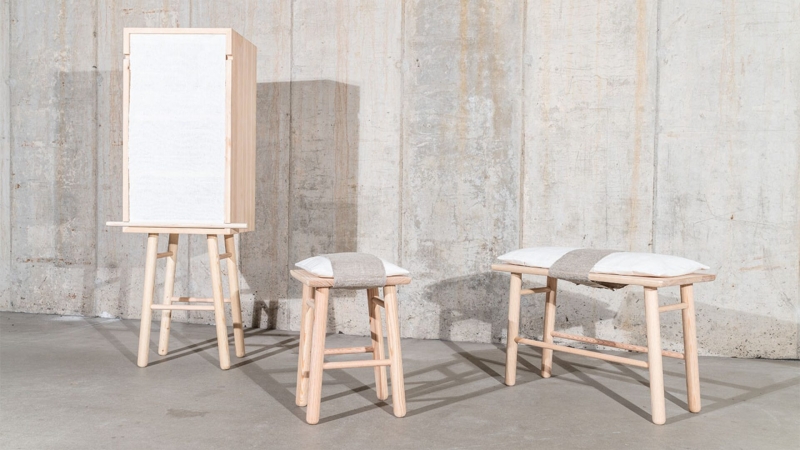
Natura by Alessio Ramundo © Giacomo Podetti
Open full width
He also highlights the value of what he calls imprecision: the small irregularities that make handmade objects unique and authentic, in contrast to the standardized perfection of industrial production. For him, this imprecision is not a flaw but a cultural signature, a way to preserve identity through craft.
From that research, Alessio asked himself: “How can design preserve and renew local know-how?” Today, that question has evolved into Ades: not just a thesis, but a cultural and productive startup in progress, aiming to connect artisans, schools, and designers in a collaborative platform that blends tradition with innovation. We interviewed Alessio to delve deeply into his idea and learn more about his desire to keep local traditions alive through contemporary design.
Ades is a project strongly connected to a community. Can you tell us more about yourself and your roots?
Alessio Ramundo:
I was born in Val di Peio, a small valley in Trentino, where nature, raw materials, and manual labour are an integral part of everyday life. As a child, I spent a lot of time in the woods surrounding me, observing and learning to respect nature itself. I would collect branches, leaves, stones, and then play with them, giving imperfect shapes to my ideas.
These moments taught me that the value of an object does not lie only in its precision, but in the human relationship that generates it. When I moved to Milan to study design, I realised how much those childhood experiences had shaped my way of thinking and creating. Ades was born precisely from the desire to reconnect with those roots and give something back to the community that shaped me.
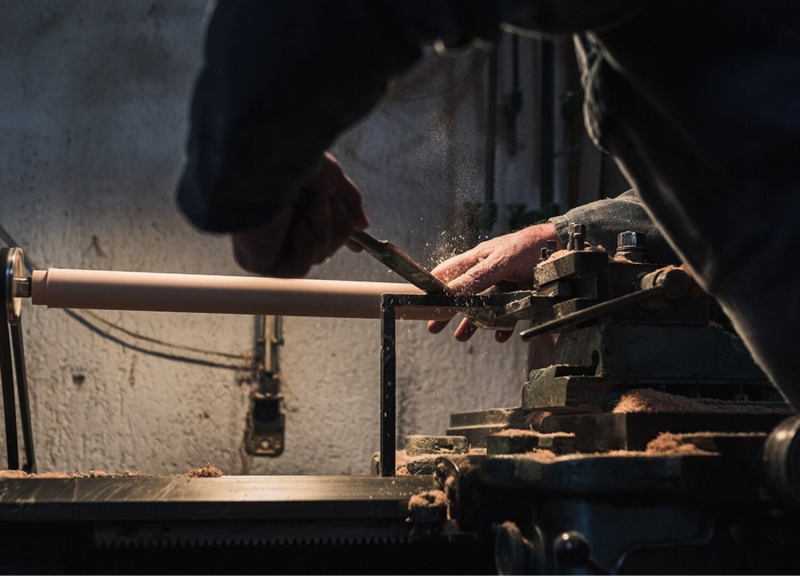
Woodturning process © Giacomo Podetti
Why did you decide to research local craft traditions?
Alessio Ramundo:
Everything began with my 2020 thesis, “Natura, artigianato autoctono”, in which I studied the history and evolution of traditional craft practices in Trentino. I realised that there is still an incredibly rich heritage of skills, but one that is often isolated, transmitted only partially to younger generations, and perceived as not fully in step with the present. I chose to work on this theme because I believe design can act as a bridge between past and present, transforming tradition into a contemporary opportunity. Craft techniques are not only cultural: they also represent a potential economic driver for mountain territories that risk losing both identity and vitality.
Ades is evolving into a startup combining on-demand production, small-batch manufacturing, and intergenerational knowledge transfer. Could you explain how this model works in practice?
Alessio Ramundo:
Ades works through a simple yet effective model. First, initial funding needed—public or private—covers materials and communication. Artisans then open their workshops, where young people learn by doing, and participation fees provide them with early support. Together, they create small collections of wooden and linen objects, produced only on demand.
These are sold through tourist orders, local collaborations, the HO.RE.CA sector ((hotel, restaurant, café/catering), and online platforms. Revenues are shared among suppliers, artisans, and the design direction, generating a circular local economy that unites training, production, and territorial development.
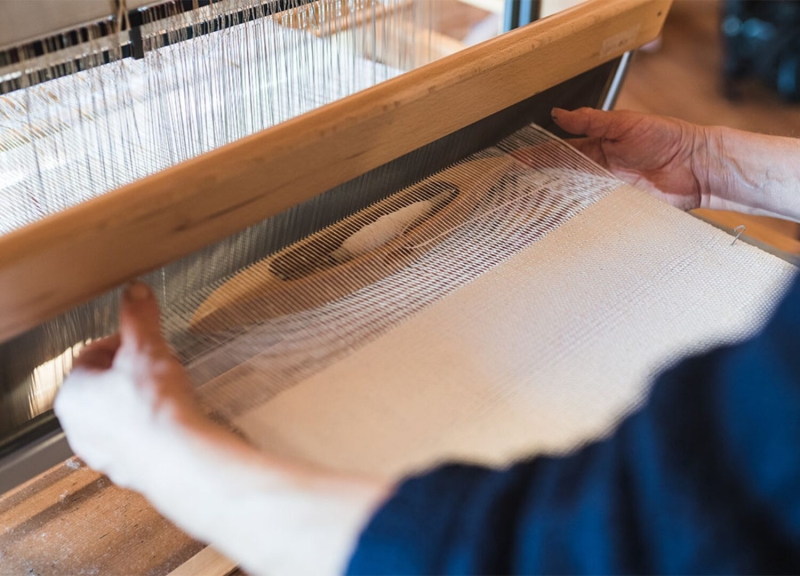
Weaving process by a local craftsman © Giacomo Podetti
What are the next steps for Ades?
Alessio Ramundo:
The next step is to launch a pilot project in Val di Peio with an initial group of artisans and young participants, producing a small collection and presenting it to the local community. At the same time, we will work on creating a broader network of collaborations with hospitality structures, territorial institutions, and workshops in the surrounding valleys, in order to root Ades firmly within the region. The goal is then to replicate the model in other Alpine valleys, creating a network of local micro-realities united by a shared approach to design, craftsmanship, and sustainability.
Looking beyond Ades, how do you imagine the future of Alpine design? Do you see it as an aesthetic, a philosophy, or perhaps a way of living that can inspire international design culture?
Alessio Ramundo:
Alpine design is a way of creating that is rooted in the land, in natural materials, in slower rhythms, and in the value of relationships. It is an invitation to reinterpret what already exists and to enhance local resources instead of seeking standardised global solutions. I believe this approach can also inspire international design, offering a credible alternative to mass production: more human, more sustainable, more conscious. Ades is just one element of this broader movement.
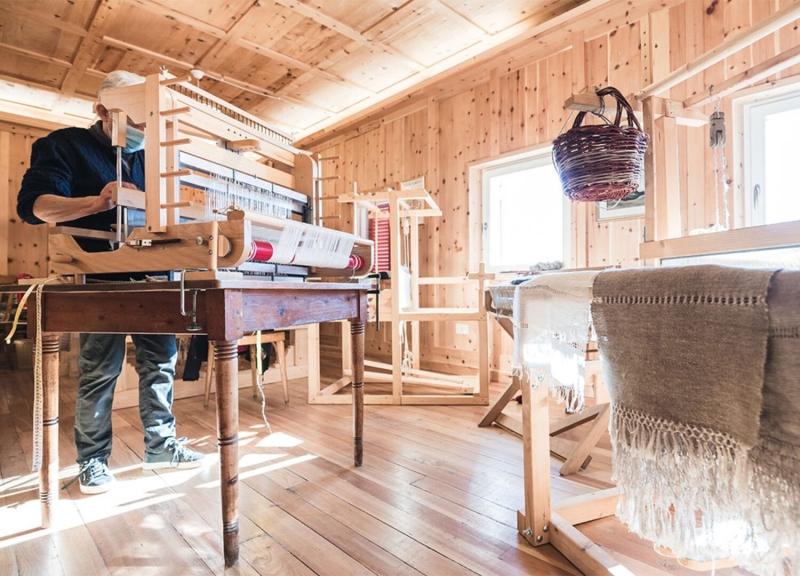
Weaving process © Giacomo Podetti
With his start-up project, Alessio Ramundo is showing us how deeply human connections with nature and community can run. It is a concrete idea to keep Alpine traditions alive, involving new generations of designers and artisans in collaborating and developing new pieces for the contemporary market. Beyond that, the production system also reflects his vision of imperfection, which becomes part of the valuable details of hand-crafted products.
Ades is clearly a good example of how contemporary design can create a local ecosystem that gives communities more opportunities to preserve their values while remaining in step with the fast-paced market we live in, and makes us ask ourselves: Should the design system slow down?