
Madeline Brooks
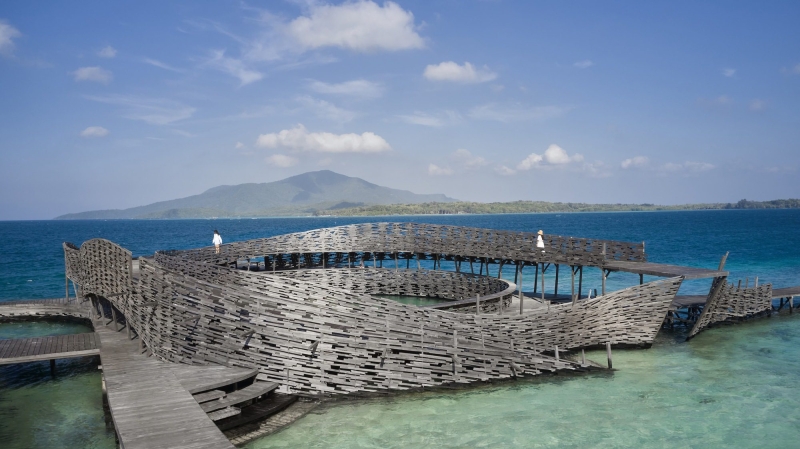
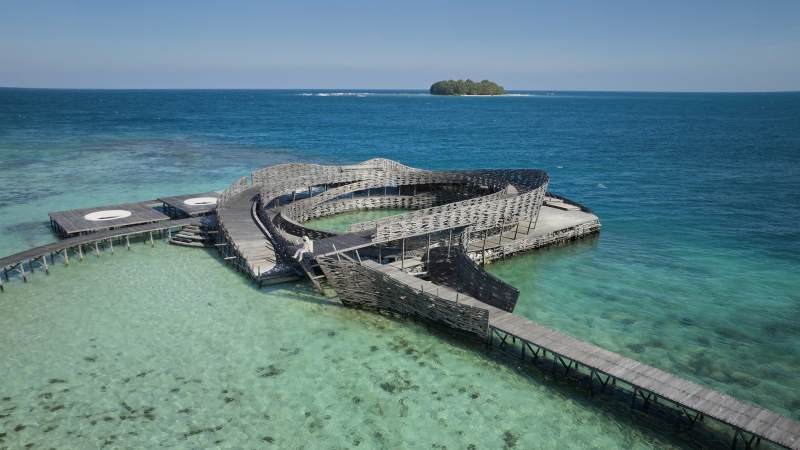
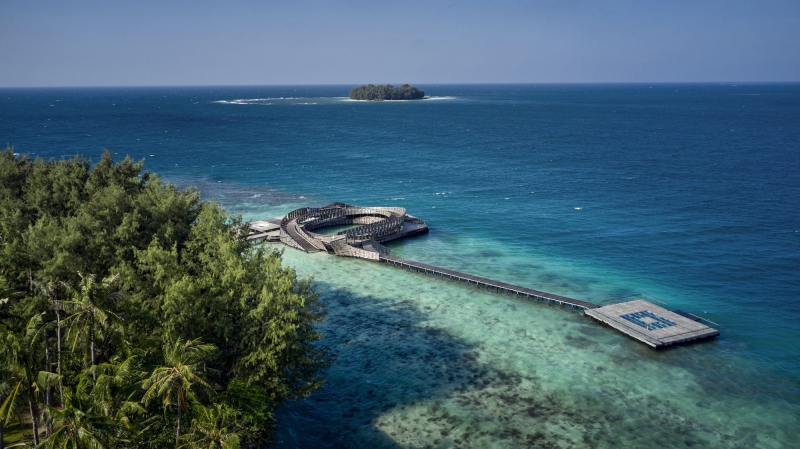
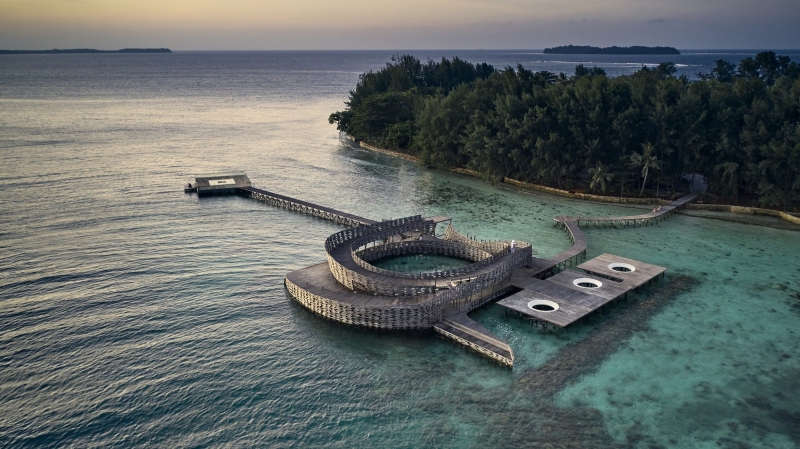
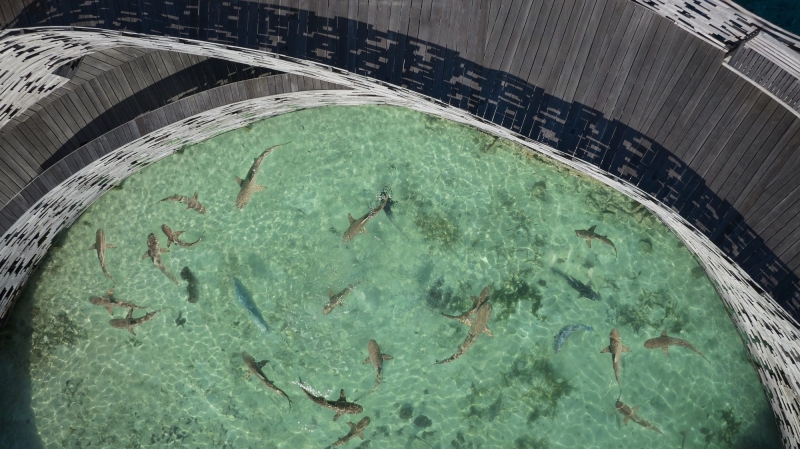
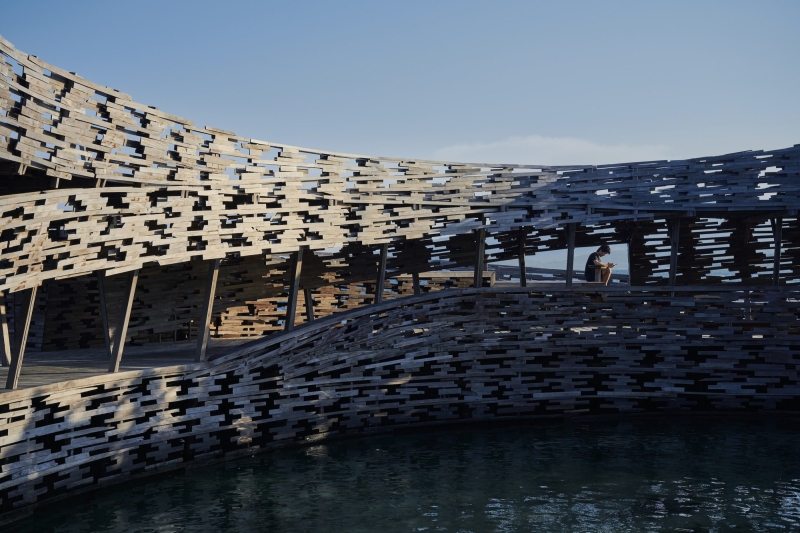
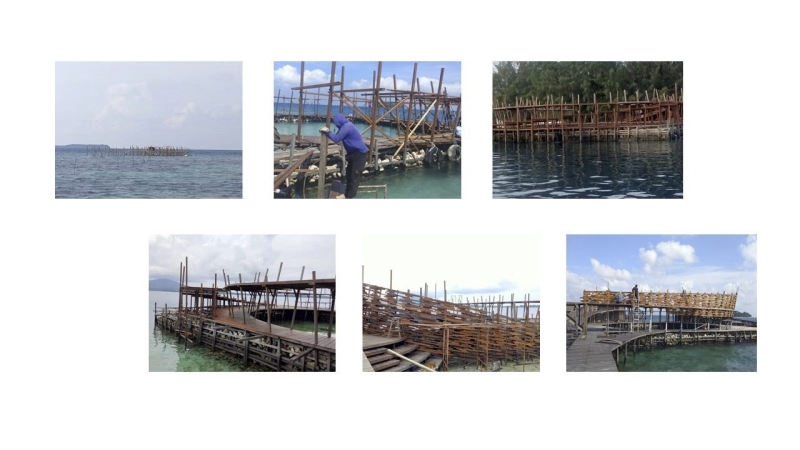
Pusaran is an experiment aimed at understanding how to construct a space in the middle of the ocean using only reclaimed ironwood in its vernacular system. Located on a private island in the Karimun Jawa archipelago, the client wanted to expand their existing shark observation pool into more tourist-friendly spaces despite the challenging site that is generally considered unsuitable for construction without any intervention to the ocean floor.
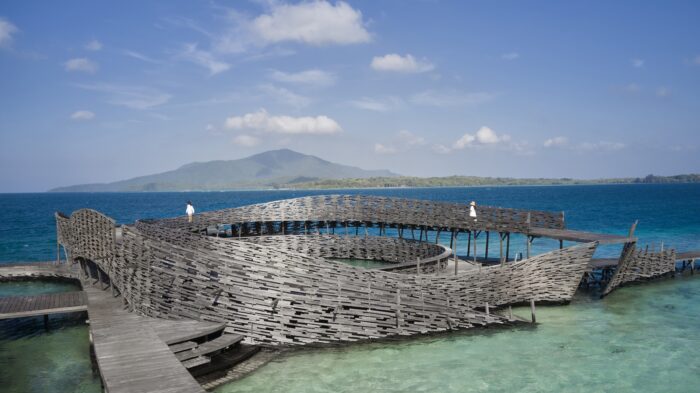
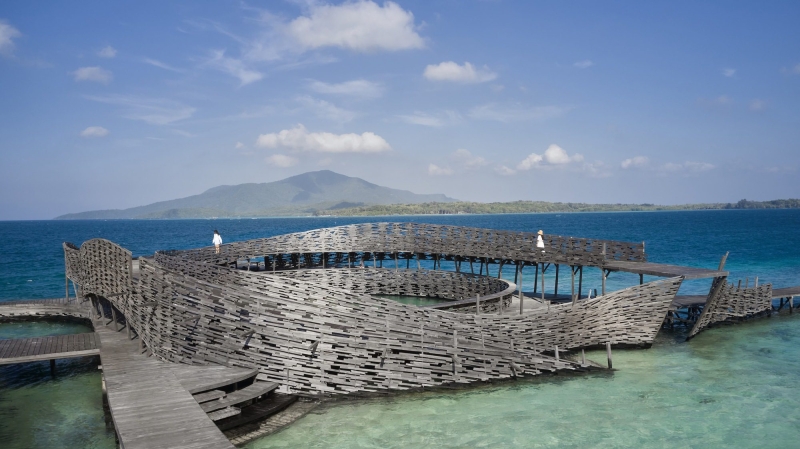
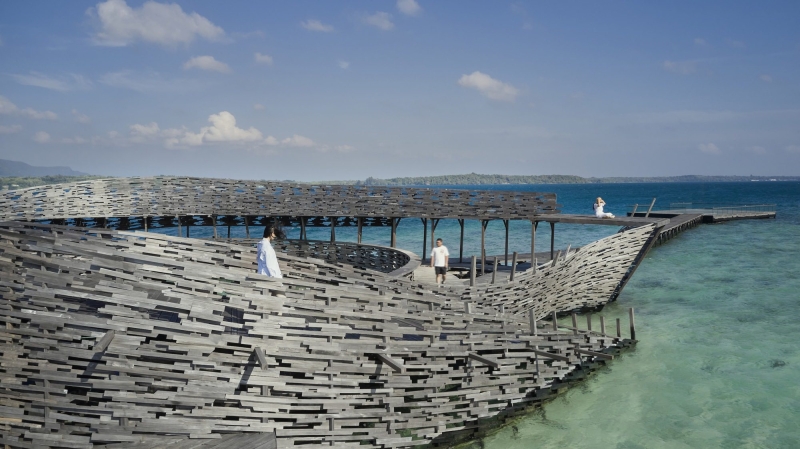
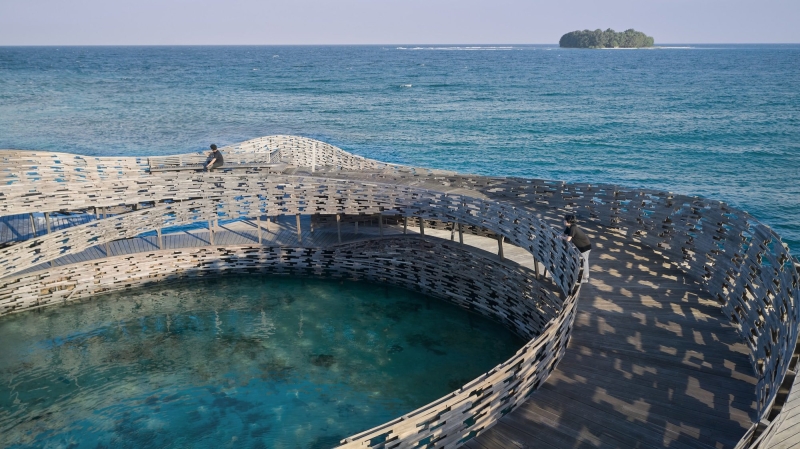
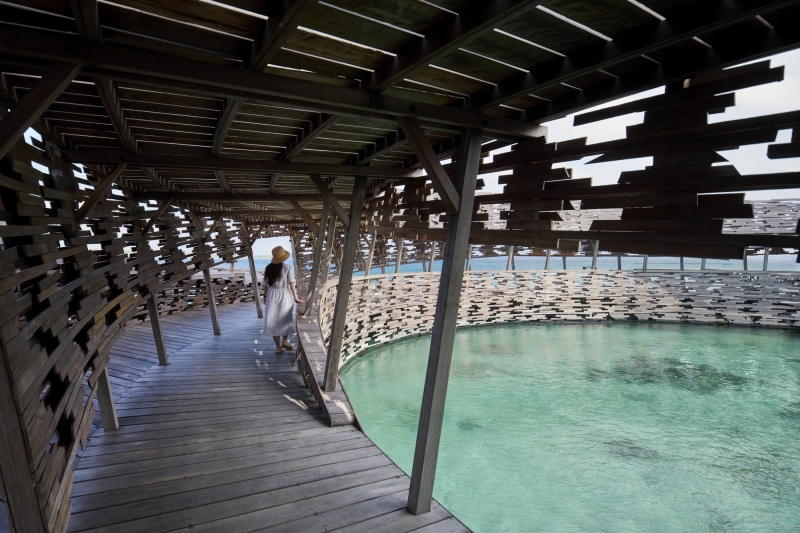
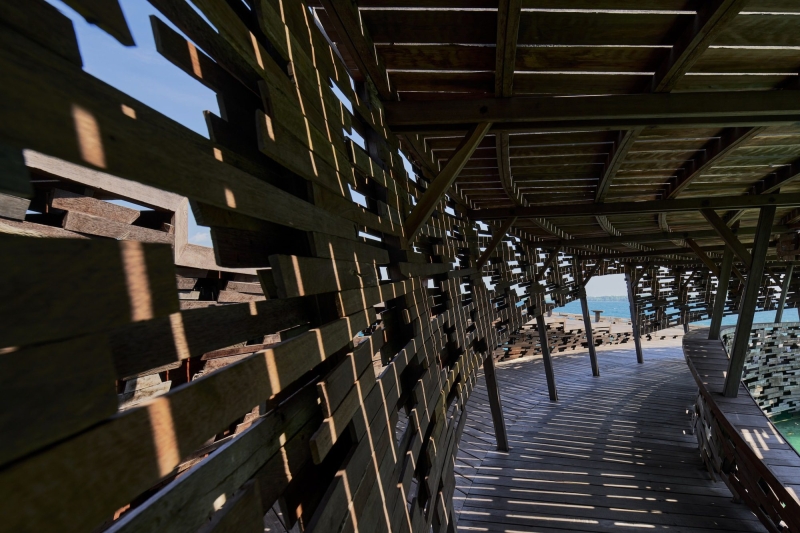
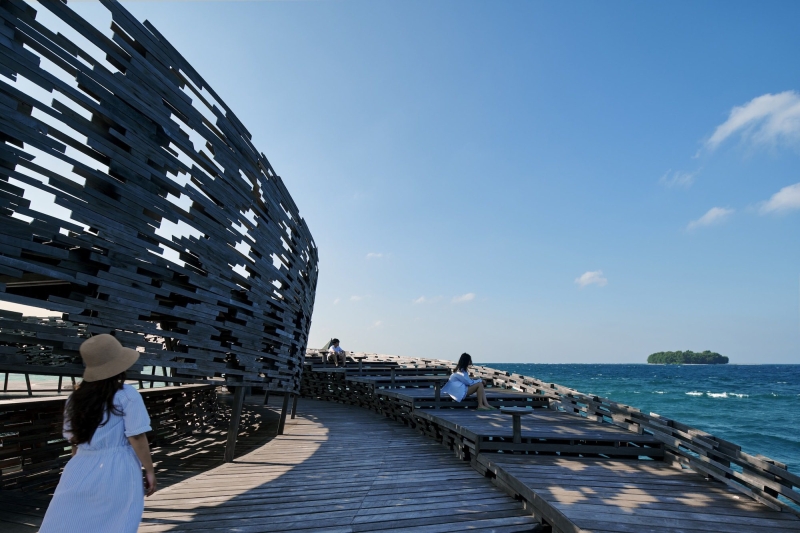
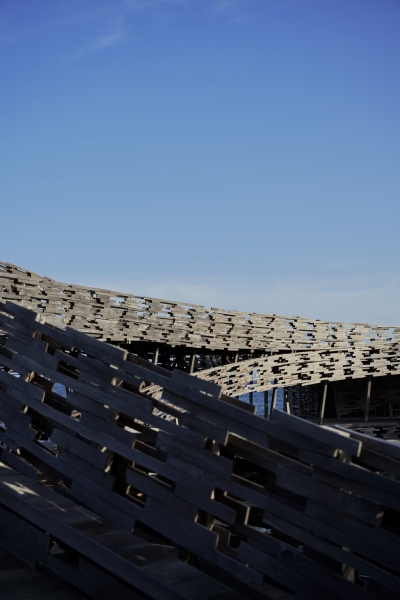
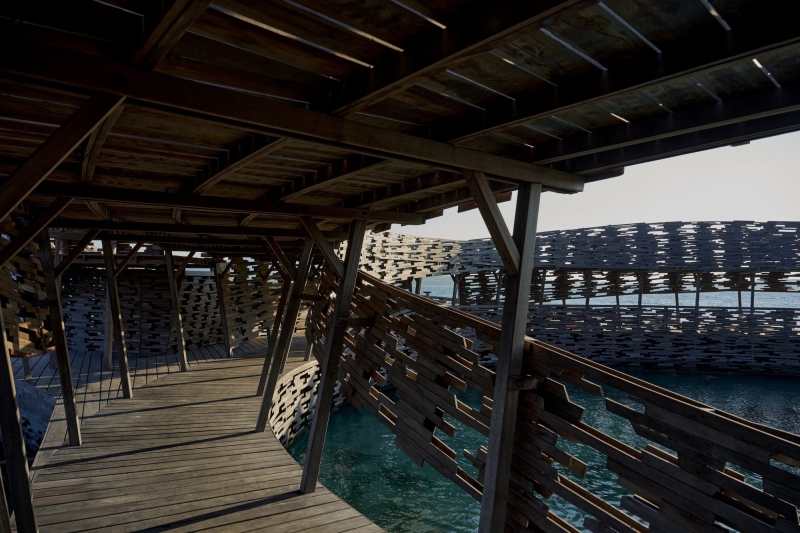
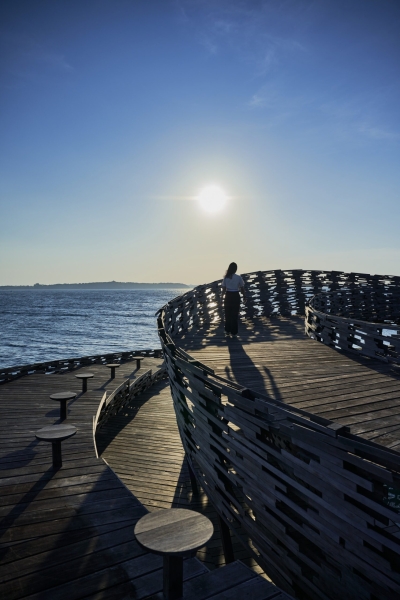
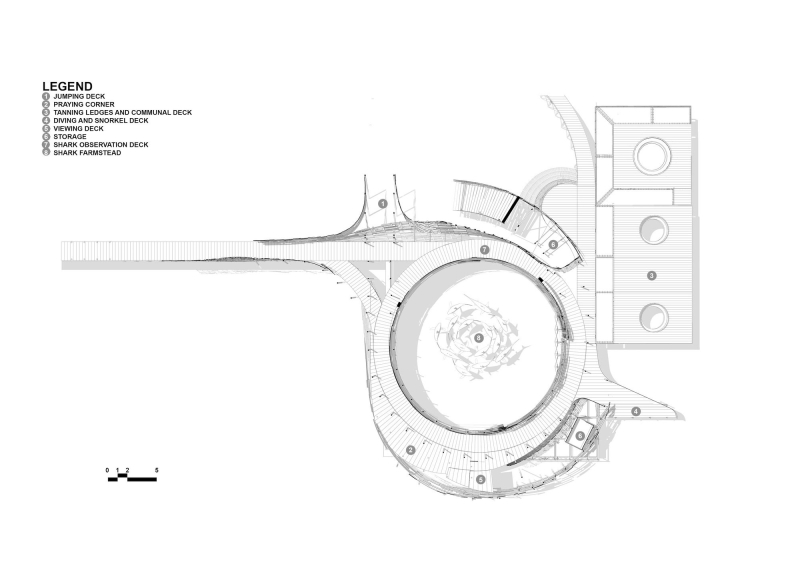
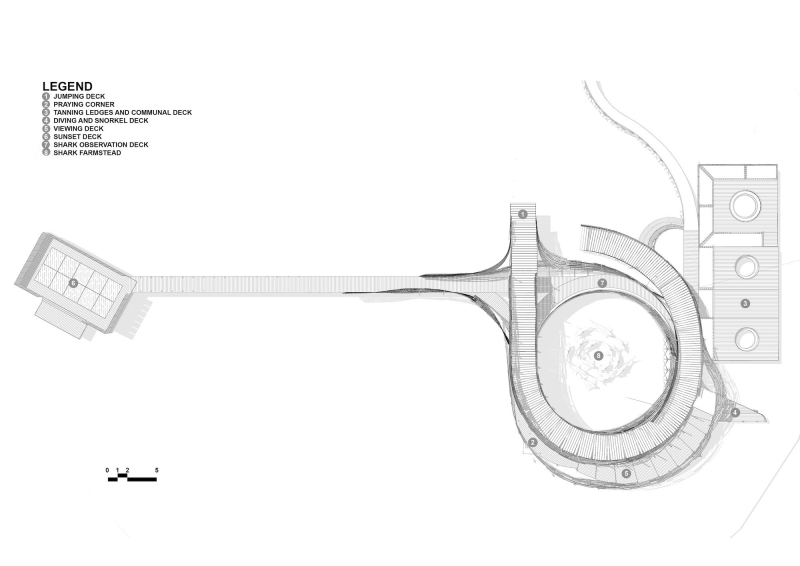
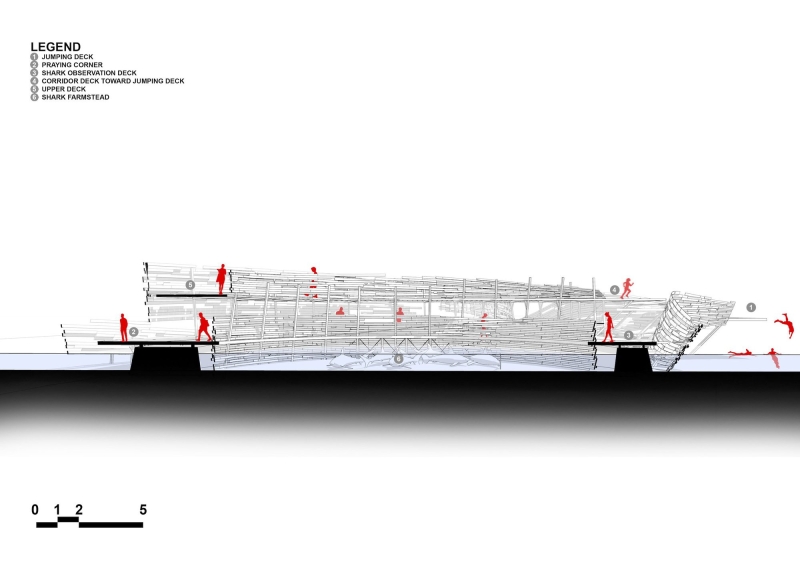
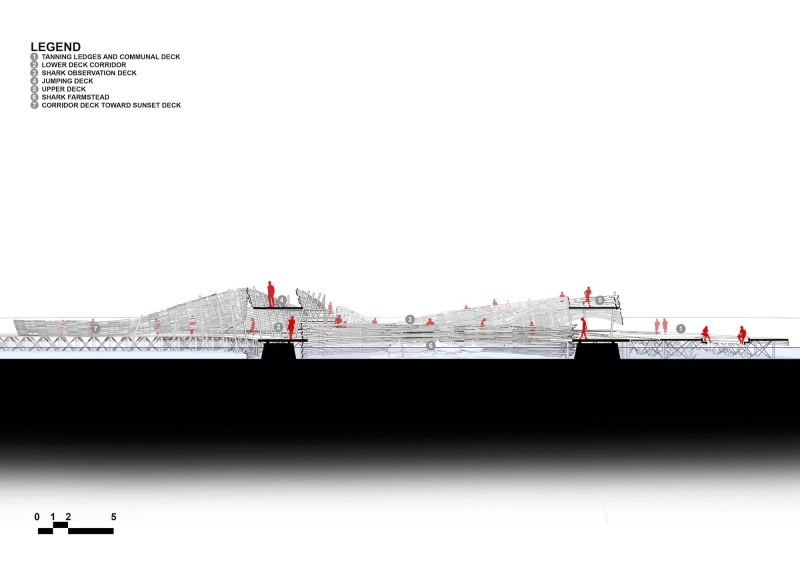
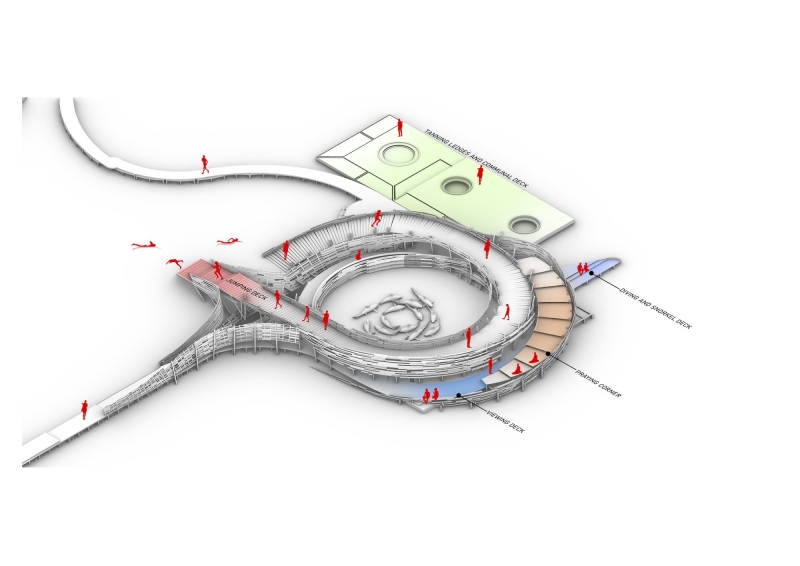
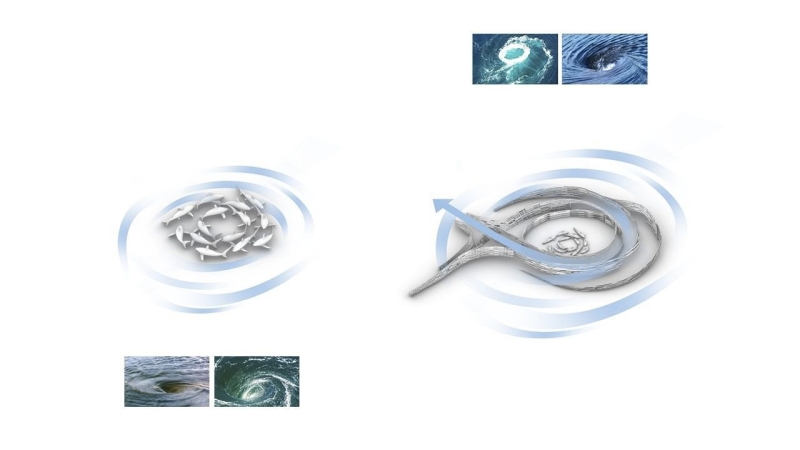
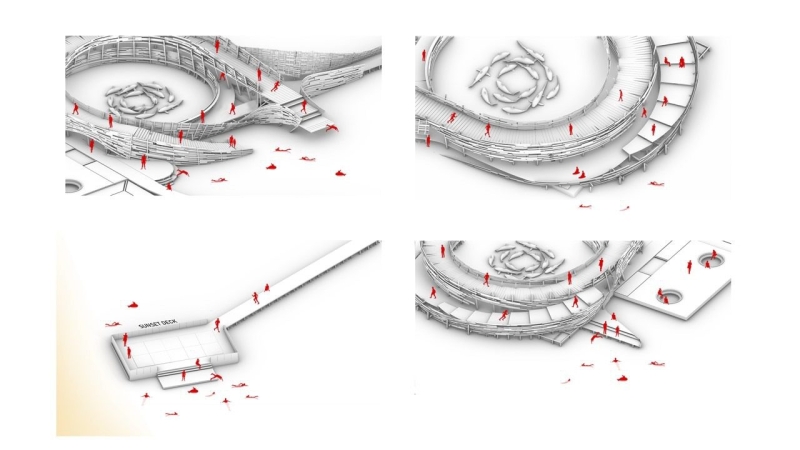
Pusaran, which means “whirlpool” in Bahasa Indonesia, consists of locally sourced reuse timber that forms multi-level activity areas while avoiding disturbance to the water biota underneath. The concept was to create an ocean observation deck that floats in the middle of the sea, offering various water activities for visitors to enjoy from morning to sunset, including diving, water sports, a tanning deck, and a praying deck. The goal was to provide entertainment and education while ensuring the preservation of the local ecosystem.
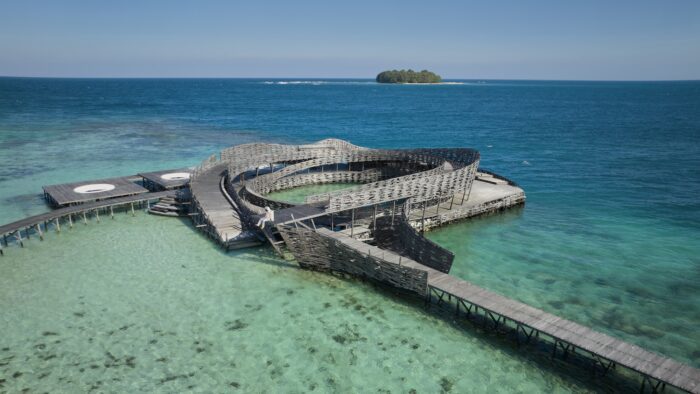
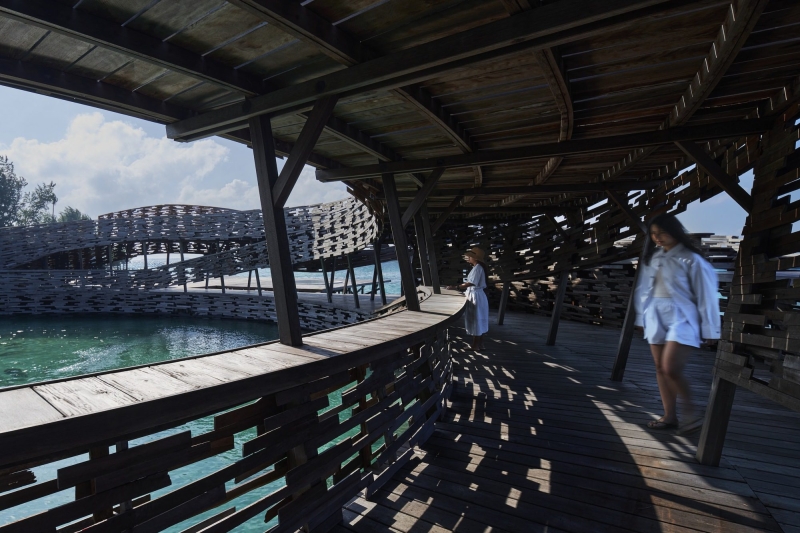
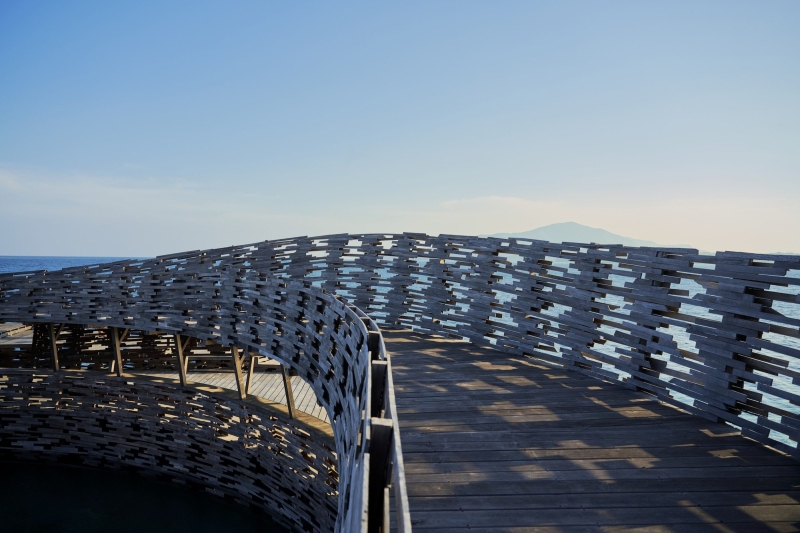
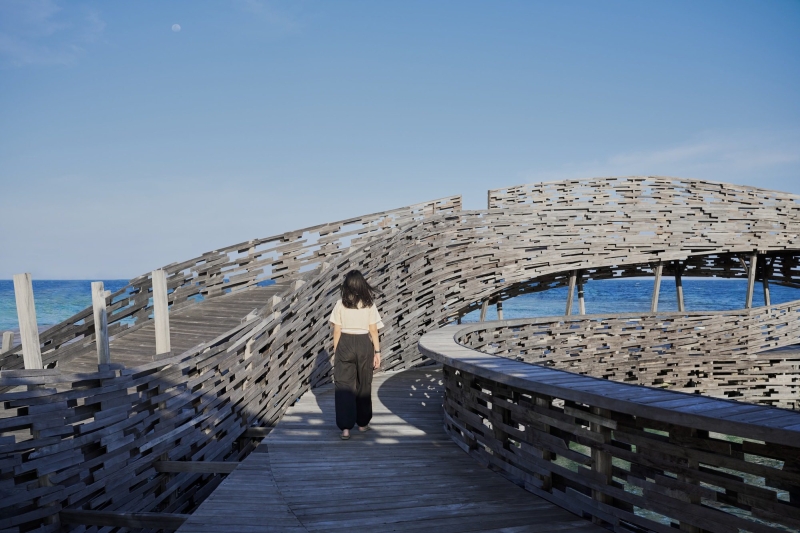
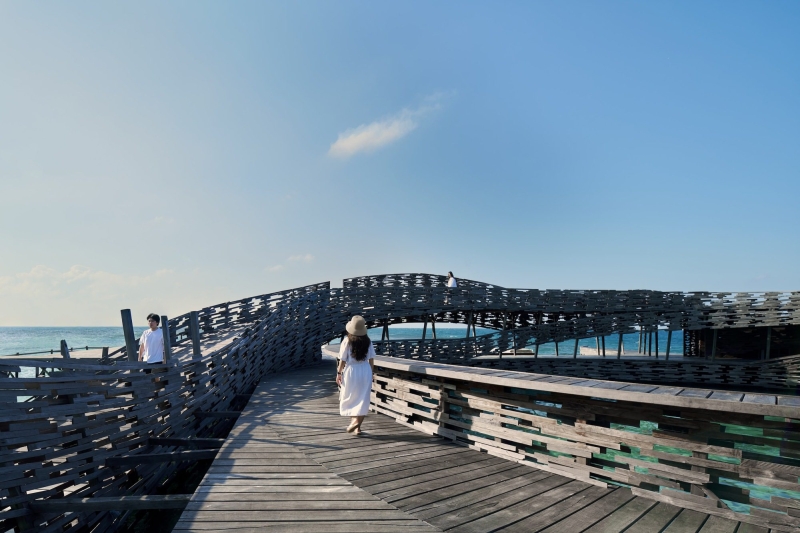
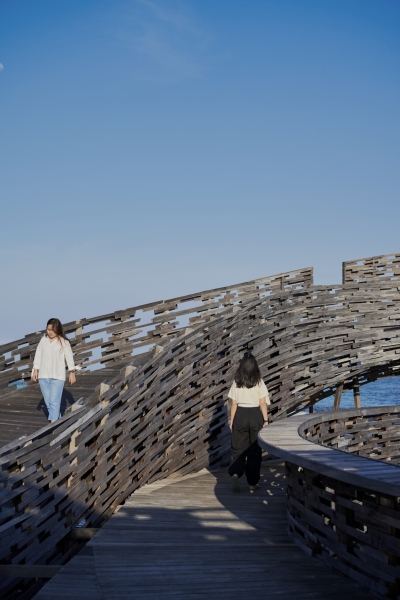
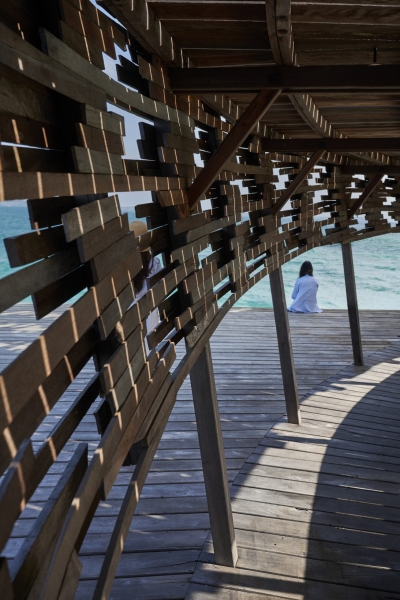
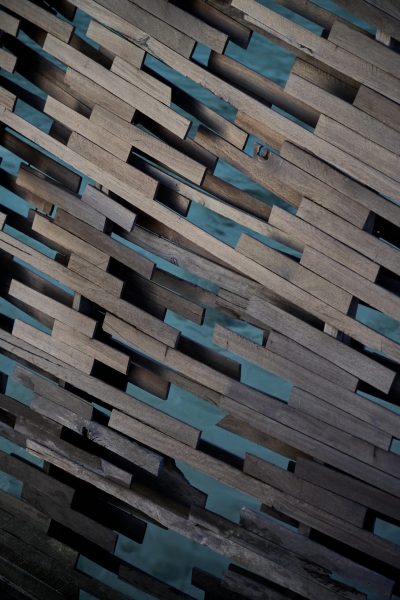
In a time when water constructions are often made of heavy, less corrosive concrete structures, with little consideration for the impact on the waterscape, Pusaran aims to achieve an ever-changing parametric space and shadow play using 100% vernacular timber construction that can last a lifetime.
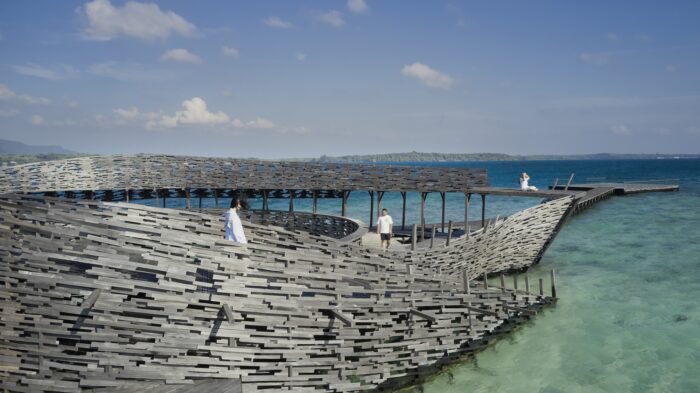
The design of Pusaran represents the waves and the centralized activities of the existing shark observation pool. The swirling ironwood structures start from the decking and extend to diagonal structures and facades, which act as windbreakers and shades for visitors. The roof even doubles as a water-jump runway. Built on the foundation of the existing shark observation pool, Pusaran combines glass floors and railings to showcase the beauty of the corals planted and grown by visitors and the owner. With hidden storage spaces in between, Pusaran serves as an educational deck for observing the workings of the ocean, winds, and natural biota in the open waters of Karimun Jawa.
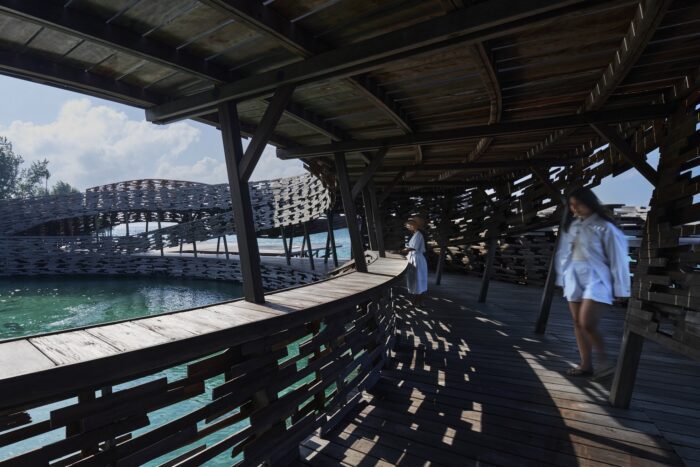
Considering the Muslim faith of the majority of Karimun Jawa’s inhabitants, Pusaran includes a separate praying deck facing Kabaa. This design feature creates a new realm of spiritual public space that connects deeply with nature and floats in the middle of the ocean.
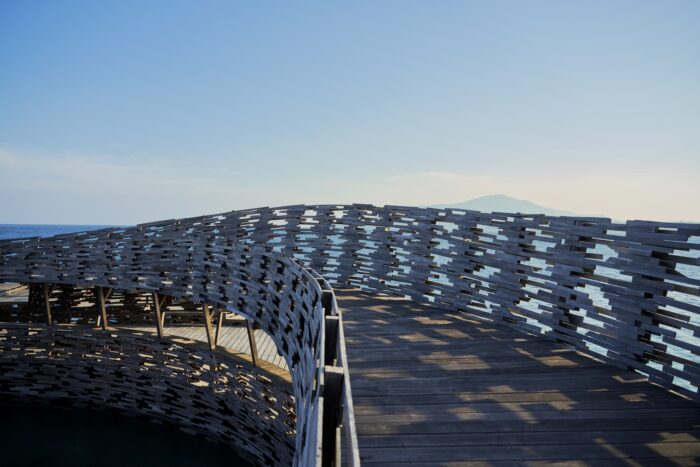
The idea behind Pusaran is to allow the natural ecosystem of existing corals (diving spots) and newly planted corals to coexist with various water activities, providing entertainment and education while maintaining visitor comfort. Pusaran is part of the RAD+ar prototype that aims to decentralize more sustainable construction practices throughout Indonesia. Designed with an open layout and using a single reclaimed material, it serves as a demonstration of how simple construction can be a sustainable asset, both entertaining and educating tourists in Karimun Jawa.
Project Info
Architects: RAD+ar (Research Artistic Design + architecture)
Area: 300 m²
Year: 2024
Country: Indonesia
Photographs: William Sutanto
Lead Architect: Antonius Richard Rusli
Architectural Designers: Junovan Muhammad, Dimas Rafidhiya Nugraha, Auliyana Khasana
Tags: 2024IndonesiaRAD+ar (Research Artistic Design + architecture)William Sutanto

Madeline Brooks
Madeline Brooks is a Projects Editor at Arch2O, where she has been shaping and refining architectural content since March 2024. With over a decade of experience in editorial work, she has curated, revised, and published an array of projects covering architecture, urbanism, and public space design. A graduate of the Harvard University Graduate School of Design, Madeline brings a strong academic foundation and a discerning editorial eye to each piece she oversees. Since joining Arch2O, she has played a pivotal role in shaping the platform’s editorial direction, with a focus on sustainability, social relevance, and cutting-edge design. Madeline excels at translating complex architectural ideas into clear, engaging stories that resonate with both industry professionals and general readers. She works closely with architects, designers, and global contributors to ensure every project is presented with clarity, depth, and compelling visual narrative. Her editorial leadership continues to elevate Arch2O’s role in global architectural dialogue.