Contents
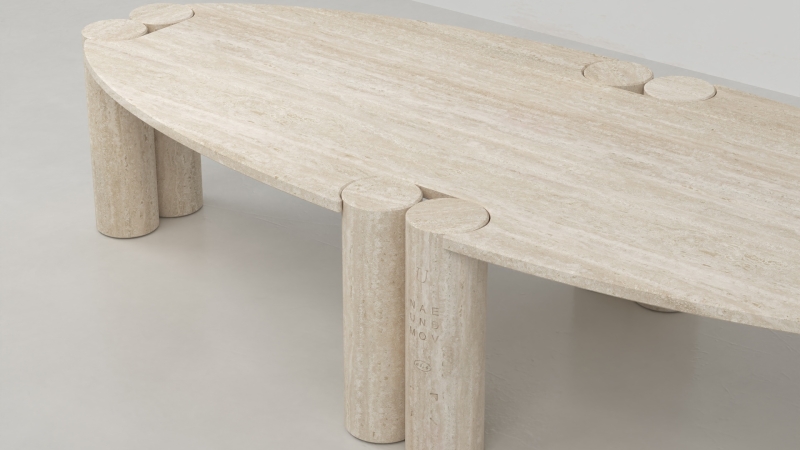
- 1 Suspended between past and present, the collection reflects Næssi Studio’s approach to design as a field of possibilities. Developed with Movimento Gallery, the project uses fragmentation and material neutrality to challenge fixed notions of function, authorship, and the idea of a closed collection.
- 2 Gallery
- 3 UNDATED originated as a research project on temporal decontextualisation. Could you explain this approach in more detail? Where did you begin, and what were you interested in exploring?
- 4 The fragment is central to this collection. It’s not just a formal device, but it seems to function as a true design method. How do you work with fragmentation, and why is it so important to you?
- 5 In UNDATED, the relationship between form and function seems inverted compared to what one might expect from design. How did you manage this balance? Was there ever a moment when you considered sacrificing form to make the objects more immediate?
- 6 White travertine is a very deliberate choice. It’s a material loaded with history, especially in a Roman context, yet you have “emptied” it. Why this decision, and how does it connect to the concept of the collection?
- 7 The objects in UNDATED have a very strong presence. How do you imagine them inhabiting a space?
- 8 The collaboration with Movimento seems to have developed slowly, without haste. How important was this approach in shaping UNDATED?
- 9 UNDATED is therefore explicitly an open collection. But what does that mean in concrete terms? Are new variations already in development, or is it more of a guiding principle than a promise of growth?
- 10 In UNDATED, you supported a line of research that questions function, typology, and even the very idea of a collection. Does this make you reconsider your role as gallerists, including your curatorial responsibilities?
- 11 The collection was conceived as open-ended, meant to evolve over time. This is an unusual choice for a gallery. What convinced you to embrace this instability?
by Ludovica Proietti
Is it possible to design within the interstices of history? To work through fragmentation, in search of the intrinsic history of things, where process matters more than the product itself? To reread connections and identities, tying what is part of us to everyday life? According to Næssi Studio – the Rome-based creative duo formed by Eleonora Carbone and Alessandro D’Angeli, who since 2020 have been rearticulating an idea of contemporary design rooted in place yet capable of transporting us into an entirely new dimension – the answer is unequivocally yes.
Today, their research and design practice extend beyond industrial design to include collaborations with galleries, fairs, and experimental spaces. Their latest project – an expansion of UNDATED, developed with Movimento Gallery, a concept space between Milan and London representing a curated selection of independent artists and designers – reflects on the value of evolution and change, and on decontextualisation as a way to bring the language of the past – from historical references to allusions to great masters – into everyday life.
Gallery
Open full width
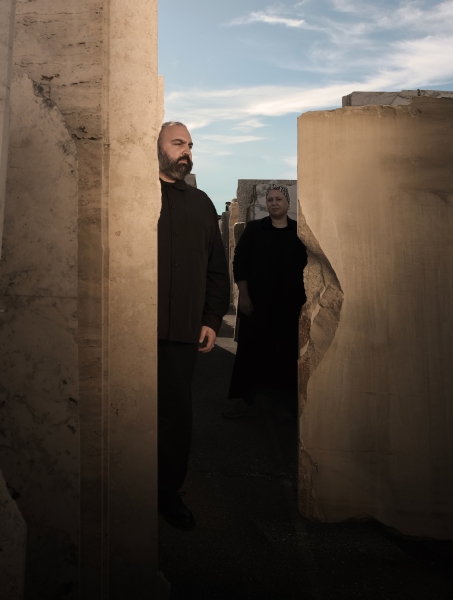
Portrait of Næssi Studio © Movimento Gallery
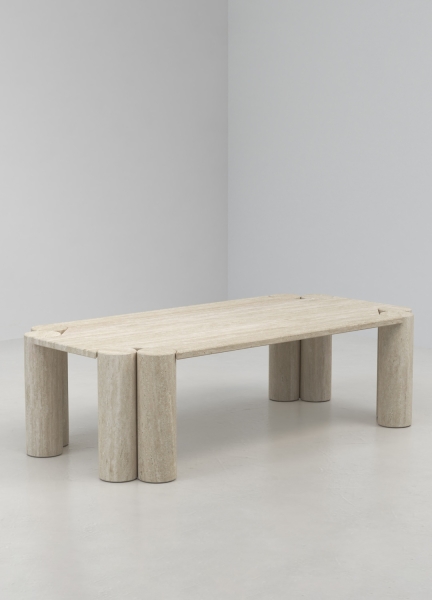
UNDATED by Næssi Studio © Movimento Gallery
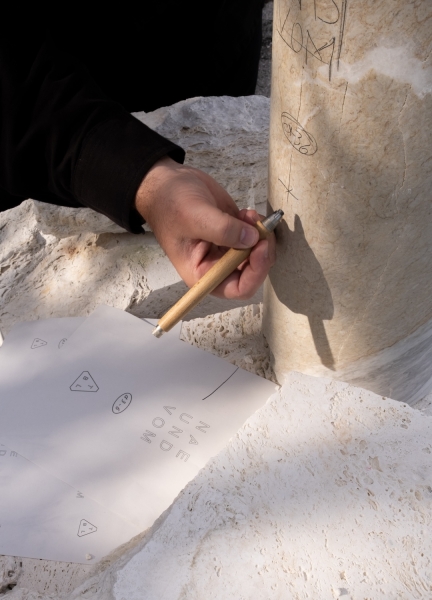
Work in progress UNDATED by Næssi Studio © Movimento Gallery
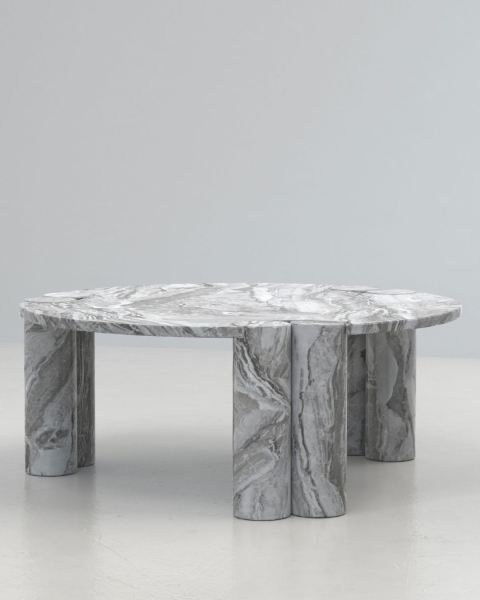
UNDATED by Næssi Studio © Movimento Gallery
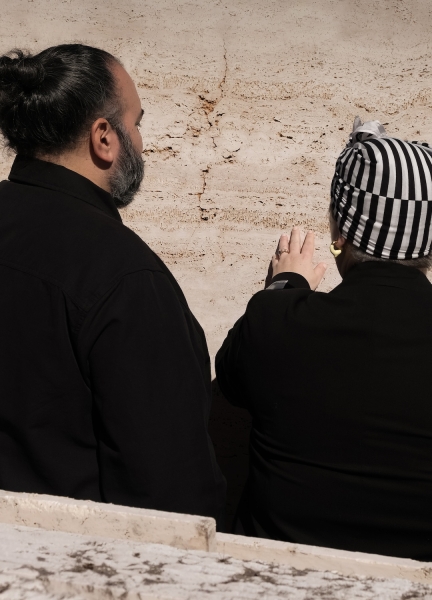
Work in progress UNDATED by Næssi Studio © Movimento Gallery
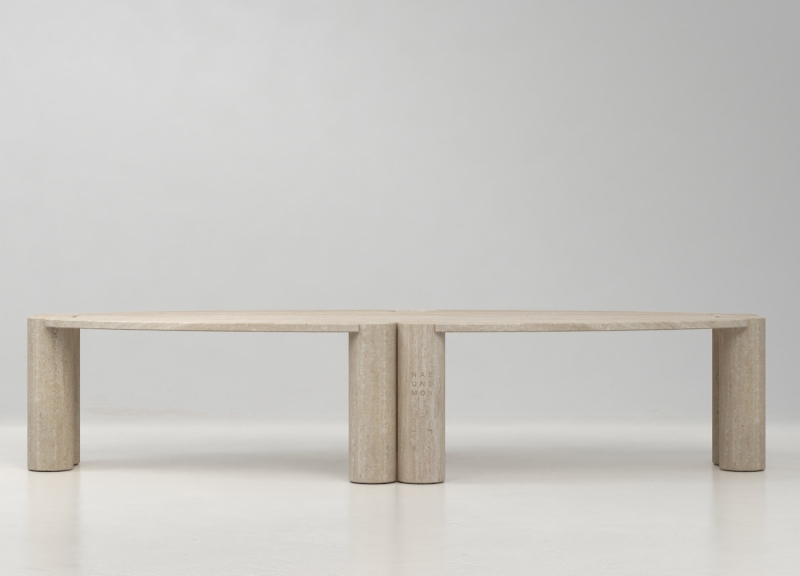
UNDATED by Næssi Studio © Movimento Gallery
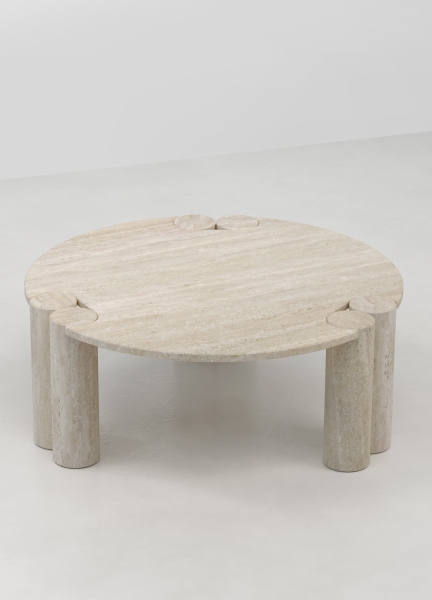
UNDATED by Næssi Studio © Movimento Gallery
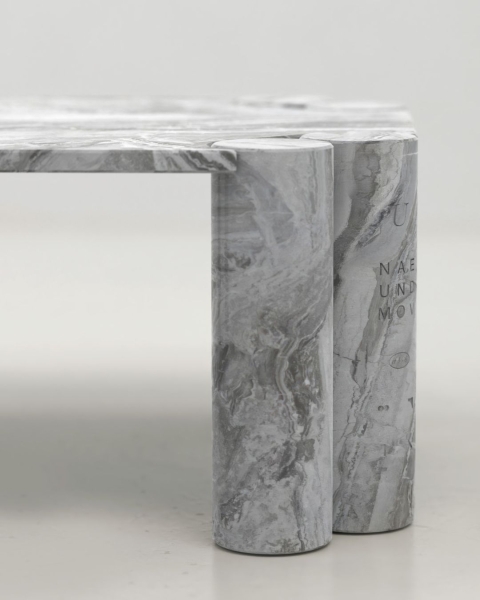
UNDATED by Næssi Studio © Movimento Gallery
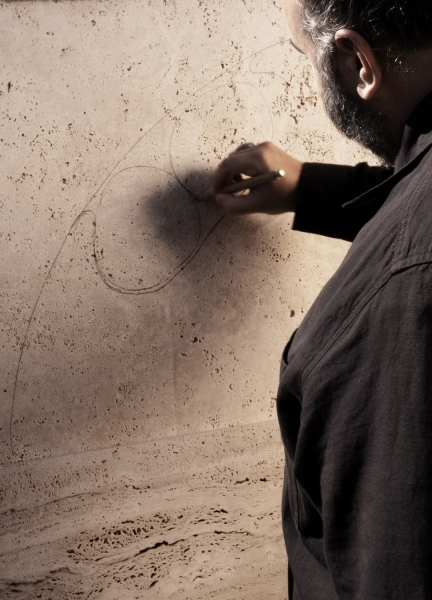
Work in progress UNDATED by Næssi Studio © Movimento Gallery
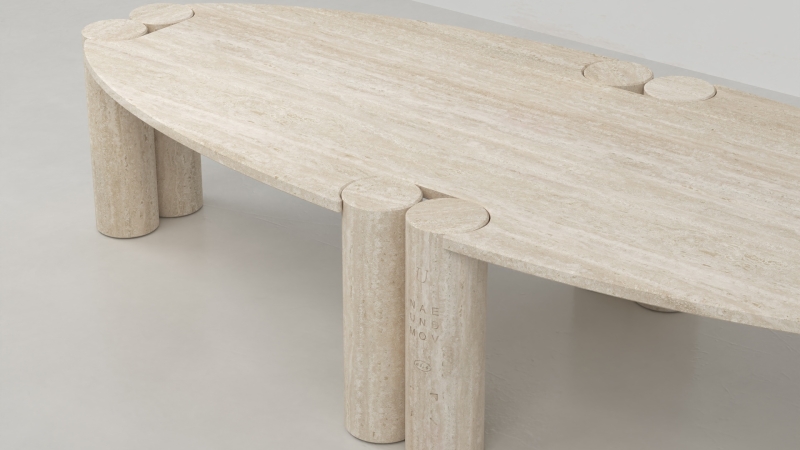
UNDATED by Næssi Studio © Movimento Gallery
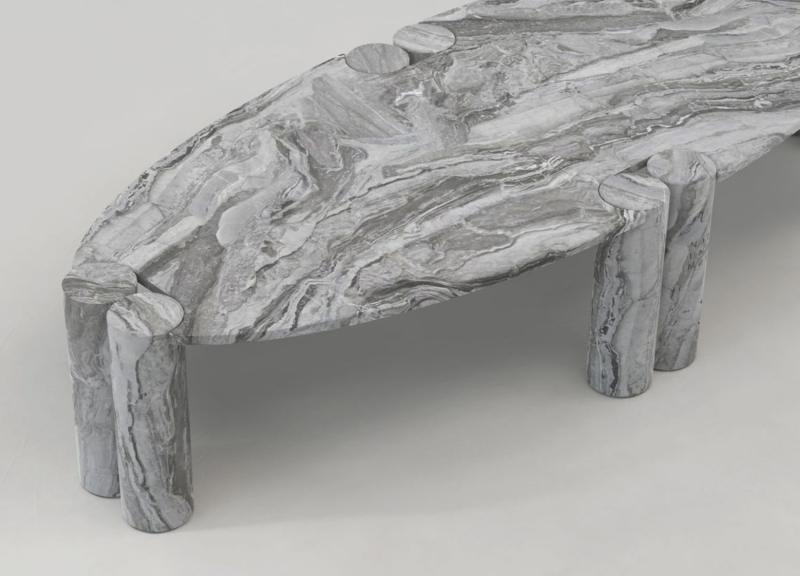
UNDATED by Næssi Studio © Movimento Gallery
Open full width
We talked with both the studio and Salvatore Morales, one of Movimento’s co-founders, to gain a deeper understanding of the forces at play and the underlying concept, and to define what a shared approach to research and design could be, grounded in common values, concepts, and ideas.
UNDATED originated as a research project on temporal decontextualisation. Could you explain this approach in more detail? Where did you begin, and what were you interested in exploring?
Næssi Studio:
UNDATED began as an investigation into temporal decontextualisation. The name refers to museum pieces without a certain date: objects suspended in time, belonging to no specific era but traversing multiple historical moments. We wanted to move away from formal clichés associated with ancient Rome and work instead on recurring archetypes, independent of context. Rome is present, but never literally. We deliberately avoided using “roman” travertine, arches, or columns as direct quotations.
This approach underpins all our work. We never start from the finished object, but from form as a field of possibilities. The output is a means, not an end.
The fragment is central to this collection. It’s not just a formal device, but it seems to function as a true design method. How do you work with fragmentation, and why is it so important to you?
Næssi Studio:
The fragment is the starting point. We began with a seat that grafts the section of a column, revealing its internal void. From there, the project expanded. The fragment is not a ruin; it’s narrative potential. A single cut is enough for a form to take on a different meaning. Each piece in the collection operates on this principle: isolating an archetypal element, sectioning it, and reinterpreting it.
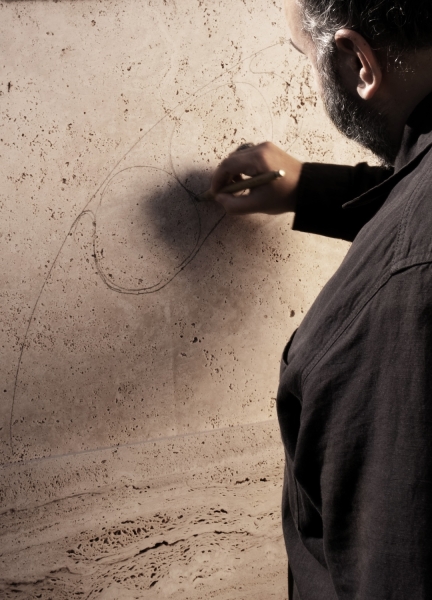
Work in progress on UNDATED by Næssi Studio © Movimento Gallery
In UNDATED, the relationship between form and function seems inverted compared to what one might expect from design. How did you manage this balance? Was there ever a moment when you considered sacrificing form to make the objects more immediate?
Næssi Studio:
In this case, function follows form. The initial seating pieces were highly sculptural; working with Movimento, we made tables immediately recognisable without losing complexity. The tables feature elements that may seem superfluous: extra legs, rotations, asymmetries. These are not remnants, but narrative surpluses that alter the perception of the object. In the oval table, for instance, there is no head of the table – every position holds the same hierarchy.
White travertine is a very deliberate choice. It’s a material loaded with history, especially in a Roman context, yet you have “emptied” it. Why this decision, and how does it connect to the concept of the collection?
Næssi Studio:
It’s a “deodorised” travertine: it loses its warm, decorative quality and becomes almost neutral. It’s a Roman material stripped of its rhetoric. This allows us to work with pure form, without the material imposing a predefined reading. White travertine sheds its warmth but gains a neutrality that leaves space for formal narration.
The objects in UNDATED have a very strong presence. How do you imagine them inhabiting a space?
Næssi Studio:
These are pieces that demand attention. They’re not designed to blend in or simply complete an interior, but to engage in a direct dialogue with space. They work best in contexts where the object can breathe: galleries, collective spaces, homes where design is understood as a language. Each piece has a sculptural presence while remaining functional. The collection works through accumulation: each object can stand alone, but together they construct a more articulated language.
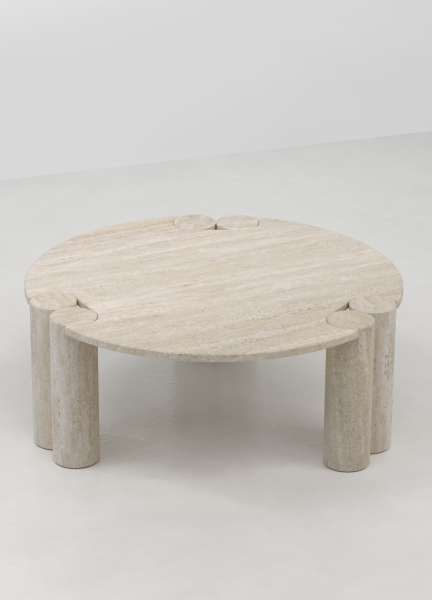
UNDATED by Næssi Studio © Movimento Gallery
The collaboration with Movimento seems to have developed slowly, without haste. How important was this approach in shaping UNDATED?
Næssi Studio:
Very important. We met several times at the beginning without a project on the table. When the idea matured on both sides, starting felt natural. There was great mutual freedom, but also constant dialogue. Movimento gave us the opportunity to develop an open-ended collection, intended to evolve. It’s not a closed catalogue, but a working method: stratification, fragmentation, form as a generator of meaning.
We don’t seek collaborations to execute a predefined design, but to build a process together. The same approach guided our work with Devoto Design on Folia, a research project that began with wood, moved into ceramics, and is still unfolding. There, we worked through compression rather than subtraction, creating an aesthetic semi-finished product capable of generating multiple objects without waste. In both cases, the output is not the goal: it’s a tool to materialise an idea, to question production processes, and to open up conversations.
UNDATED is therefore explicitly an open collection. But what does that mean in concrete terms? Are new variations already in development, or is it more of a guiding principle than a promise of growth?
Næssi Studio:
Openness means freedom, variation, evolution. A collection in which every piece can be reinterpreted, every element can germinate and bloom into different solutions. More than a series of finished objects, it’s a field of possibilities. We didn’t close the collection into a definitive form because we’re not interested in merely expanding a catalogue of shapes. For us, it’s the process – continuously generating meaning – that remains the true core of design research.
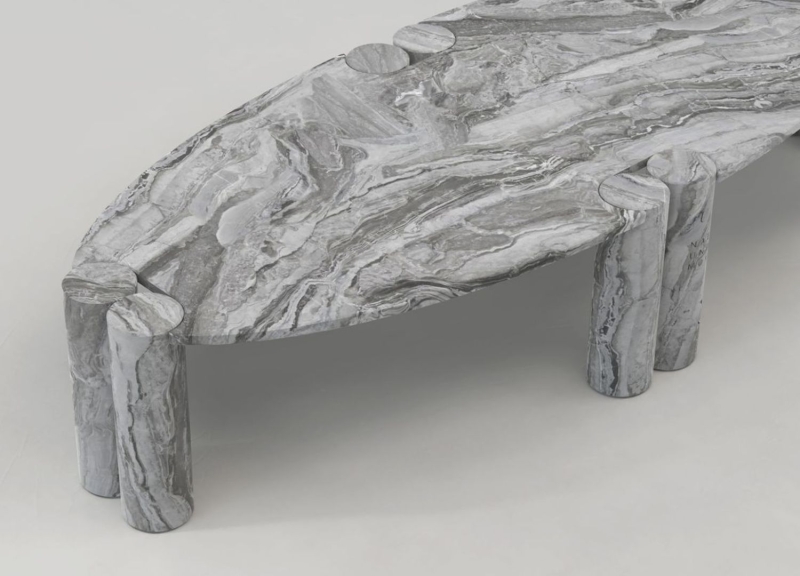
UNDATED by Næssi Studio © Movimento Gallery
But since UNDATED has involved the gallery from the outset – and will continue to do so, given the project’s intrinsic openness – how has Movimento Gallery responded to this approach?
In UNDATED, you supported a line of research that questions function, typology, and even the very idea of a collection. Does this make you reconsider your role as gallerists, including your curatorial responsibilities?
Salvatore Morales, co-founder of Movimento Gallery:
Today, being a gallerist in the field of collectible design means going beyond the mere selection of objects and assuming a curatorial and critical responsibility. Projects like UNDATED confirm this vision: the gallery becomes a space for thought, where design is not only bound to use, but acts as a witness of time, merging aesthetics of memory with radical contemporaneity.
Supporting this kind of research means privileging the creative process over the finished object. In this sense, UNDATED presents itself not as a product catalogue, but as an open dialogue between material and design gesture. Here, practical function – while still present – is temporarily suspended to encourage a more contemplative mode of engagement, transforming a series of tables into a flow of relationships and reflections on time.
The collection was conceived as open-ended, meant to evolve over time. This is an unusual choice for a gallery. What convinced you to embrace this instability?
Salvatore Morales, co-founder of Movimento Gallery:
What convinced us was the awareness that contemporary design can no longer afford to be static. Embracing the instability of an open collection like UNDATED was not a loss of control, but a strategic choice. We believe the value of a project lies in its ability to evolve over time, rather than being exhausted at the moment of production.
Accepting this challenge means recognising that a gallery should not function as a museum of immobile objects, but as an incubator of ideas in progress. Supporting an open narrative allows us to remain relevant: we are not selling a self-contained piece, but offering the opportunity to take part in an aesthetic and design evolution that is still unfolding.