Contents
- 1 Architecture That Follows the Slope
- 2 A Quiet Palette That Lets the Form Lead
- 3 Water Set Into the Slope, Not Placed on Top
- 4 A Circular Gathering Space Shaped for Conversation
- 5 Eating Outdoors Along the Curve of the Land
- 6 Everyday Living Organised by Form
- 7 Built-In Curves That Define the Room
- 8 Private Spaces Branching From the Core
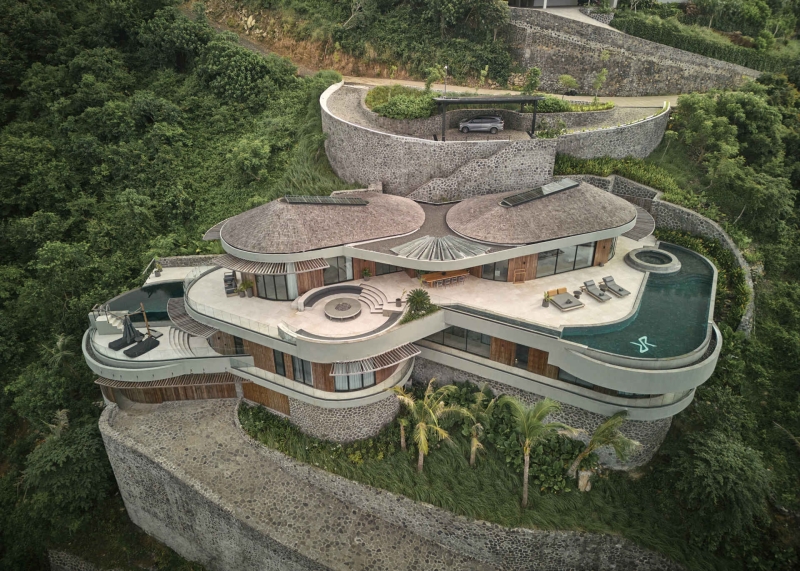
Designed by Alexis Dornier with interiors by Somewhere Concepts, Nyrenstone Estate sits on one of the steepest slopes in Tampah Hills, South Lombok, Indonesia. The house is shaped directly by its terrain, stepping down the hillside through a sequence of circular forms. Rather than imposing a single volume, the design unfolds gradually, using geometry to organise space, frame views, and guide movement across the site.
Architecture That Follows the Slope
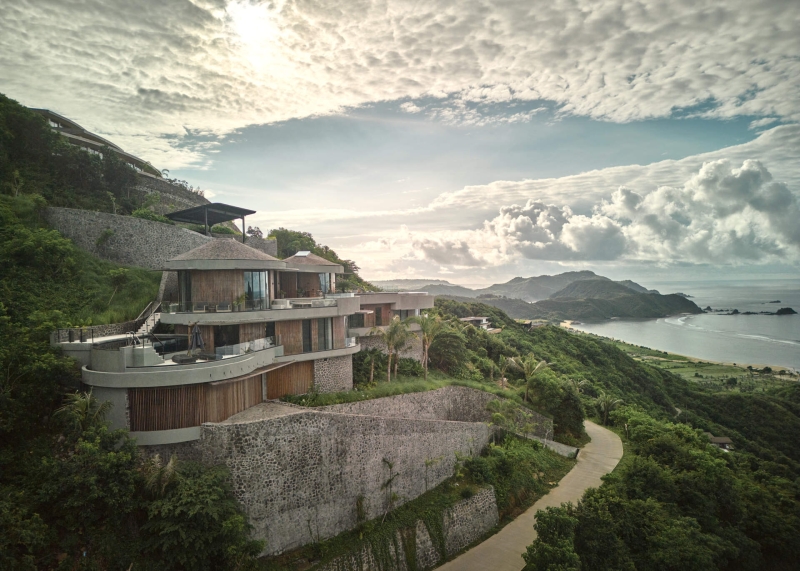
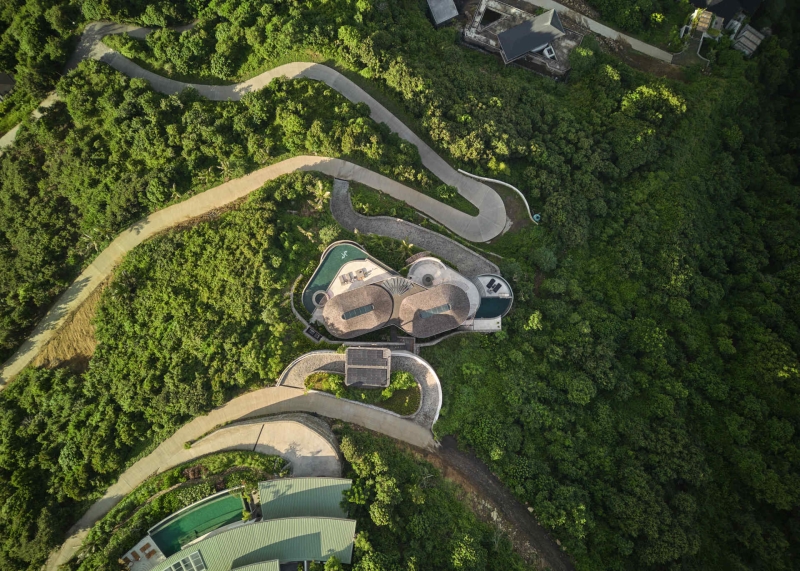
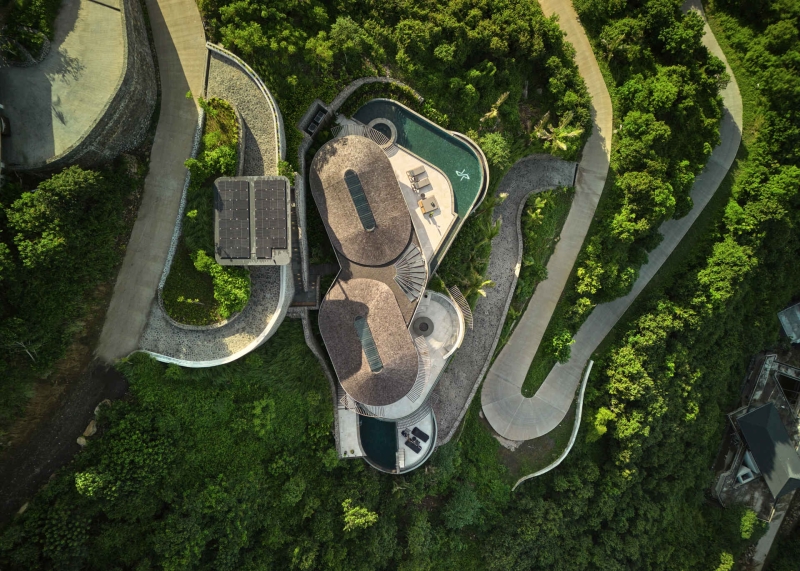
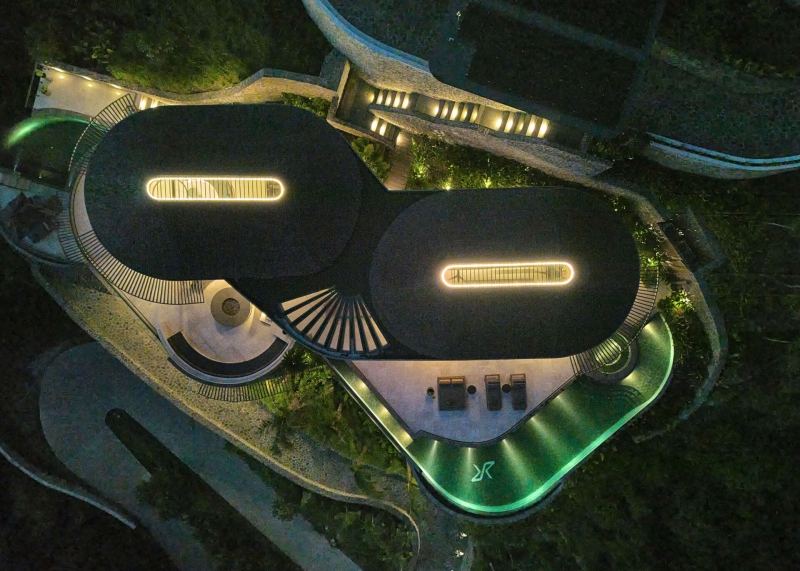
Nyrenstone Estate follows the natural fall of the land, descending across multiple levels instead of flattening the slope. Circles and tangents structure the plan, creating a layout that responds to topography, view lines, and circulation. The architecture reads as a connected series of forms rather than one object, giving the impression that the house has grown out of the hillside.
This approach allows the building to echo the curve of the coastline below, reinforcing the relationship between architecture and landscape.
A Quiet Palette That Lets the Form Lead
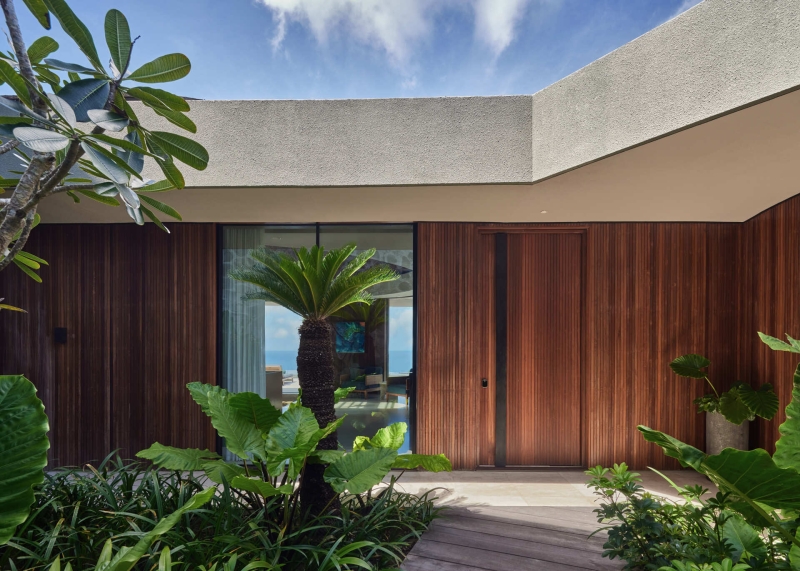
Material choices remain restrained and consistent. Warm teak ceilings, off white walls, and pale Palimanan stone floors establish a calm palette that supports the architectural logic. Rather than competing with the landscape, these materials help the structure settle into its surroundings while maintaining a clear silhouette from afar.
Water Set Into the Slope, Not Placed on Top
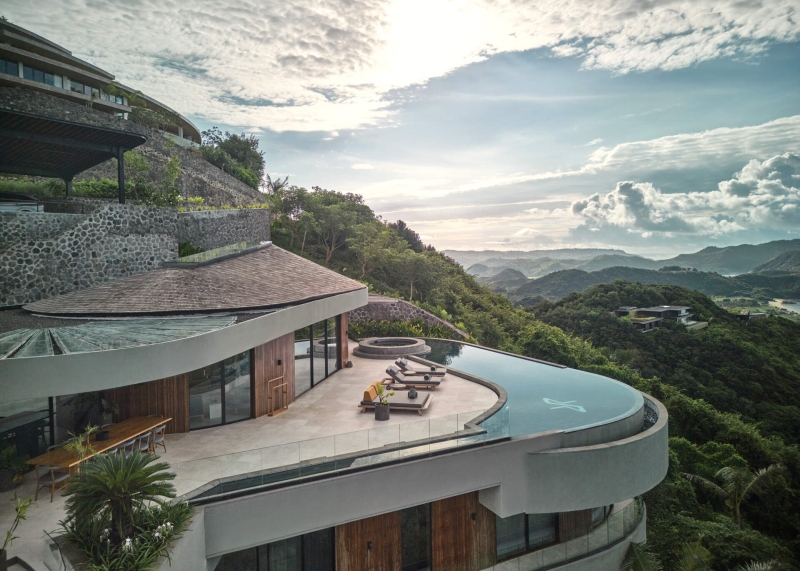
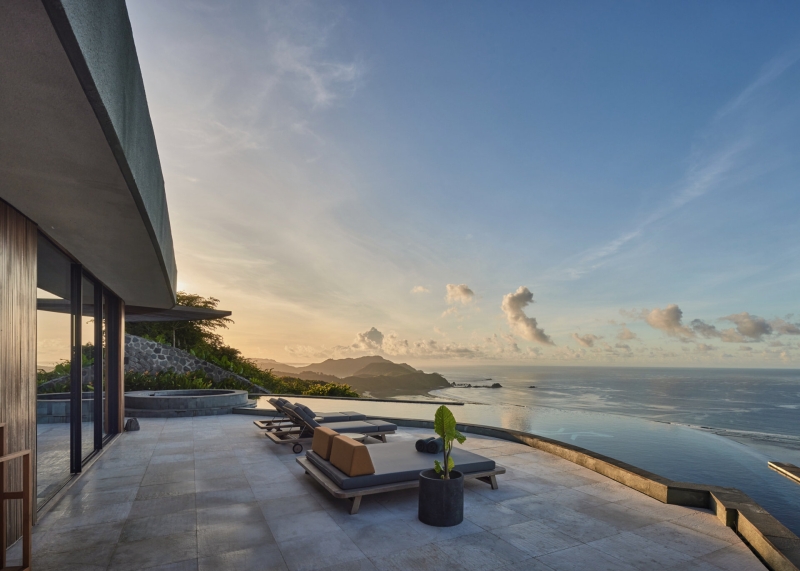
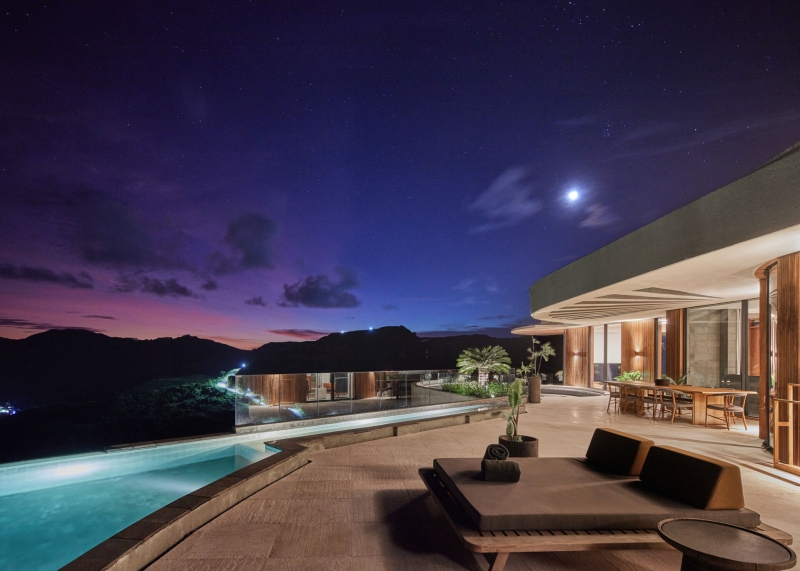
The pool sits within the descending sequence of spaces, aligned with the home’s curved geometry. Its placement follows the same logic as the architecture, responding to slope and outlook rather than acting as a separate feature. Views across the bay remain uninterrupted, reinforcing the connection between water, land, and horizon.
A Circular Gathering Space Shaped for Conversation
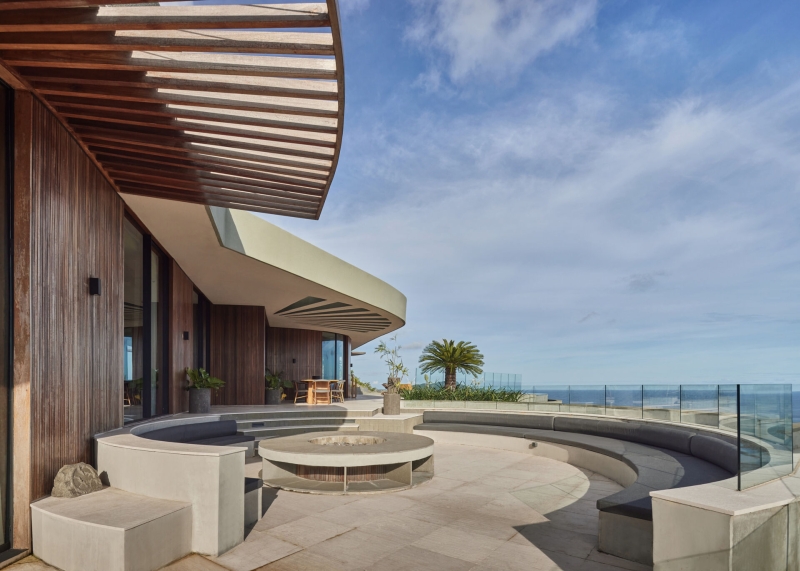
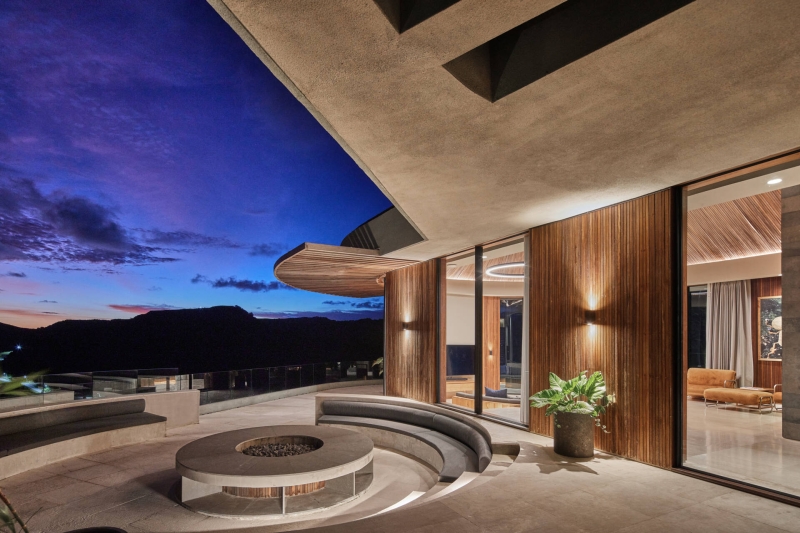
A circular fire pit continues the project’s emphasis on gathering spaces shaped by curves. Built-in seating follows the form, creating a natural place for people to come together. The geometry supports conversation and shared use, reflecting the role of circular spaces throughout the house.

Eating Outdoors Along the Curve of the Land
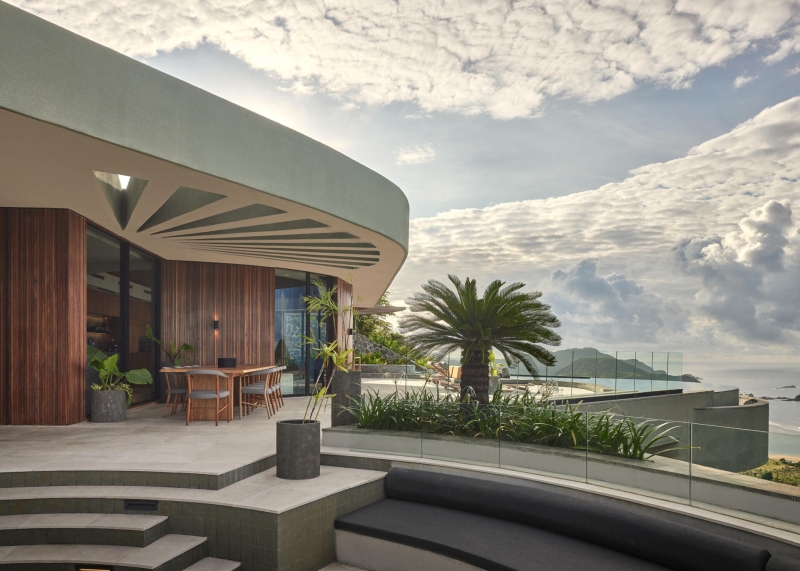
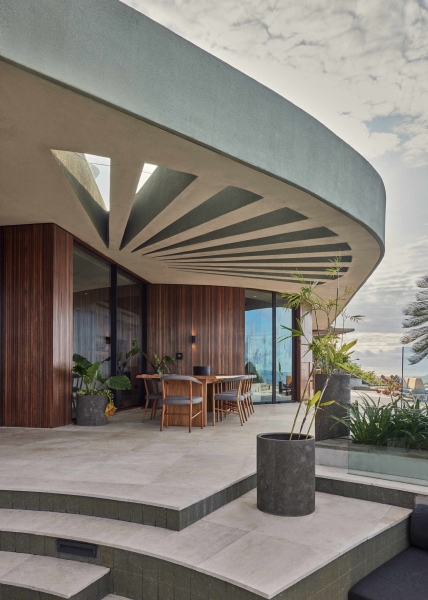
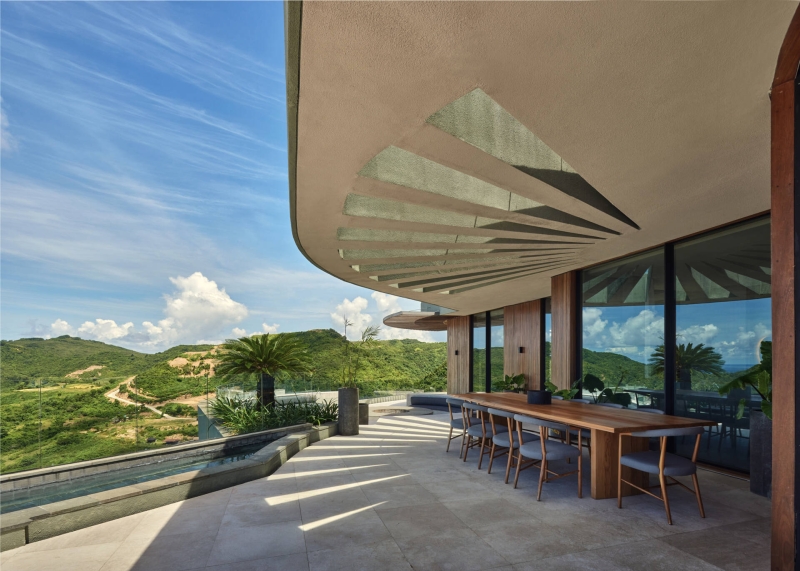
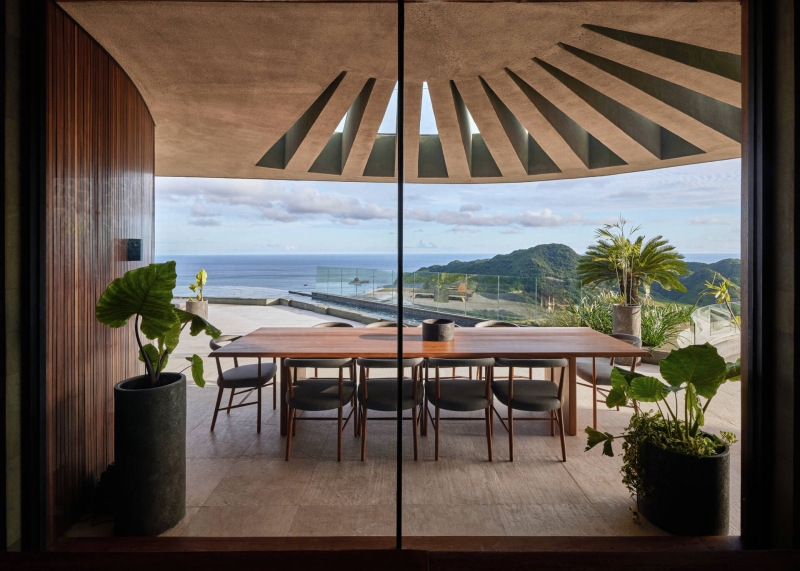
Outdoor dining areas are organised around the same curved planning principles. Positioned to engage with views and topography, these spaces feel integrated rather than added on. Movement between inside and out remains fluid, guided by form rather than thresholds.
Everyday Living Organised by Form
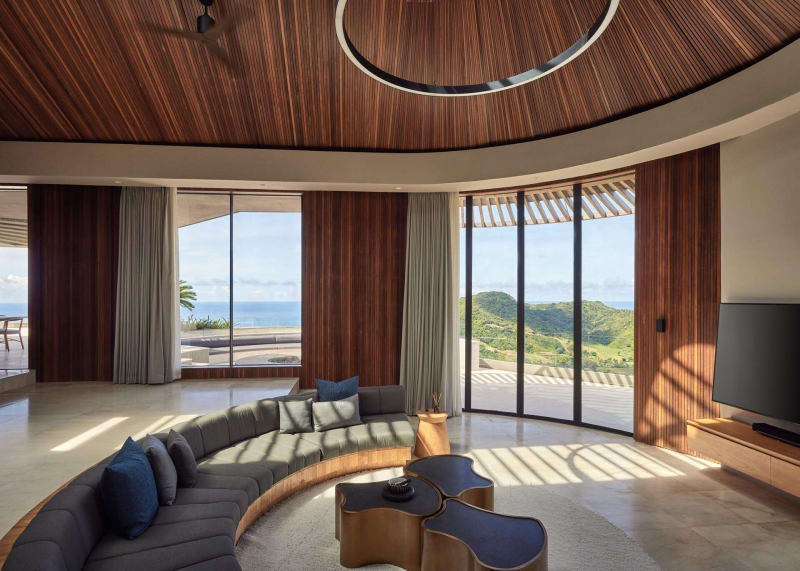
Shared interior spaces are anchored by circular forms that define lounges, dining areas, and fireplaces. These zones sit at the heart of the plan, both spatially and socially. The absence of rigid lines allows space to flow freely, encouraging a relaxed and intuitive experience of the interior.
The interior ceilings are finished in warm teak, introducing a sense of warmth and continuity throughout the house. This material choice softens the circular geometry and reinforces the calm, measured atmosphere of the interiors. By keeping the ceiling treatment consistent across spaces, the architecture remains the focus, with the teak acting as a unifying layer that supports both shared and private areas without drawing attention away from form or view.

Built-In Curves That Define the Room
The media room reinforces the project’s circular language through it’s stepped-down location and built-in curved seating. This geometry softens the room’s function and maintains continuity with the rest of the house. Seating becomes part of the architecture, not a separate layer.

Private Spaces Branching From the Core
Private wings branch out from the communal core, providing separation for two families without breaking the overall flow. These areas remain connected to the larger composition while offering quieter spaces set within the descending form of the house.
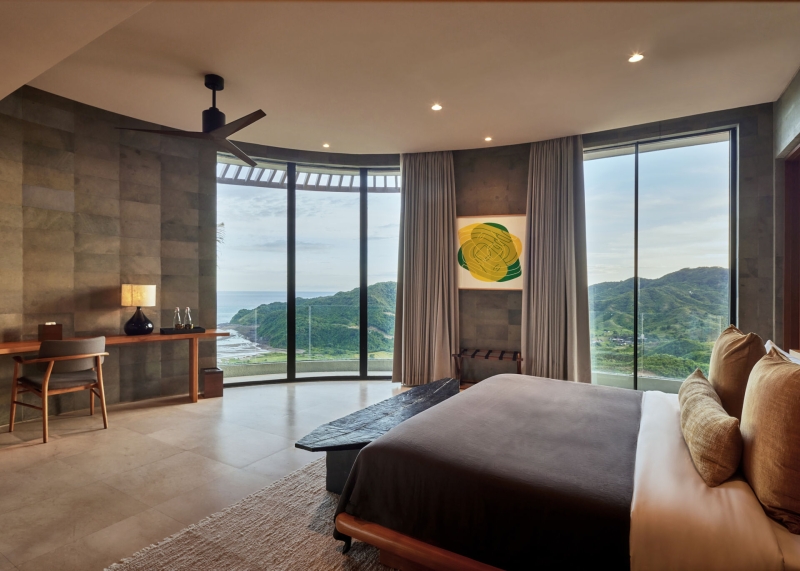
Nyrenstone Estate demonstrates how architecture can respond to the land. By allowing topography and geometry to lead, the house achieves a balanced presence that feels sculptural yet measured.
Photography by KIE | Architectural Design: Alexis Dornier | Interior: Somewhere Concepts | Construction: Adi Jaya Utama | Landscape: WIND Landscape | Environmental Design: Eco Mantra