
Madeline Brooks
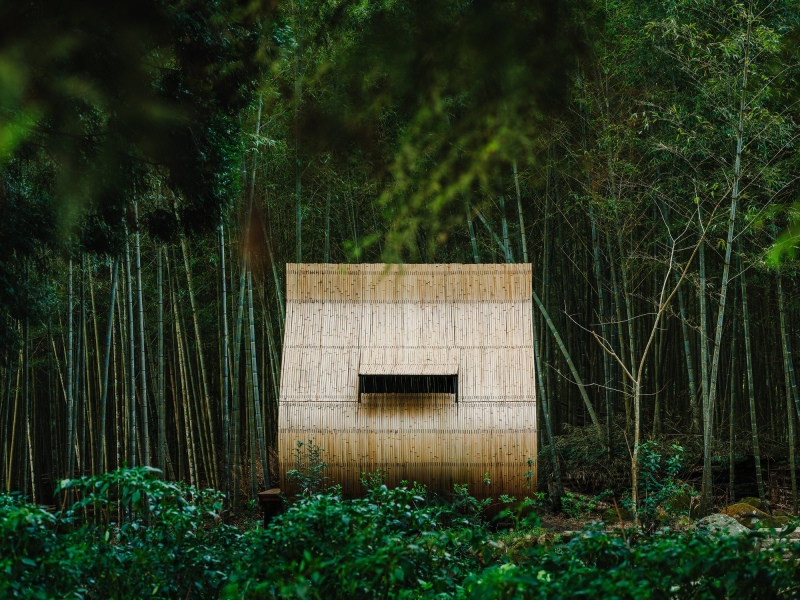
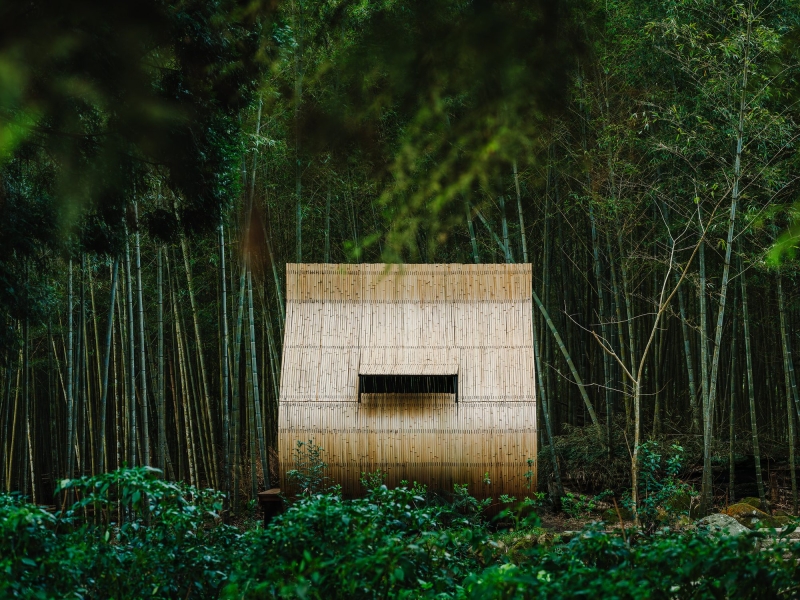
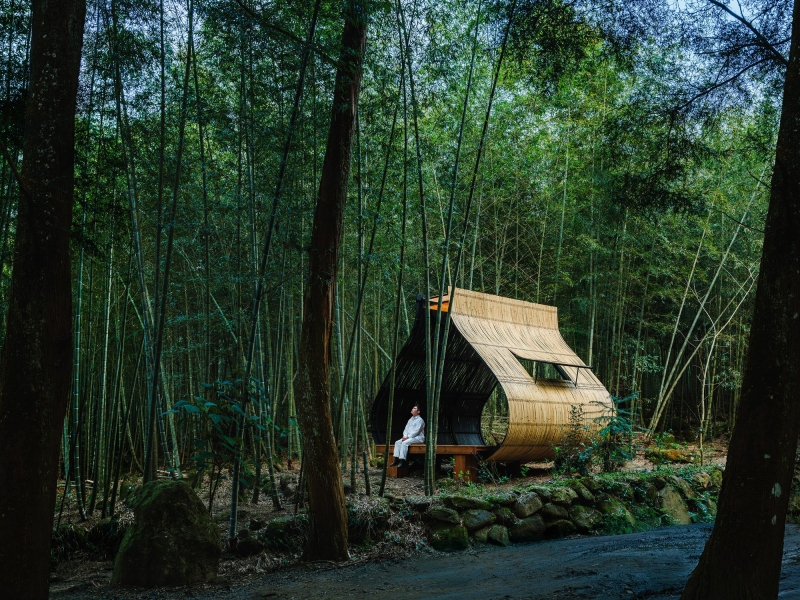
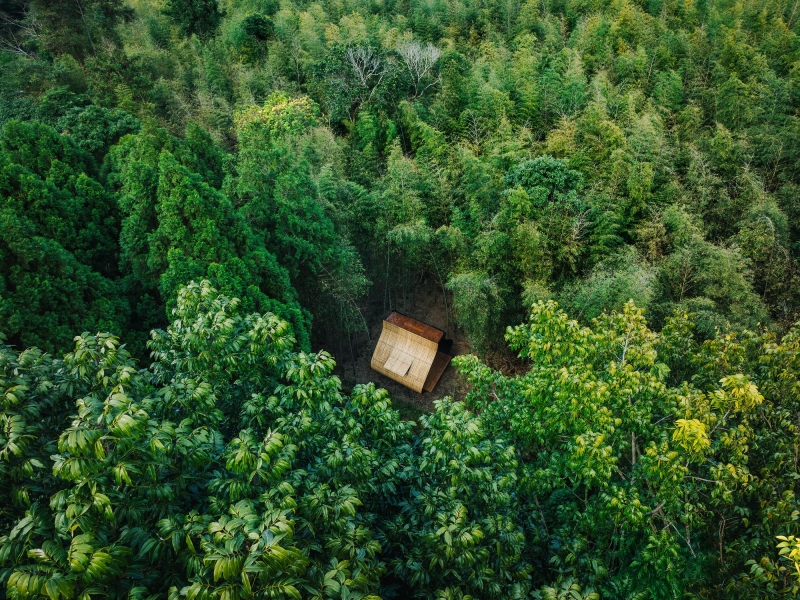
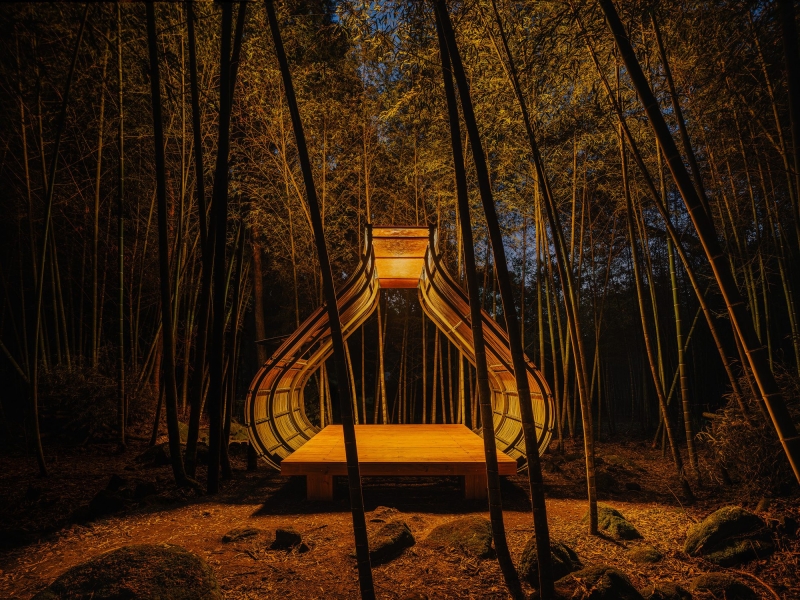
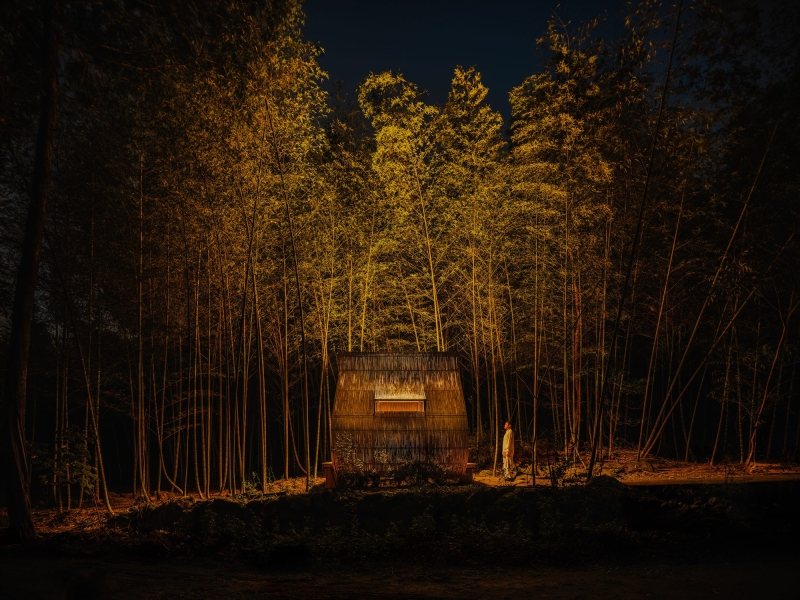
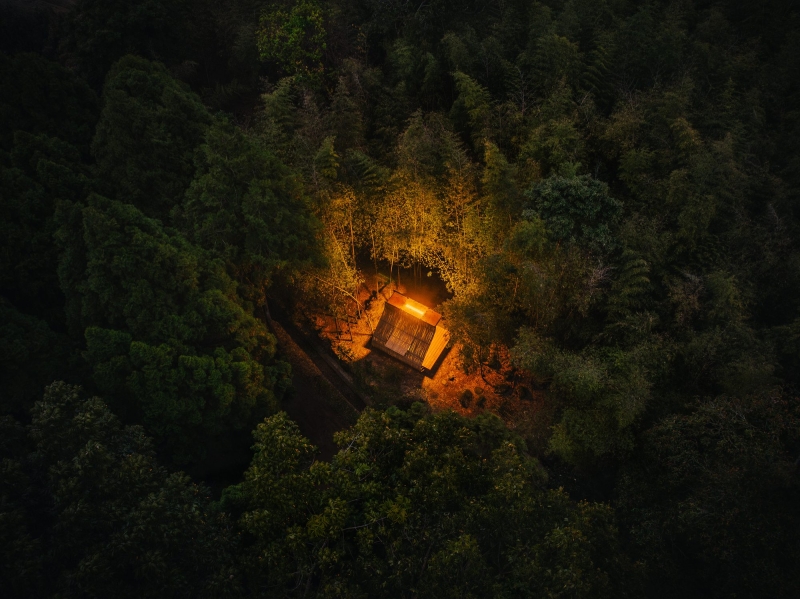
Taiwanese artist Cheng Tsung Feng’s “Bamboo Cabin Plan” is a series of small-scale architectural works built primarily with bamboo, exploring the traditional ways people wrap food. The first piece in this project, Bamboo Cabin Plan: Sticky Rice Dumpling, is situated along a bamboo forest hiking trail in Lugu Township, Nantou County. It offers a shaded resting place for hikers passing through the area.
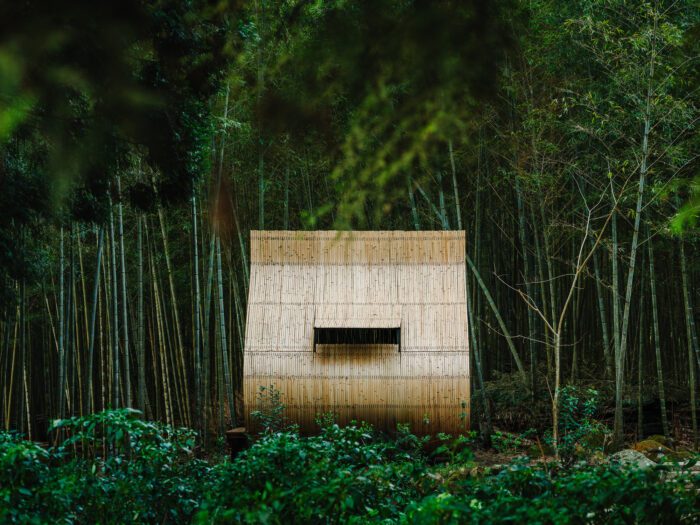
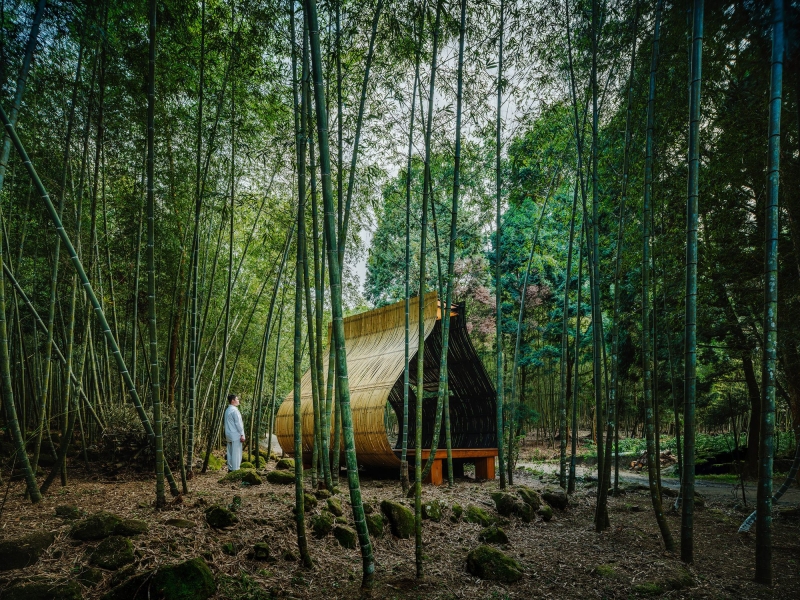
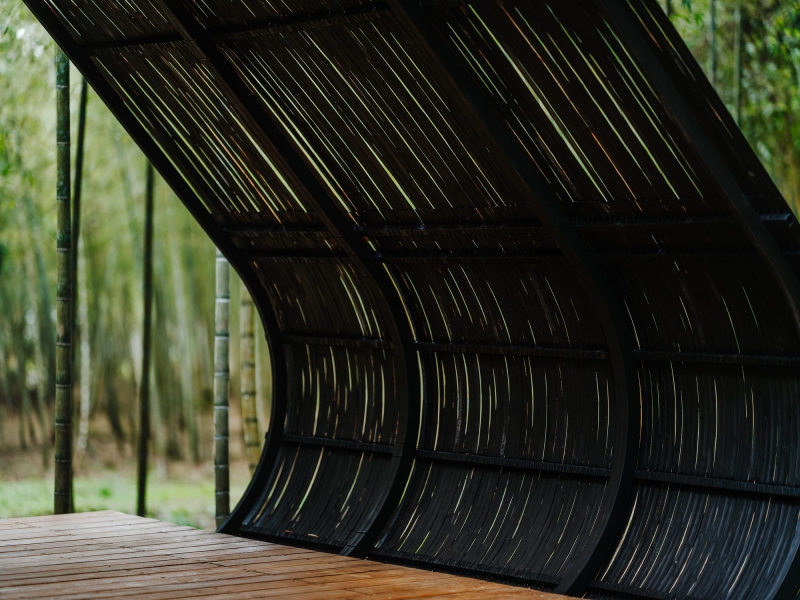
The form of the Bamboo Cabin draws inspiration from the traditional act of wrapping a Sticky Rice Dumpling—placing two bamboo leaves in the palm, filling them with ingredients, and letting the leaves naturally bend under the weight and the shape of the hand to form a curved, enclosing shape.
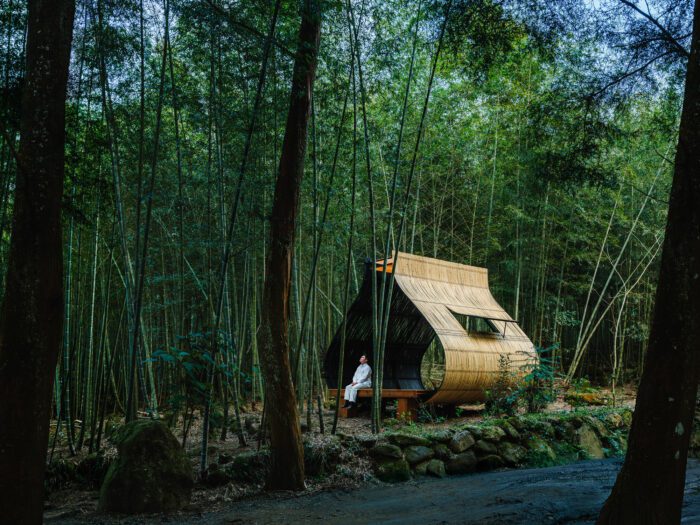
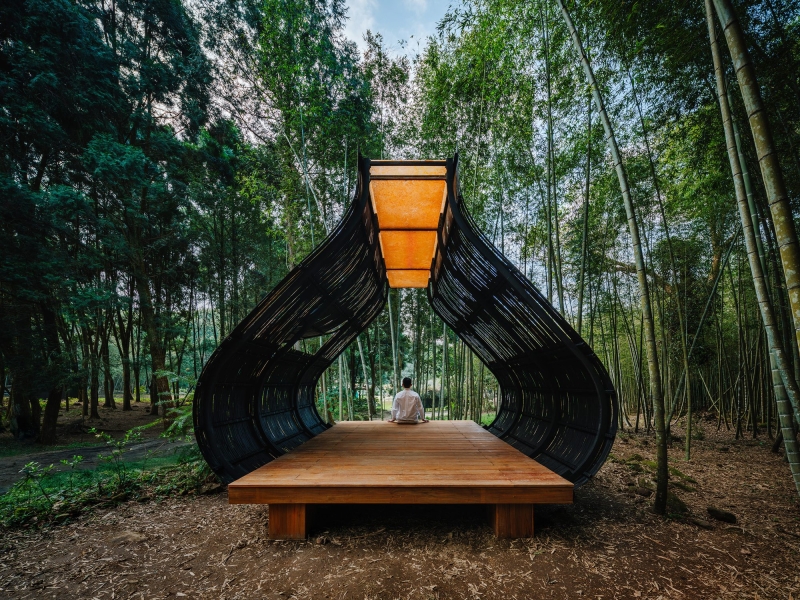
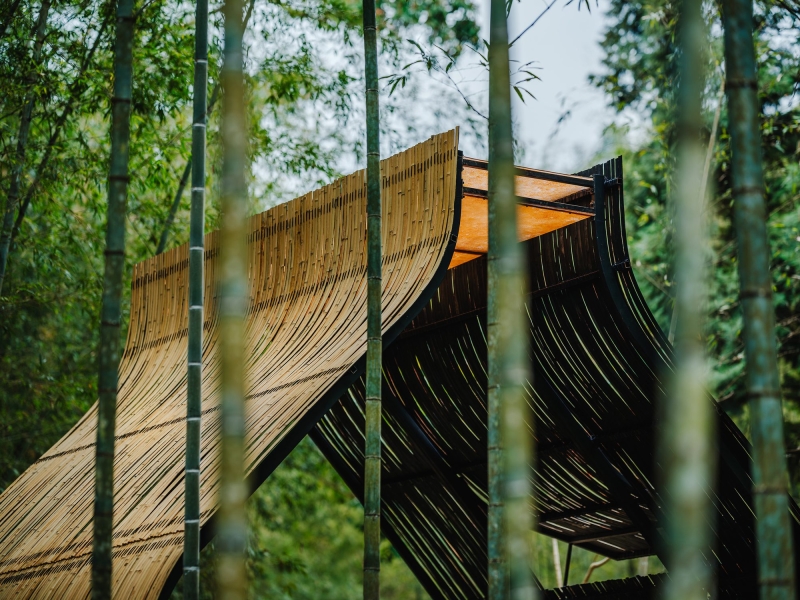
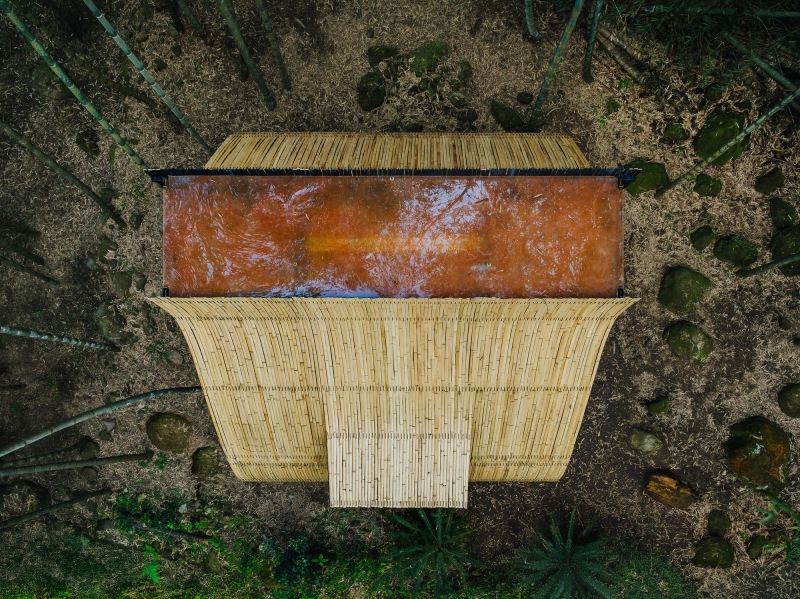
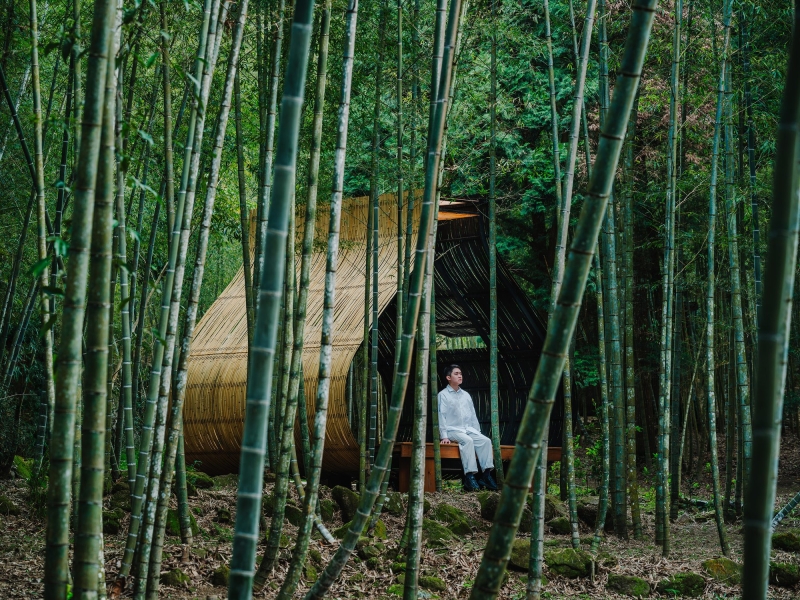
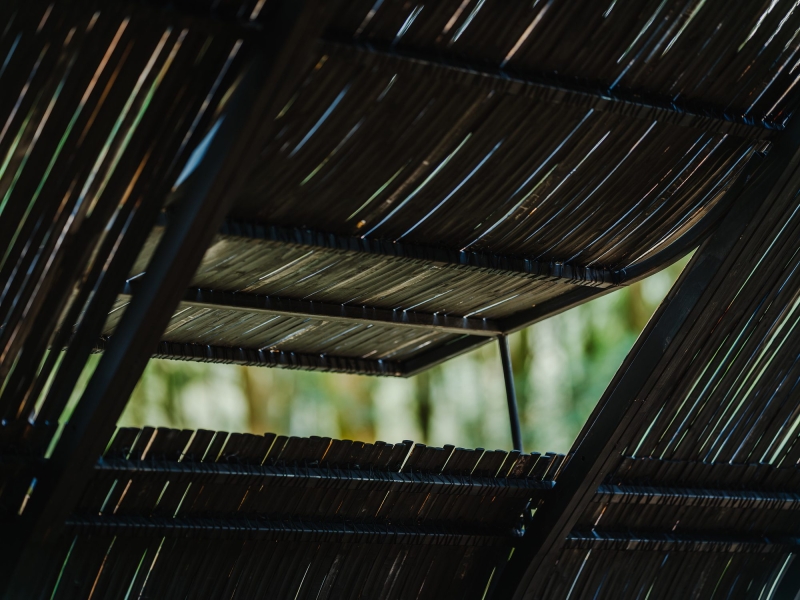
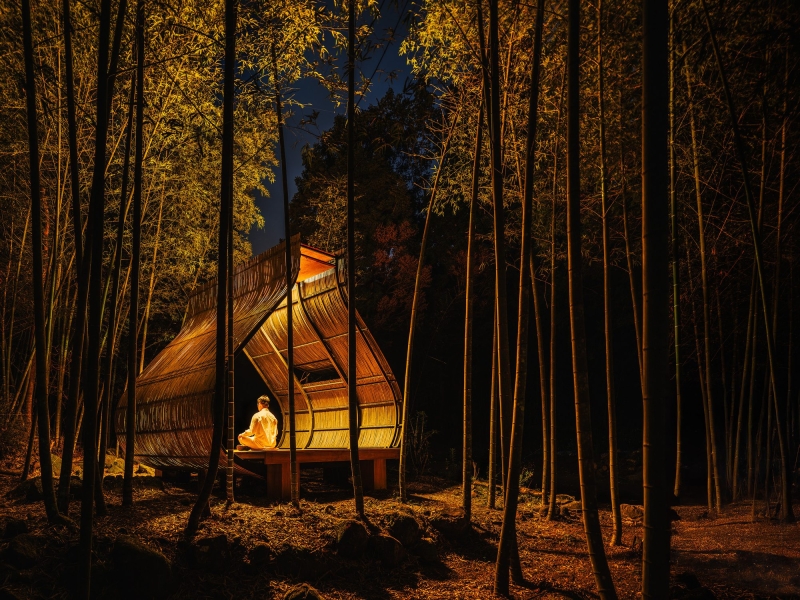
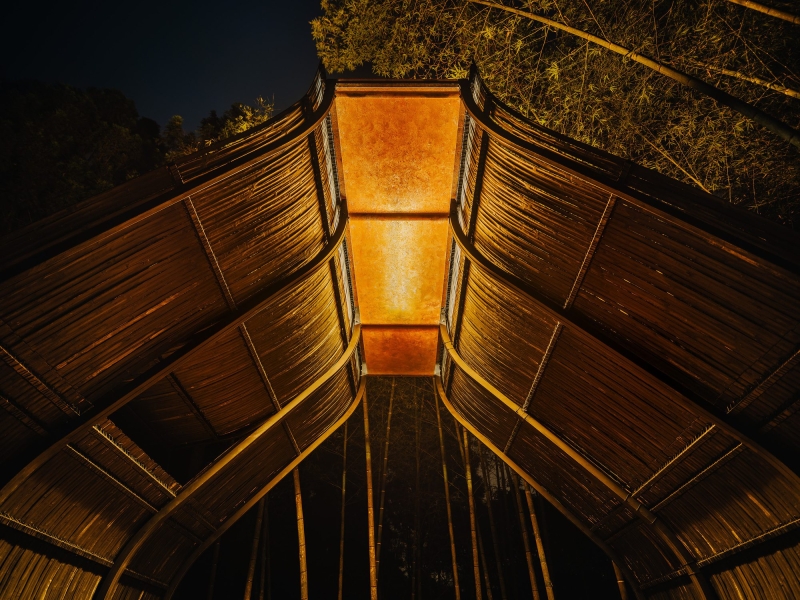
Feng translated this delicate process into architectural form. He arranged multiple bamboo strips in parallel, bending them to create a surrounding space. A small portion at the center is slightly lifted to form a tiny window. The raised wooden floor introduces a gap and shadow between the structure and the ground, giving the cabin a light and playful appearance. The floor allows visitors to sit, nap, or enjoy a picnic inside. On the roof, two handcrafted amber-colored waterproof panels are installed. Their specially textured surface diffuses the light, creating a warm, oily glow reminiscent of glutinous rice, adding a cozy and flavorful impression to the space within.
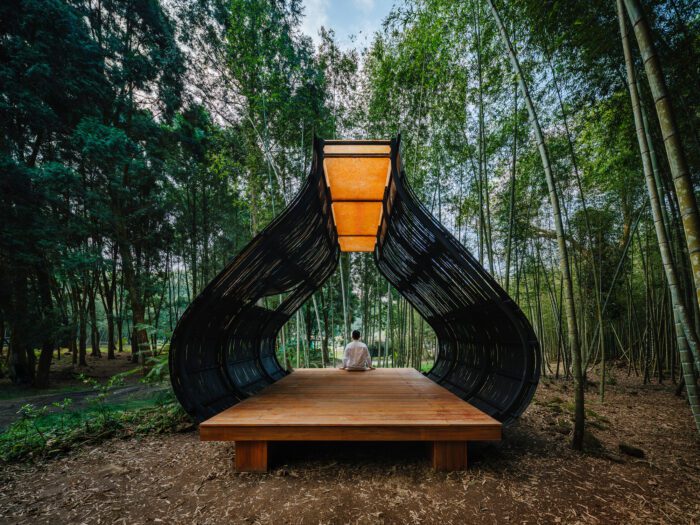
Starting from the idea of food wrapping, the Bamboo Cabin invites people to step into a giant Sticky Rice Dumpling—as if being held within palms and bamboo leaves, embraced by food culture, tasty memory, and nature material.
Project Info
Architects: Cheng Tsung FENG Design Studio
Area: 12 m²
Year: 2025
Country: Taiwan
Photographs: Fixer Photographic Studio
Lead Architects: Cheng Tsung Feng
Design Team: Chung Sheng Hsu, Chan Wei Hsu

Tags: 2025Cheng Tsung FENG Design StudioFixer Photographic StudioTaiwan

Madeline Brooks
Madeline Brooks is a Projects Editor at Arch2O, where she has been shaping and refining architectural content since March 2024. With over a decade of experience in editorial work, she has curated, revised, and published an array of projects covering architecture, urbanism, and public space design. A graduate of the Harvard University Graduate School of Design, Madeline brings a strong academic foundation and a discerning editorial eye to each piece she oversees. Since joining Arch2O, she has played a pivotal role in shaping the platform’s editorial direction, with a focus on sustainability, social relevance, and cutting-edge design. Madeline excels at translating complex architectural ideas into clear, engaging stories that resonate with both industry professionals and general readers. She works closely with architects, designers, and global contributors to ensure every project is presented with clarity, depth, and compelling visual narrative. Her editorial leadership continues to elevate Arch2O’s role in global architectural dialogue.