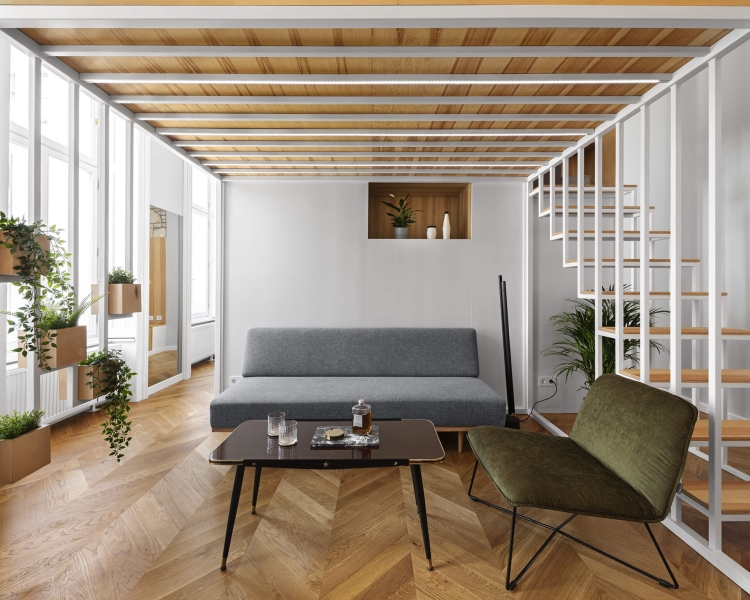
High ceilings and original wood floors set the tone from the very beginning inside this Budapest apartment, redesigned by Architres Studio. Located in the heart of the city, the once dark and compartmentalized home has been reworked into a clear, adaptable interior that can function equally well as a short term rental or a long term residence for up to four people.
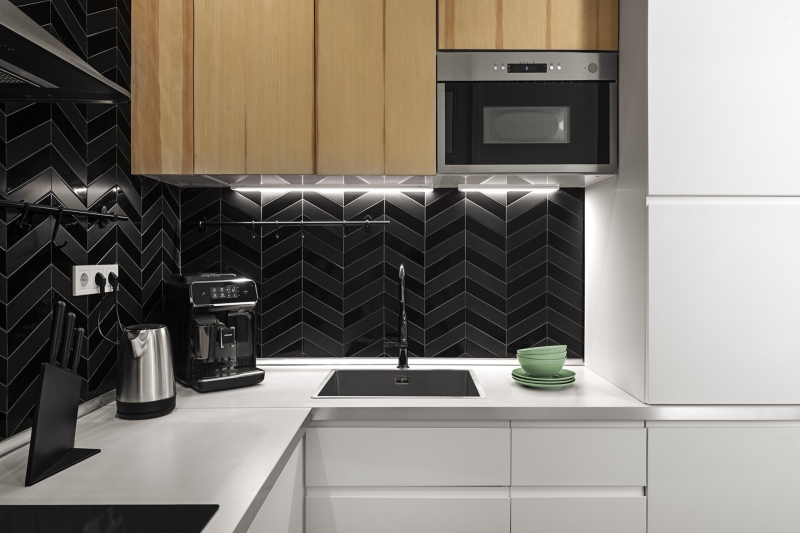
The front door opens directly into the kitchen and dining area, immediately revealing the apartment’s new sense of openness. Rather than hiding these everyday spaces away, they have been positioned at the entry to create a welcoming first impression.
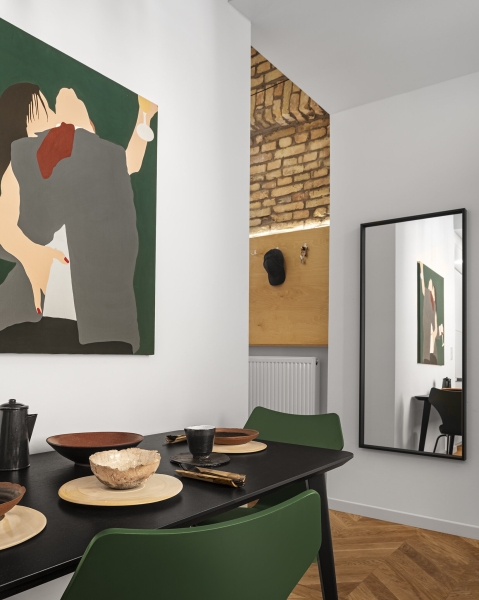
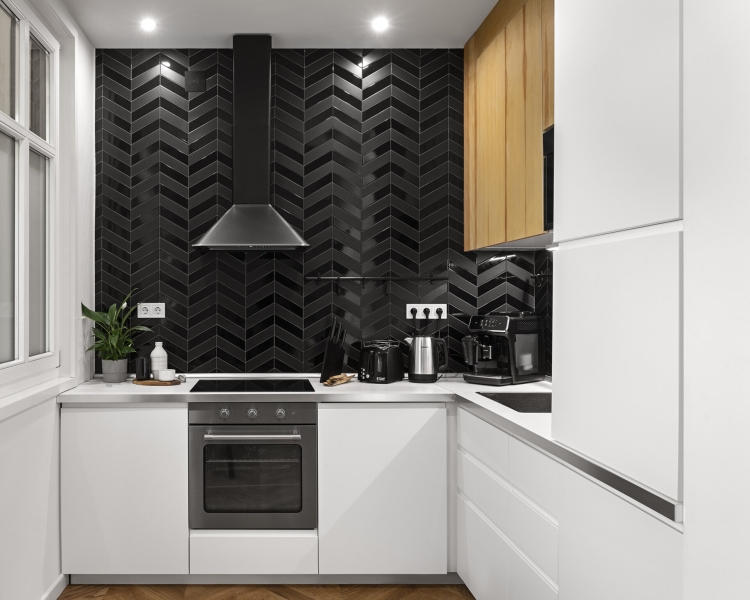
Minimalist white cabinetry keeps the kitchen visually light, while a striking accent wall of gloss and matte black tiles adds depth and contrast. A black dining table anchors the space and reinforces the restrained color palette without overpowering it.
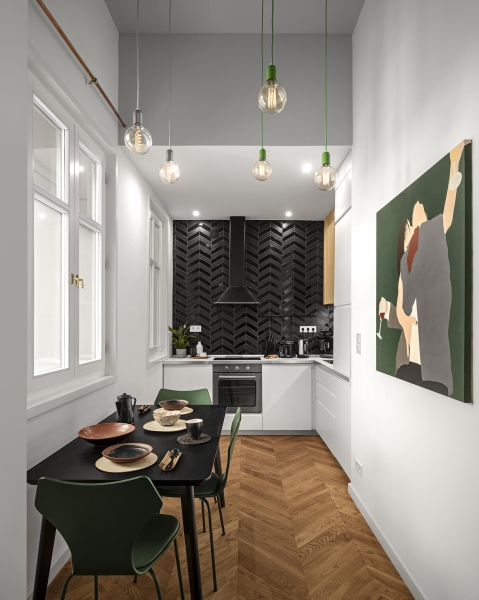
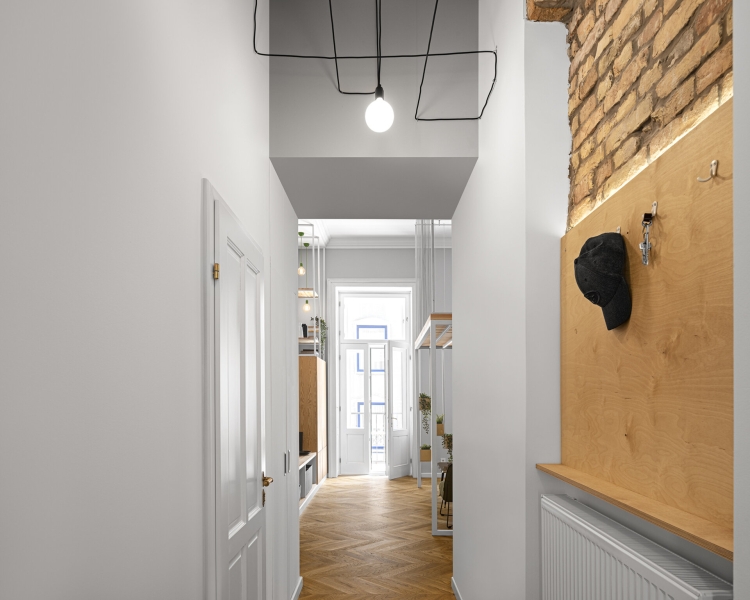
From here, a hallway leads deeper into the apartment, offering brief glimpses of the building’s original brick construction. These exposed sections act as subtle reminders of the apartment’s past, adding texture and warmth as you move toward the more private areas. The hallway also helps transition between functions, guiding residents and guests from shared spaces to rooms designed for rest and retreat.
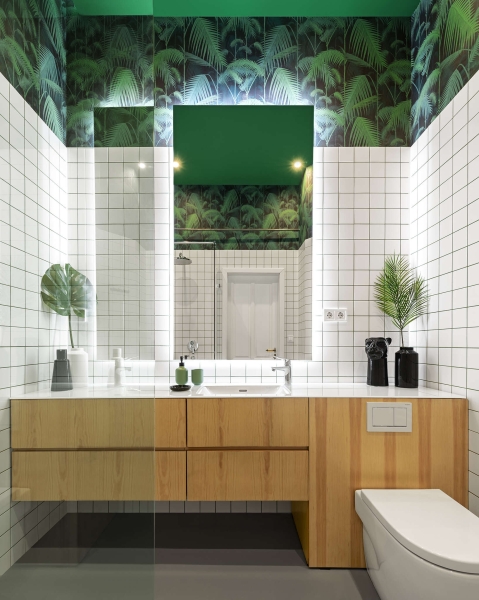
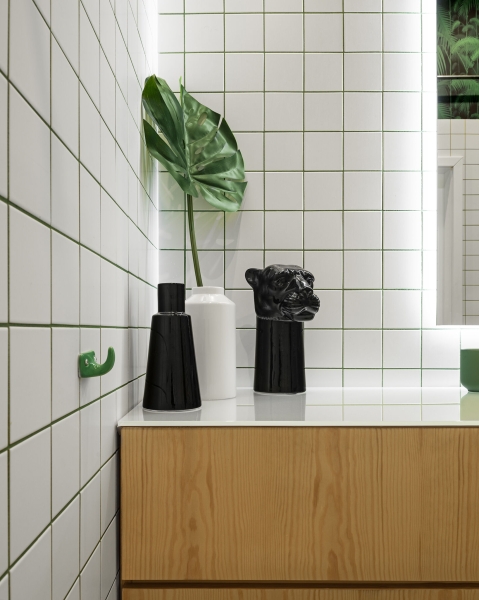
Along this passageway, a door opens to reveal the bathroom. Square white tiles wrap the space in a clean, graphic finish, while a wood vanity introduces warmth and continuity with the rest of the apartment. Decorative wall coverings featuring a palm tree pattern add personality, softened by a back lit mirror that enhances both function and atmosphere. Hints of green here quietly echo through the apartment, visually linking the bathroom with the surrounding rooms.
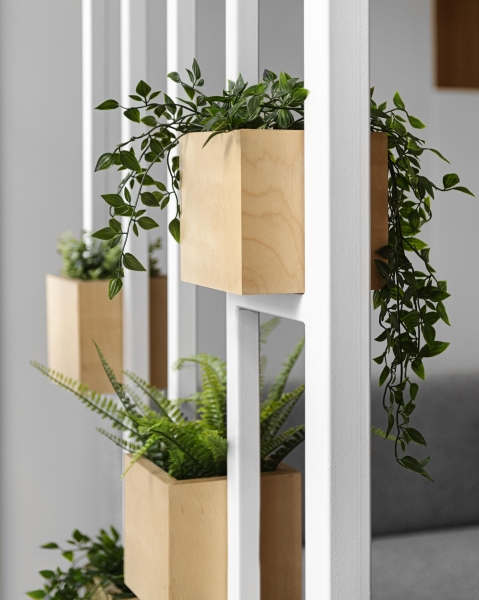
At the end of the hallway sits the main living area, where the redesign truly comes into focus. Built-in wood cabinetry provides practical storage while also framing the television, allowing the space to remain uncluttered. Large doors open onto a small balcony, bringing in natural light and extending the living area outward. Adjacent to the couch, a white painted steel frame displays plants in wooden boxes, adding life and softness without disrupting the apartment’s calm aesthetic.
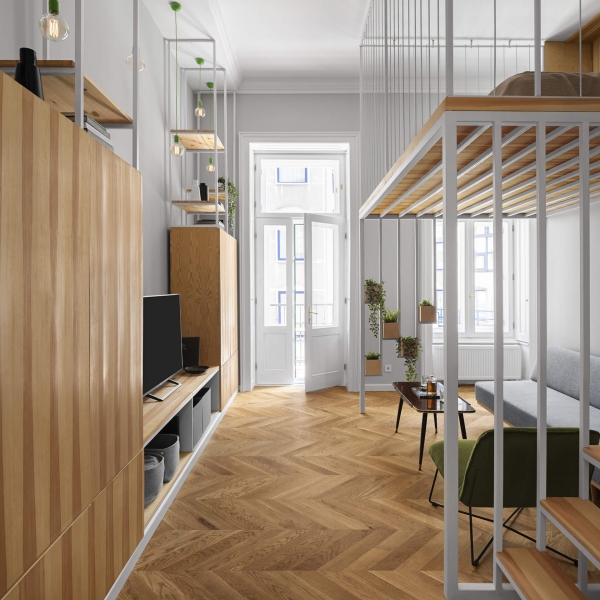
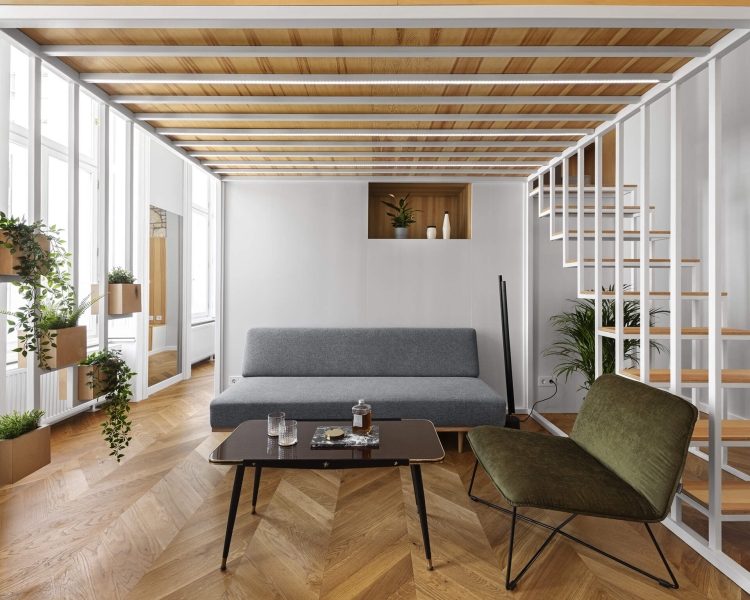
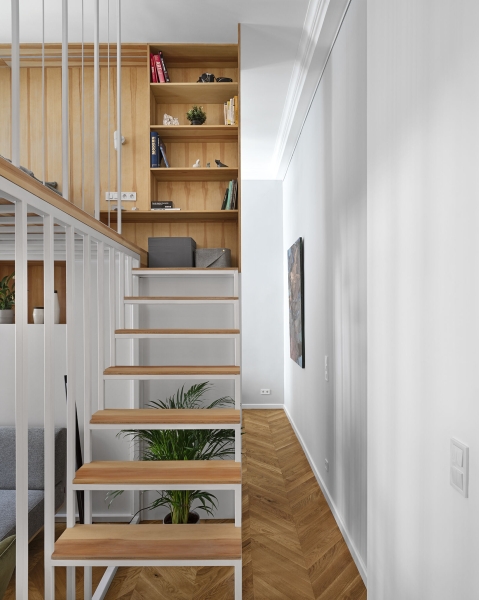
Aa staircase leads up to the mezzanine, an architectural move that defines the apartment’s flexibility. At the top of the stairs, a built-in bookcase acts as both storage and a visual threshold, gently separating levels without closing them off. This elevated platform allows the space below to remain open and fluid while creating a sense of privacy above.
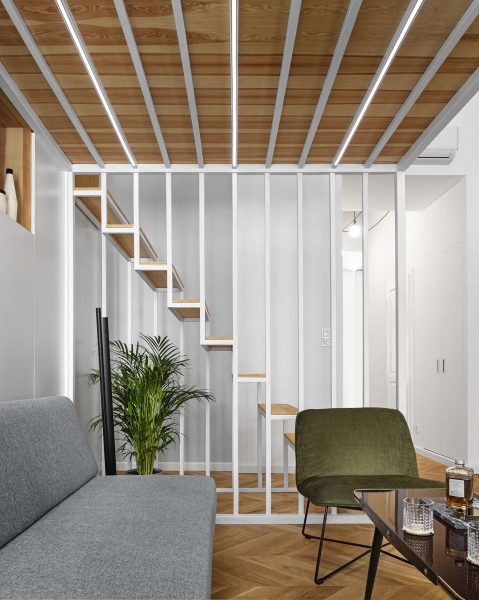
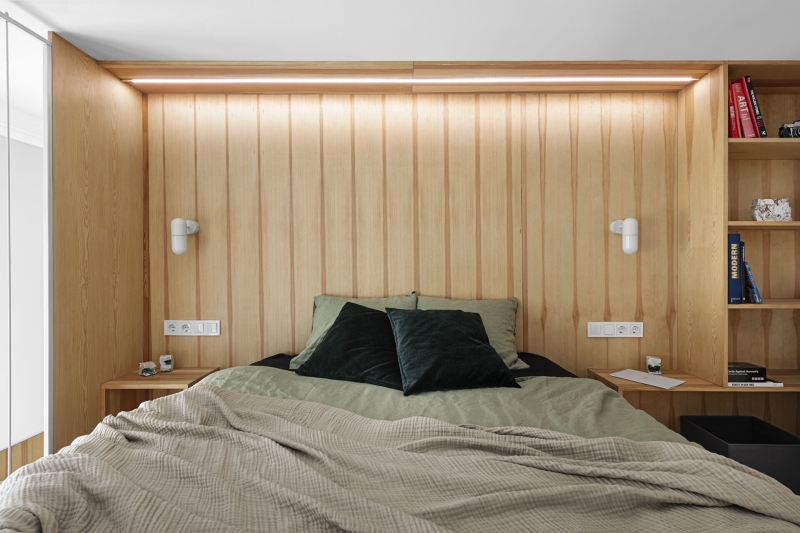
The mezzanine itself is home to a bedroom that feels intimate without being enclosed. A wood-lined wall forms the headboard, reinforcing the consistent use of natural materials throughout the apartment. Simple lighting casts a soft glow, creating a restful atmosphere while still allowing light to filter through the larger space below.
Back downstairs, a second bedroom is tucked behind the living room wall. Here, the generous ceiling height allows original brick and stonework to remain visible, giving the room a raw, authentic character. The bed sits on a raised platform that clearly defines the sleeping zone, yet this feature is entirely removable. When needed, the room can be transformed into a home office, reflecting the apartment’s adaptable design philosophy.
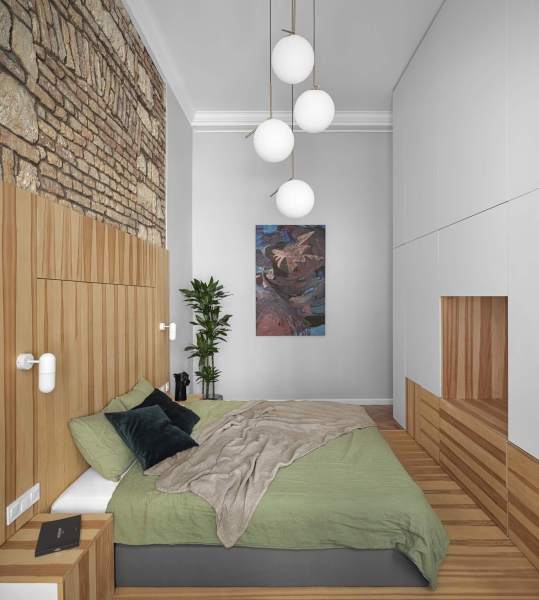
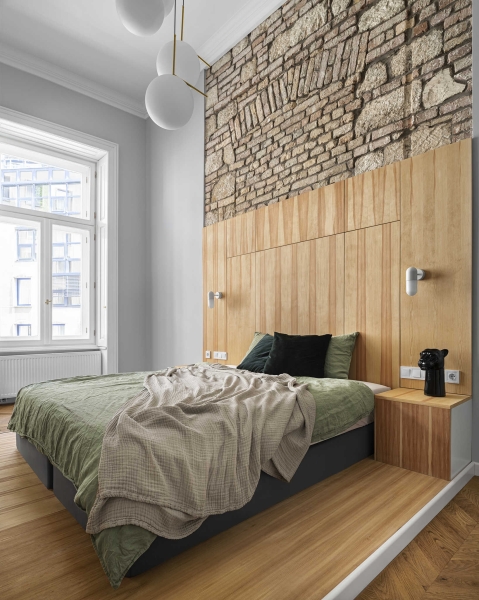
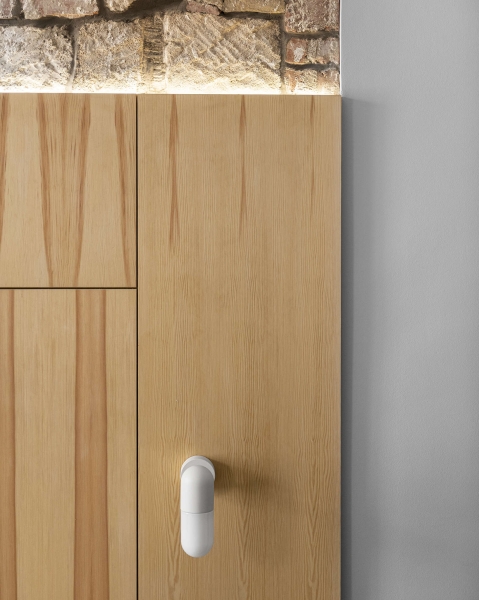
Throughout the home, wood, white, and grey create a calm and cohesive backdrop, punctuated by exposed brick and carefully chosen details. Art and accessories by local contemporary artists have been selected to complement the architecture, completing an interior that feels thoughtful, functional, and quietly expressive.
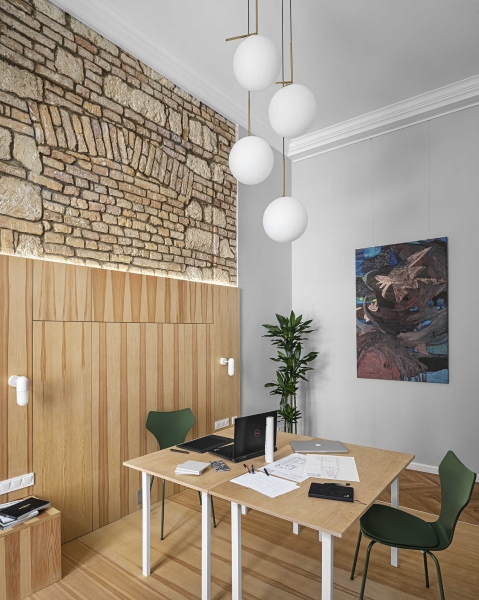
By opening up the layout and introducing a centrally placed mezzanine, Architres Studio has turned a once narrow and dark apartment into a flexible living environment where space and privacy coexist.
Photography by Gergo Gosztom