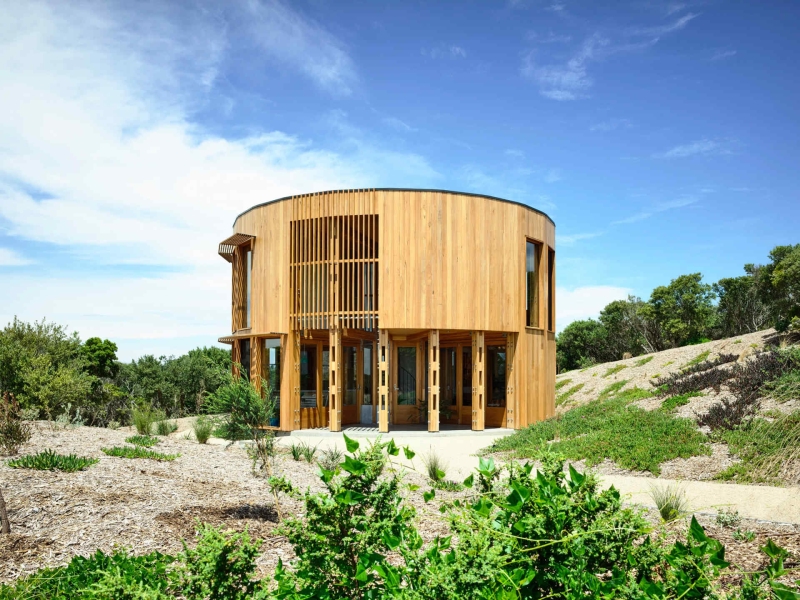
On Australia’s Mornington Peninsula, a holiday house quietly challenges the idea that bigger is better. Designed by Austin Maynard Architects, St Andrews Beach House is a two storey circular home built for slow living, simplicity and time away from the noise of everyday life. Less than five metres in radius, it sits lightly within the sand dunes, surrounded by bush, scrub and rugged coastal terrain, and is a modern take on the humble beach shack, shaped by restraint and intention.
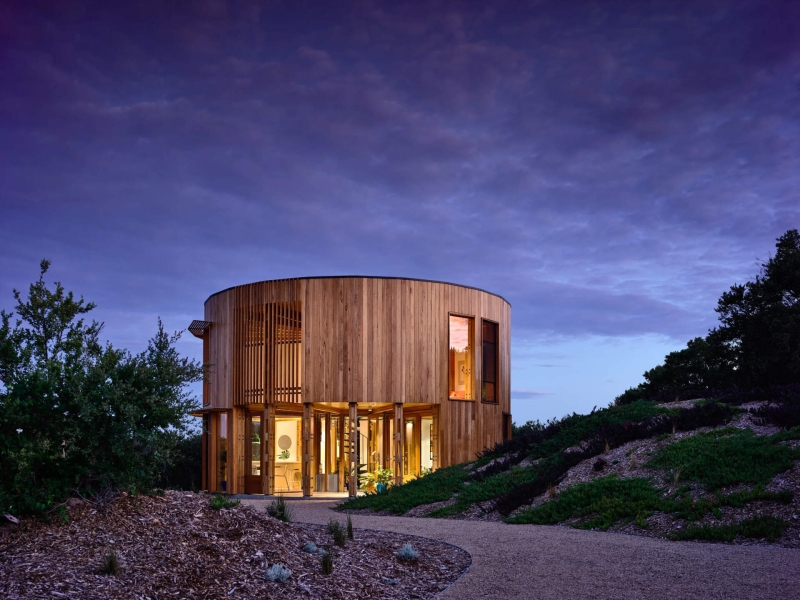
The circular form allows the home to have multiple outlooks, with windows positioned to frame the surrounding bushland and dunes from every angle. There is no clear front or back. Instead, the house turns outward in all directions, responding to its remote setting and uninterrupted views.
An open deck carved directly into the structure connects the interior with the outdoors. When opened up, it expands the living space and blurs the line between inside and out, making the house feel far larger than its footprint suggests.
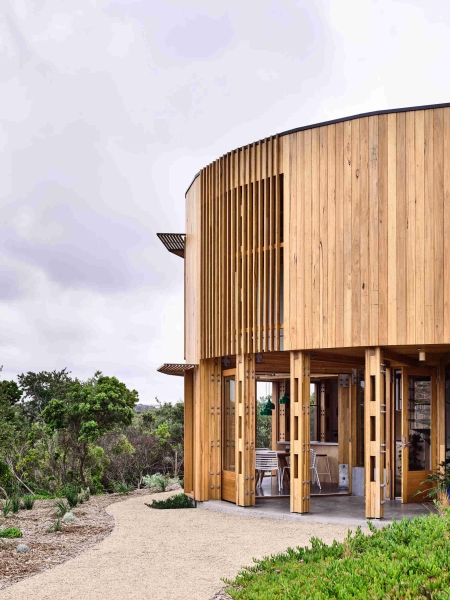
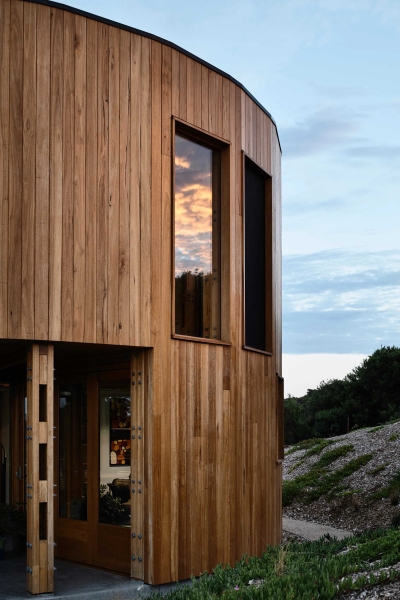
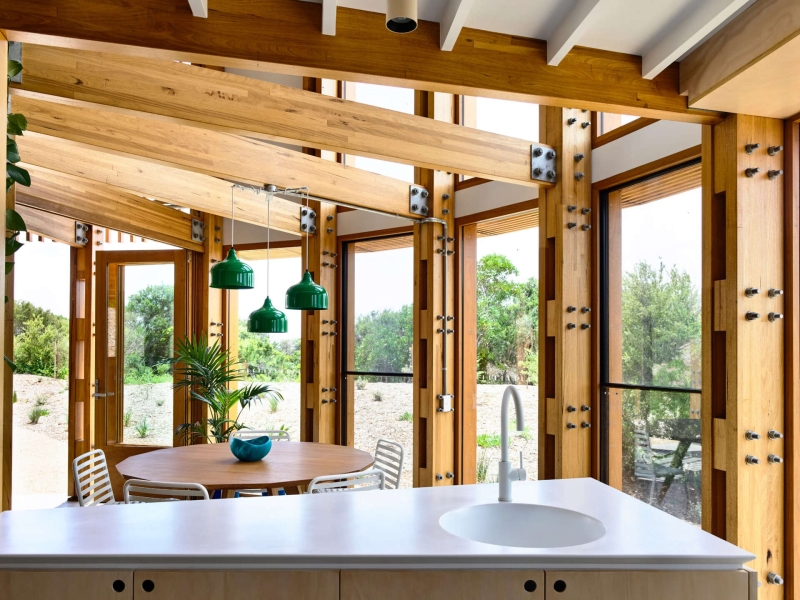
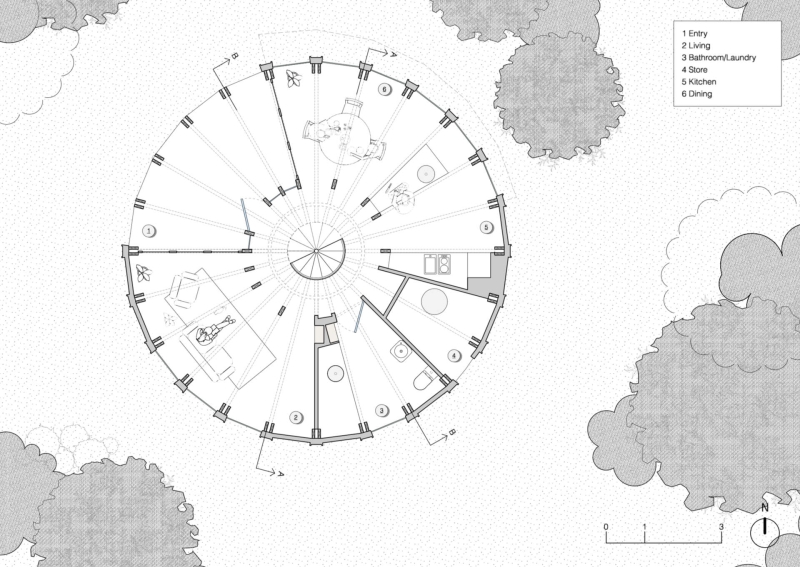
Inside, the ground floor is devoted to shared living. The kitchen and dining area occupy the same open space, encouraging relaxed meals and easy conversation. There are no corridors or wasted areas here. Every part of the plan has a purpose, shaped by the geometry of the circle.
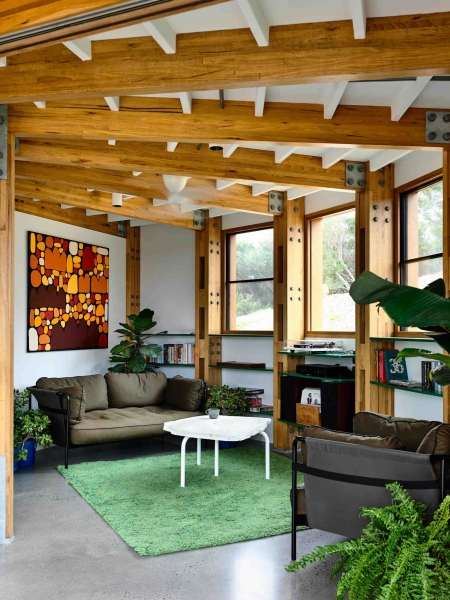
Alongside the kitchen and dining area is a living room, positioned to take in views of the surrounding landscape. A bathroom and laundry are also located on this level, keeping all essential functions compact and efficient. Large windows draw in natural light while maintaining a strong connection to the wild setting outside.
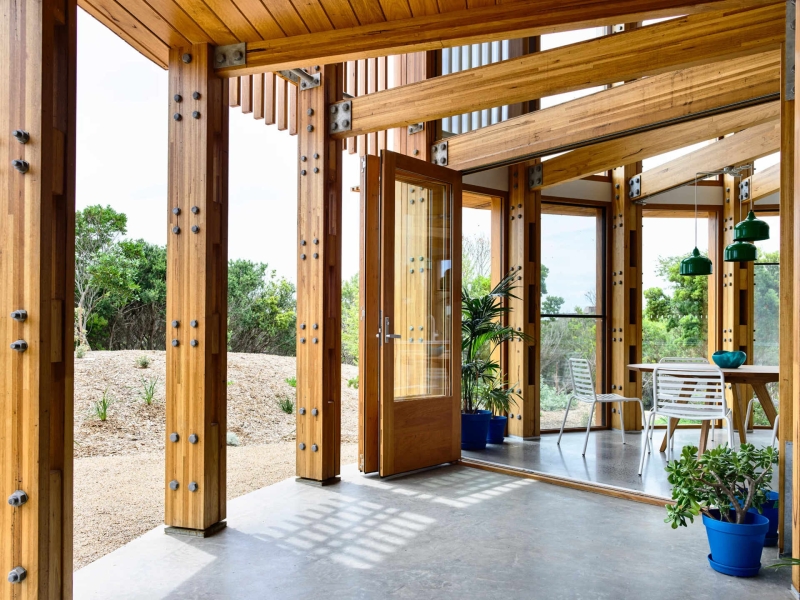
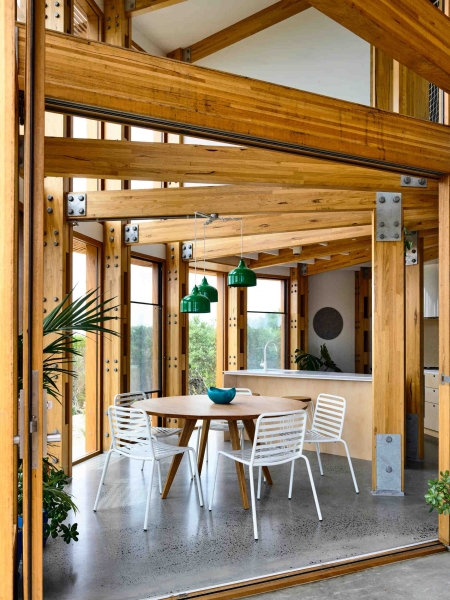
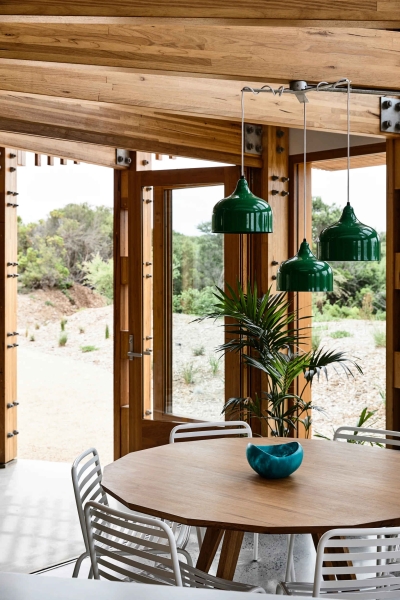
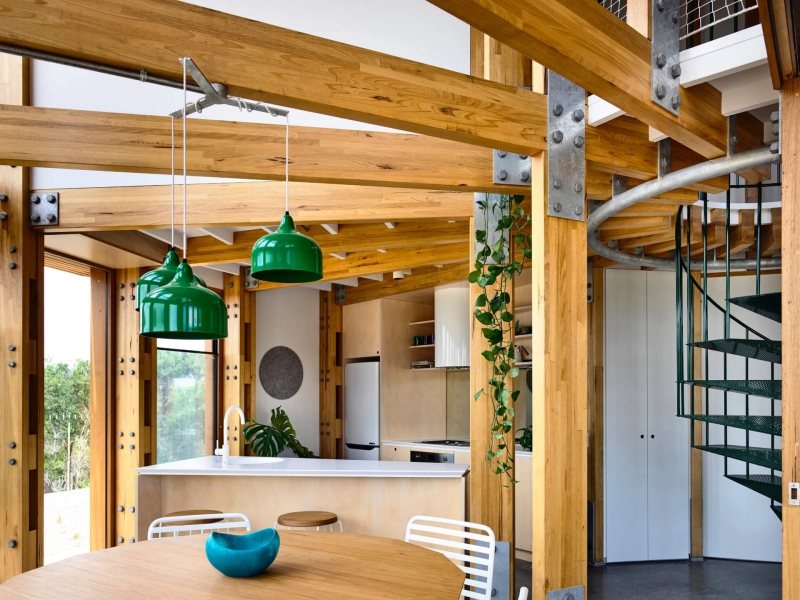
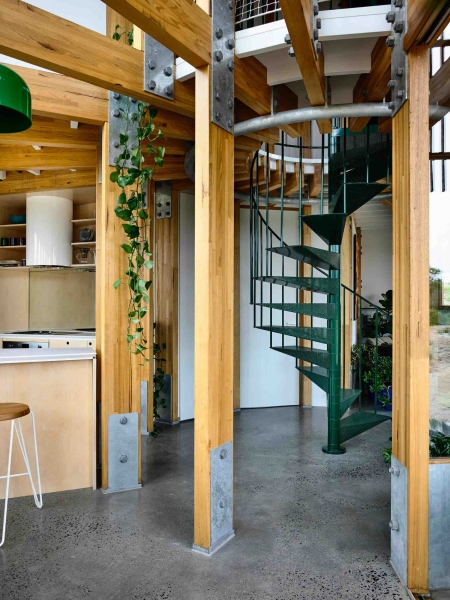
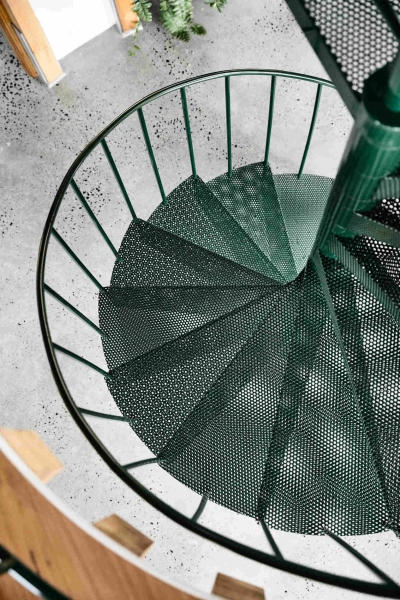
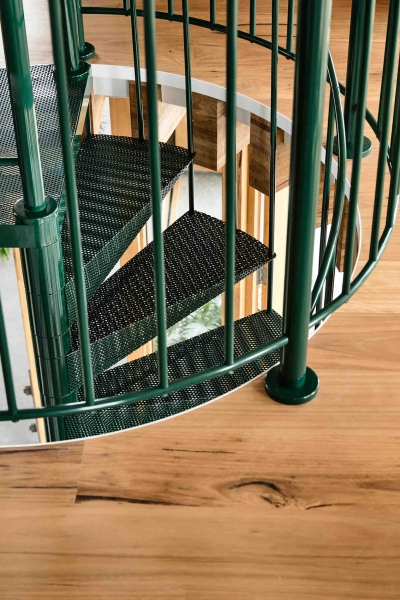
At the centre of the home, a dark green metal spiral staircase rises to the upper level. It acts as both a functional element and a visual anchor, drawing the eye upward while allowing light and air to move through the space. The staircase reinforces the circular logic of the house and keeps movement compact and intuitive.
Upstairs, the layout shifts away from conventional ideas of privacy and separation, continuing the home’s relaxed approach to holiday living.
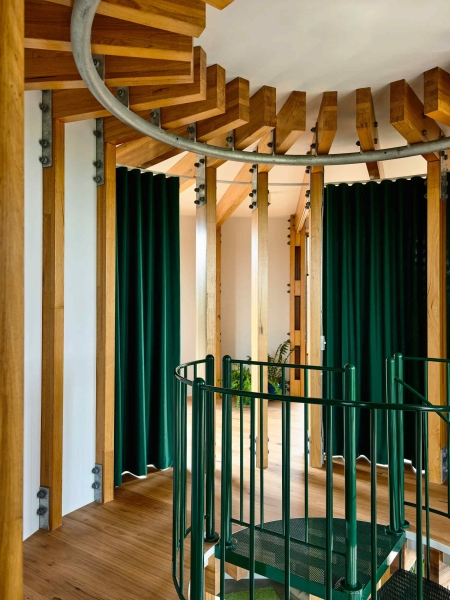
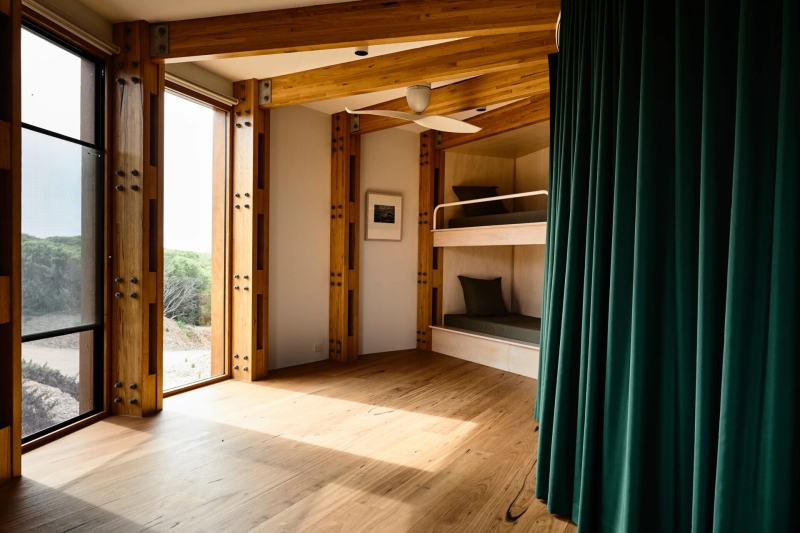
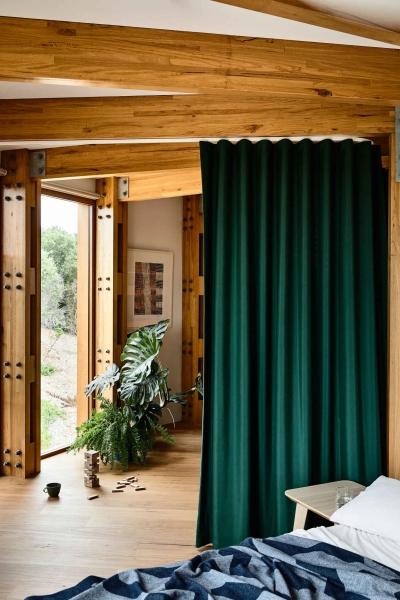
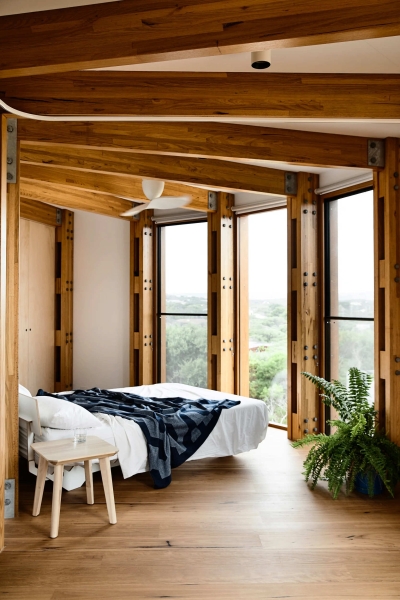
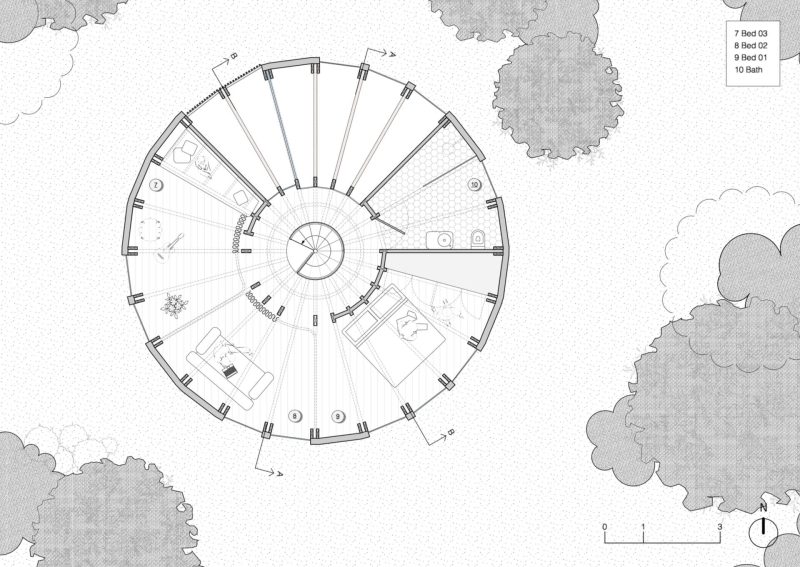
Rather than dividing the upper level into separate bedrooms, the sleeping area is arranged as a single bunk room. Curtains provide separation when needed, allowing the space to adapt easily. At times it can function as a bedroom, and at others as a second living area or games room.
This approach reflects the spirit of traditional beach shacks, where flexibility matters more than formality. The focus is on shared experiences, with floor space taking priority over built in boundaries.
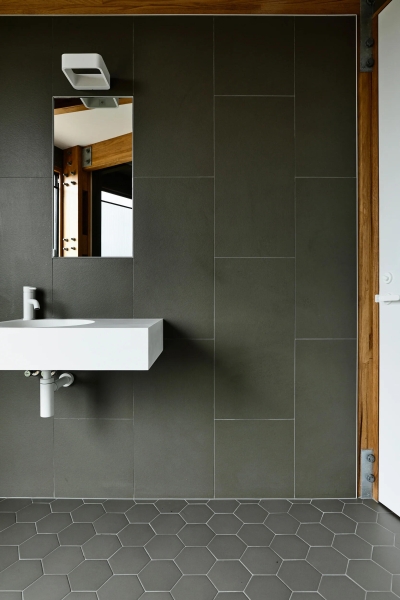
The upstairs bathroom continues the home’s understated material palette. Large format tiles line the walls, creating a calm and cohesive backdrop. Underfoot, smaller hexagonal tiles add texture and subtle contrast, grounding the space without overwhelming it.
The circular geometry is clearly expressed in the floor plans for both levels. Each space is tightly organised around the central stair, showing how a simple form can produce a surprisingly rich and flexible layout. It is a clear example of how thoughtful design can make even the smallest home feel generous.
St Andrews Beach House does not try to compete with the landscape or modern ideas of luxury. Its strength lies in what it leaves out. By keeping the footprint small and the layout open, the house creates a slower, more grounded way of living by the sea, where the setting takes the lead and the architecture quietly supports it.
Photography by Derek Swalwell | Architect: Austin Maynard Architects | Project team: Andrew Maynard, Mark Austin, Ray Dinh | Builder: Spence Construction | Engineer: Perret Simpson | Building surveyor: Steve Watson & Partners | Energy Consultant: Efficient Energy Choices | Land Surveyor: Steve Palmer Surveys